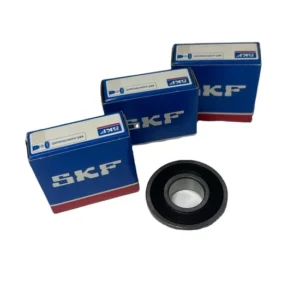
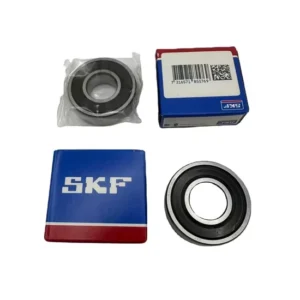
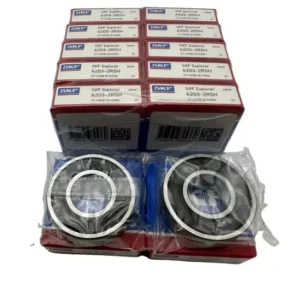
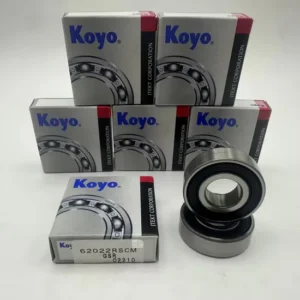
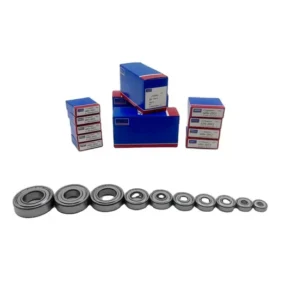
Verified Authenticity Guarantee — Every shipment includes scannable QR codes linked to the manufacturer's official verification app for instant origin validation.
Technical Specifications
| Parameter | Value |
|---|
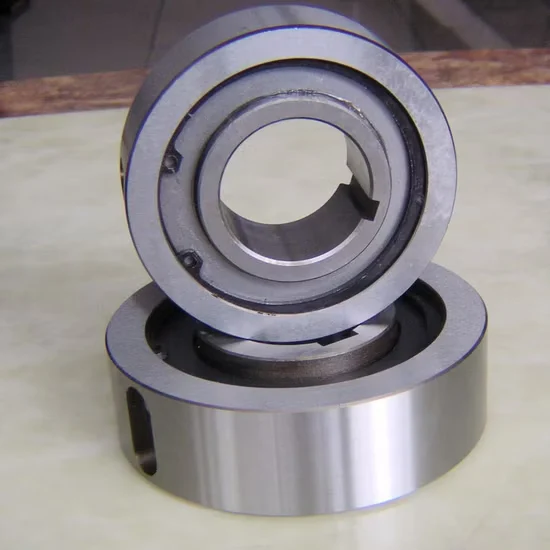
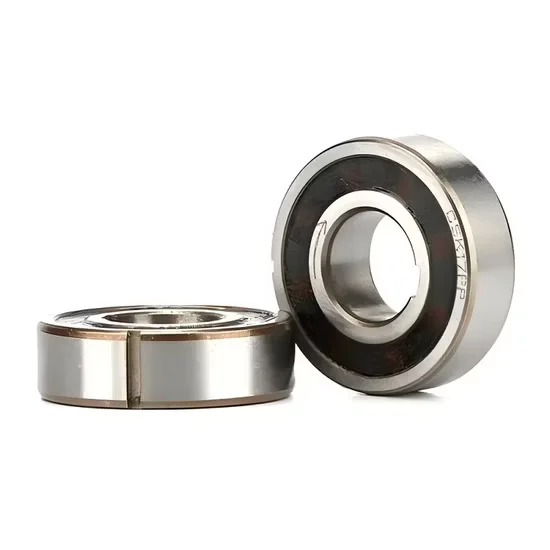
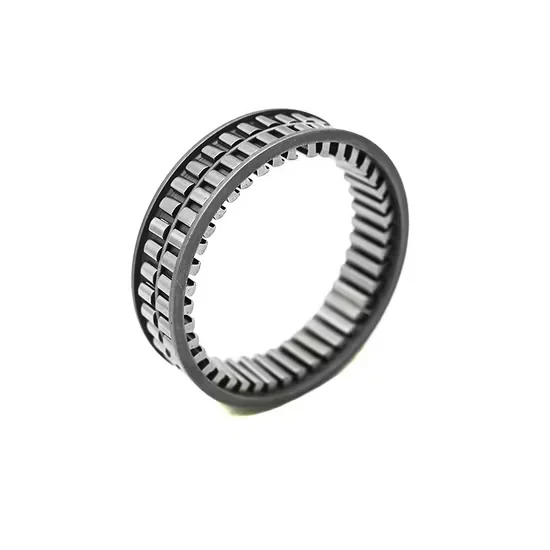
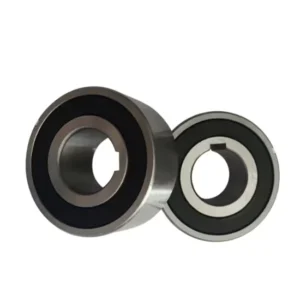
| Product Type | One Way Clutch Bearing |
| Style | With Outer Ring |
| Rows Number | Single |
| Load Direction | Radial Bearing |
| Material Options | Gcr15 bearing steel (stainless variants available) |
| Seals Type | Sealed |
| Precision Rating | P0 |
| Clearance | C0 |
| Origin | Shandong, China |
Application Suitability
| Industry | Typical Applications |
|---|
| Material Handling | Bucket backstop devices, Elevator feeders |
| Agriculture | Combine harvester feed mechanisms, Tractor PTO overrunning clutches |
| General Manufacturing | Indexing conveyors, Packaging machinery freewheel mechanisms |
Why Backstop Failures Happen Before the Steel Yields
Sprag or roller slip under shock loads causes immediate reverse rotation.
When elevator feeders experience sudden stops, the reverse torque can easily overwhelm the locking elements if the outer ring hardness is inadequate. Early in my career, I witnessed a catastrophic bucket elevator rollback because the outer ring raceway crushed under heavy reverse loading, completely destroying the material hopper below. Sourcing from a reliable one way clutch bearing supplier ensures the heat treatment depth and surface hardness perfectly match the actual shock loads, preventing such devastating equipment damage and ensuring operational safety [NEED_CITE: rolling bearing failure mode classification per ISO 15243].

Matching Locking Mechanics to Feeder Dynamics
Selecting the right configuration requires carefully evaluating the specific overrun and backstop cycles of your machinery. A proper one way clutch bearing supplier will assess the engagement frequency, drag torque, and stopping dynamics to ensure the outer ring integration fits your existing housing without requiring expensive modifications. This precise matching prevents micro-slippage during continuous agricultural harvesting or heavy construction lifting operations, ensuring the locking mechanism engages instantly when the drive motor cuts power.
Navigating Dust, Moisture, and Shock Loads
Bucket elevators and agricultural feeders operate in highly contaminated environments where abrasive dust easily infiltrates unsealed components. The sealed configuration is absolutely critical here, retaining essential lubrication and blocking particulate ingress that would otherwise accelerate sprag wear and cause premature locking failure. Furthermore, the radial load direction combined with sudden reverse shock demands high structural rigidity from the outer ring to prevent deformation during engagement, maintaining precise alignment of the internal elements [NEED_CITE: environmental contamination effects on bearing service life].
Material Options and Heat Treatment Realities
While Gcr15 bearing steel is the standard choice for high wear resistance in continuous backstop operations, alternative materials like stainless steel variants are available for highly corrosive agricultural environments. The critical factor is not just the base material, but the specific heat treatment profile applied during manufacturing. The outer ring must achieve sufficient surface hardness to resist brinelling from the locking elements, while maintaining a tougher core to absorb severe shock loads without cracking. Proper material selection and thermal processing directly dictate the operational lifespan in demanding feeder mechanisms.

The Financial Impact of Improper Backstop Selection
Choosing an under-specified locking mechanism inevitably leads to unplanned downtime and catastrophic damage to downstream equipment. When a backstop fails under load, the resulting reverse rotation can snap drive shafts, destroy gearboxes, and void machinery warranties. Following the failure analysis frameworks outlined in ISO 15243 helps identify whether the root cause was inadequate torque capacity, improper housing fit, or material fatigue, all of which are preventable through rigorous initial selection and proper engineering validation [NEED_CITE: financial consequences of premature mechanical failure].
Securing Reliable Components for Heavy-Duty MRO
We maintain massive spot inventory covering thousands of standard part numbers, ensuring urgent maintenance requirements are met without waiting for extended production runs. Our engineering team provides cross-brand equivalent model consultation, helping you replace obsolete units with modern, reliable alternatives that fit perfectly. Every component undergoes strict quality assurance with complete traceability documentation, guaranteeing that the heat treatment and dimensional tolerances meet the exact demands of your bucket backstop devices. We also offer flexible consolidation shipments for mixed-brand MRO orders, significantly reducing your procurement complexity and lowering overall logistics costs for your facility.
Documentation & Authenticity
- Certificate of Conformity verifying Gcr15 material grade and heat treatment records.
- Official app QR codes on packaging for instant authenticity validation of premium brands.
- Dimensional inspection reports confirming outer ring tolerances and P0 precision rating.
- Factory batch traceability documents linking the sealed unit to its specific production run.
Storage, Handling & Mounting
- Keep the sealed unit in its original moisture-barrier packaging until installation to protect the Gcr15 surfaces.
- Use clean gloves when handling the outer ring to prevent acidic sweat from compromising the anti-corrosion coating.
- Verify the housing bore dimensions before pressing the outer ring to avoid distorting the internal locking elements.
- Do not wash or relubricate the sealed configuration, as this destroys the factory-applied grease and seal integrity.
Engineering Data Required for Precise Selection
To determine the exact model for your specific application, please provide the detailed equipment parameters, including the maximum backstop torque, overrun speed, and expected radial loads. Working with an experienced one way clutch bearing supplier ensures these parameters are accurately translated into the correct part number. Sharing the OEM equipment number or existing housing dimensions allows our technical team to cross-reference and confirm the optimal outer ring configuration for your machinery.
Frequently Asked Questions
Q: How do we determine the exact model based on our elevator feeder parameters?
A: You need to provide the maximum reverse torque, overrun speed, and radial loads. Our engineering team uses these parameters to calculate the required locking capacity and select the appropriate outer ring dimensions. Sharing the OEM equipment manual or existing housing drawings allows us to cross-reference and confirm the exact replacement model for your machinery.
Q: What are the common failure modes in bucket backstop devices?
A: The most frequent failures involve sprag or roller slip due to inadequate heat treatment on the outer ring raceway, leading to surface crushing under heavy shock loads. Contamination ingress causing abrasive wear and lubrication starvation are also common. Regular inspection of the sealed configuration and verifying the torque capacity against actual operational peaks can prevent these incidents.
Q: When should we choose stainless steel variants over standard Gcr15 bearing steel?
A: Standard Gcr15 steel offers excellent wear resistance for typical agricultural and construction environments. However, if the machinery operates in highly corrosive conditions, such as fertilizer processing or marine applications, stainless steel variants provide substantially higher corrosion resistance. Evaluating the specific chemical exposure and washdown frequency will dictate whether the premium material option is justified.
Q: How do you handle flexible MOQ for mixed-brand MRO consolidation orders?
A: We support everything from single-unit emergency spare parts to full container consolidation shipments. Our inventory covers multiple premium global brands alongside reliable domestic lines, allowing you to mix different bearing types in one order. This flexibility ensures you can address urgent maintenance requirements while optimizing shipping costs, backed by complete traceability documentation for every component.