30209 Bearing Specs & Equivalents: Wholesale Supplier for Sale
Identical outer dimensions do not guarantee direct interchangeability.
Selecting reliable 30209 equivalents requires verifying internal contact angles and axial clearance classes, not just matching basic d, D, T, and B dimensions. Premature cage failure in heavy machinery often stems from unverified internal geometry rather than poor steel quality. A qualified 30209 bearing wholesale supplier for sale must provide traceability documentation confirming these internal specifications to prevent costly downtime.

I learned this the hard way early in my career at a quarry in Riyadh. The client needed an urgent replacement for a crushed SKF unit on a primary crusher. I sourced a batch based solely on matching external dimensions. Within weeks, the cages shattered under shock load, halting the entire line. The client was furious, pointing out that the axial clearance was completely wrong for their heavy-load application. That incident changed how I approach every inquiry. Now, I never approve an equivalent without checking the internal geometry first. Selling bearings is not about moving iron; it is about ensuring equipment runs smoothly for as long as possible. [NEED_CITE: ISO standards for tapered roller bearing internal clearance]
What Are the Core Specs of the 30209 Bearing?
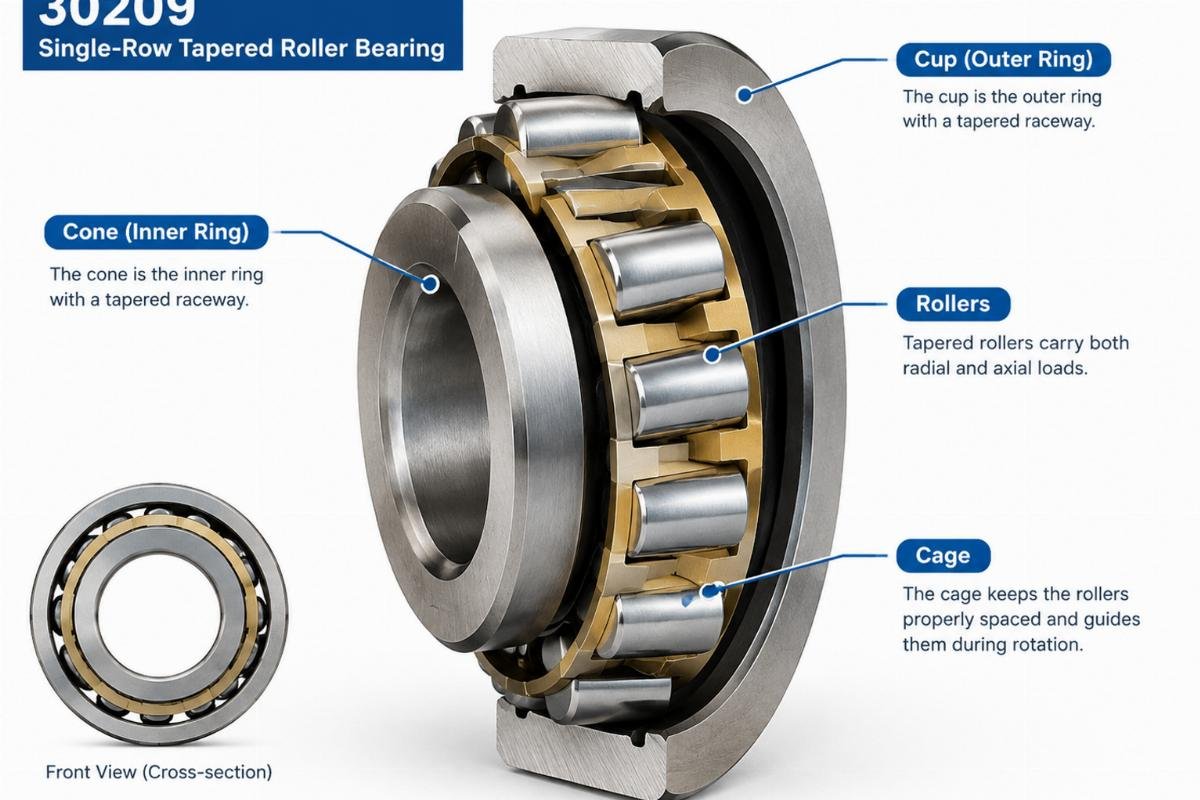
The 30209 is a single-row tapered roller bearing designed for combined radial and axial loads.
Understanding the baseline specifications is critical before evaluating any alternative. The 30209 belongs to the metric series of tapered roller bearings, featuring a cone (inner ring), cup (outer ring), tapered rollers, and a cage. Its primary function is to handle heavy radial loads while simultaneously supporting axial loads in one direction.
The basic dimensional specifications include the bore diameter (d), outside diameter (D), total width (T), and inner ring width (B). These values are standardized globally, meaning a 30209 from any manufacturer should fit the same housing and shaft. However, the load ratings—basic dynamic load rating (Cr) and basic static load rating (Cor)—can vary slightly between brands due to differences in material purity and manufacturing precision. [NEED_CITE: Manufacturer technical datasheets for load rating variations]
Structural features such as the contact angle determine how effectively the bearing distributes load. A steeper contact angle increases axial load capacity but may reduce radial capacity. This internal geometry is rarely visible from the outside but dictates the bearing’s lifespan in applications like gearboxes or conveyor systems. When sourcing from a 30209 bearing wholesale supplier for sale, always request the specific contact angle data if the application involves significant thrust loads.
How Do 30209 Equivalents Compare Across Top Brands?
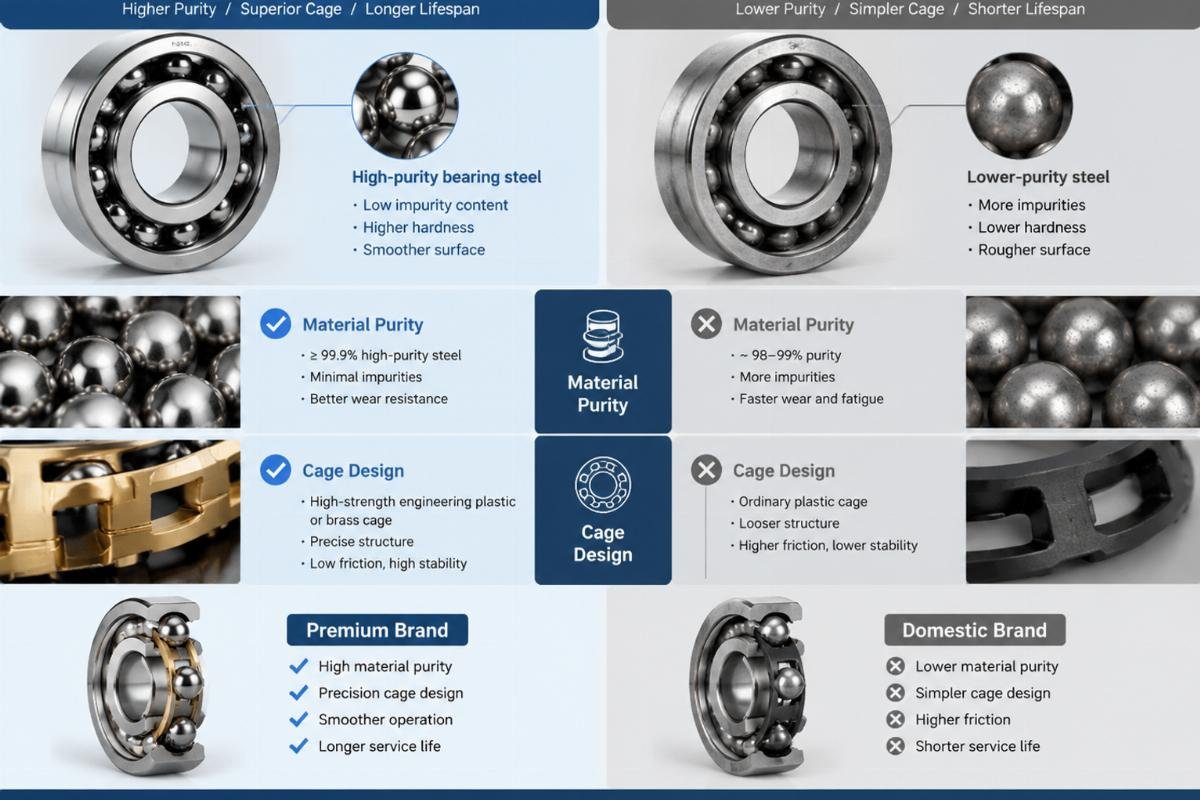
Performance differences lie in material consistency and cage design, not just brand names.
When comparing equivalents, a matrix approach helps clarify what you are paying for. Premium global brands often invest heavily in steel cleanliness and heat treatment processes, resulting in longer fatigue life. Domestic Chinese brands have improved significantly, offering reliable performance for standard applications at a more competitive cost. The key is matching the brand tier to the operational severity.
| Feature | Premium Global Brands (SKF, FAG, NSK) | Reliable Domestic Brands (ZWZ, HRB) |
|---|---|---|
| Material Purity | Controlled inclusion density | Standard industrial grade |
| Cage Design | Optimized for high-speed stability | Robust designs for general use |
| Precision Class | Consistent P0/P6 availability | Standard P0 widely available |
| Traceability | Full batch-level documentation | Sample-level or batch-level |
| Cost Position | Higher initial investment | Competitive pricing |
A European wind farm operator once mixed brands in a gearbox assembly without verifying the internal clearance class. The premium units ran smoothly, but the domestic equivalents caused noticeable vibration levels during continuous high-speed operation. The issue was not the steel quality but the mismatch in internal clearance tolerances. [NEED_CITE: Industry application guidelines for mixed-brand bearing installations]
Sourcing from a 30209 bearing wholesale supplier for sale who understands these nuances allows you to blend brands strategically. For non-critical positions, domestic brands offer excellent value. For high-shock or high-speed zones, premium brands provide the necessary reliability. The supplier’s role is to guide this selection based on technical data, not just price lists.
Why Dimensions Alone Fail in 30209 Replacement?
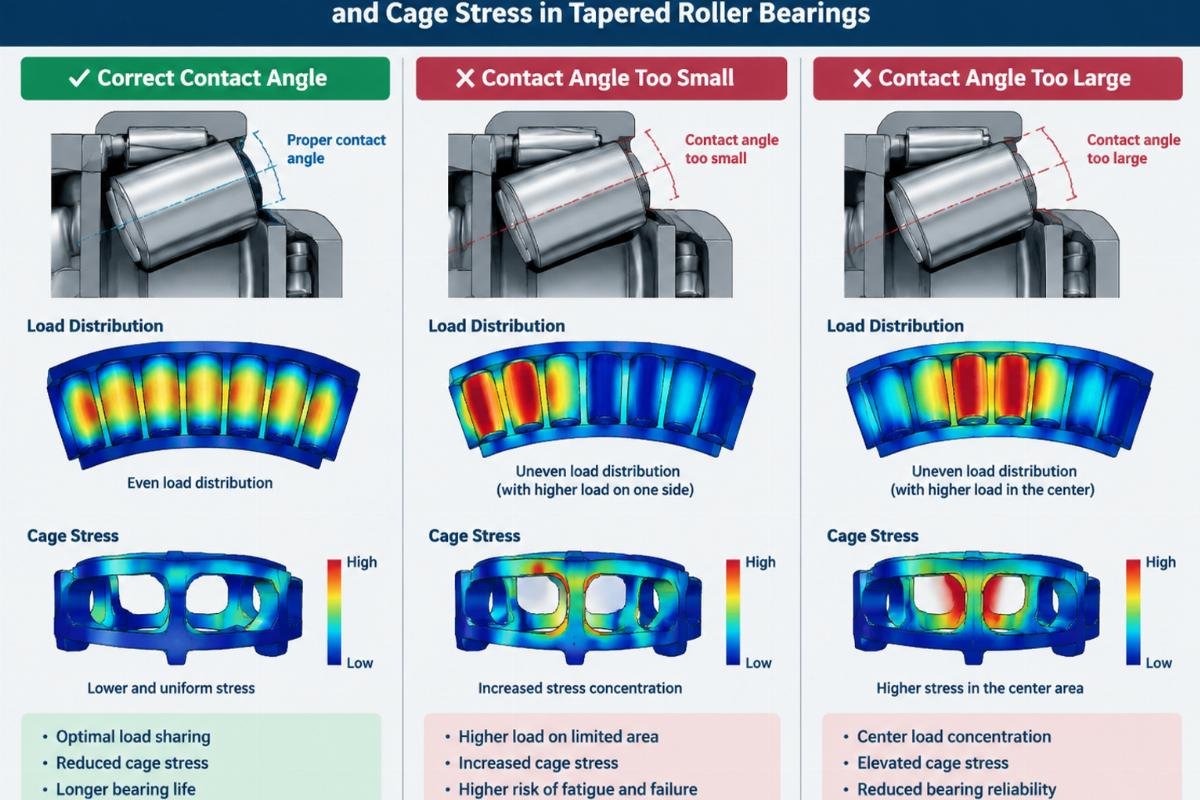
Mismatched contact angles and clearance cause rapid cage failure, even with perfect fit.
Many buyers assume that if the bearing fits the shaft and housing, it will work. This is a dangerous misconception. Tapered roller bearings rely on precise internal geometry to manage load distribution. If the contact angle of the replacement differs from the original, the load path shifts, causing edge loading on the rollers. This leads to premature spalling and cage fracture.
Axial clearance is another critical factor. Too tight, and the bearing overheats due to friction. Too loose, and it allows excessive movement, leading to vibration and impact damage. In a conveyor system replacement scenario, a site manager chose a cheaper equivalent based solely on dimensions. The lead time was short, but the dimensional tolerances were loose. The result was increased temperature rise and frequent maintenance stops. [NEED_CITE: Verification methods for internal clearance classes]
A qualified 30209 bearing wholesale supplier for sale will ask about your application conditions before quoting. They should verify whether you need standard clearance or a specific class like C3 for high-temperature environments. Without this verification, you are gambling with your equipment’s uptime. The cost of a failed bearing is far higher than the savings from a cheaper, unverified unit.
How to Verify Equivalents Before Procurement?
Request traceability docs and verify internal geometry to ensure reliability.
Before placing an order, implement a strict verification checklist. First, demand complete traceability documentation. This includes material certificates and inspection reports that confirm the bearing meets ISO dimension standards. Second, verify the internal geometry. Ask for the specific contact angle and clearance class. If the supplier cannot provide this data, they are likely trading generic stock without technical oversight.
Third, check the cage material and design. Steel cages are standard for heavy loads, but some equivalents may use polymer or brass cages unsuitable for high-temperature or high-shock applications. Fourth, review the packaging and marking. Genuine products have clear, laser-etched markings and robust packaging to prevent contamination during shipping.
A Middle East steel mill operator once received a batch of bearings with vague documentation. Upon inspection, the markings were poorly printed, and the cage material felt lighter than specified. Testing revealed substandard hardness levels. By rejecting the batch and switching to a supplier who provided full traceability, they avoided a potential catastrophic failure in their rolling mill. [NEED_CITE: ISO dimension standards for bearing marking and packaging]
Working with a 30209 bearing wholesale supplier for sale who prioritizes transparency simplifies this process. They should offer technical consultation to cross-reference equivalents accurately. This ensures that every unit you receive matches the technical requirements of your machinery, not just its physical dimensions.

Conclusion
Verify internal geometry, not just dimensions, to prevent premature failure.
Selecting the right 30209 equivalent demands attention to contact angles and axial clearance. Relying solely on external dimensions risks costly downtime and equipment damage. Partner with a supplier who provides traceable documentation and technical guidance to ensure your bearings perform reliably in demanding conditions.

Written by
authorEditor covering global sourcing, supplier verification, and industrial product knowledge. Content is compiled from manufacturer specifications, industry standards, and hands-on experience with international B2B buyers. Every article is fact-checked before publishing to help procurement professionals make informed decisions.
View all posts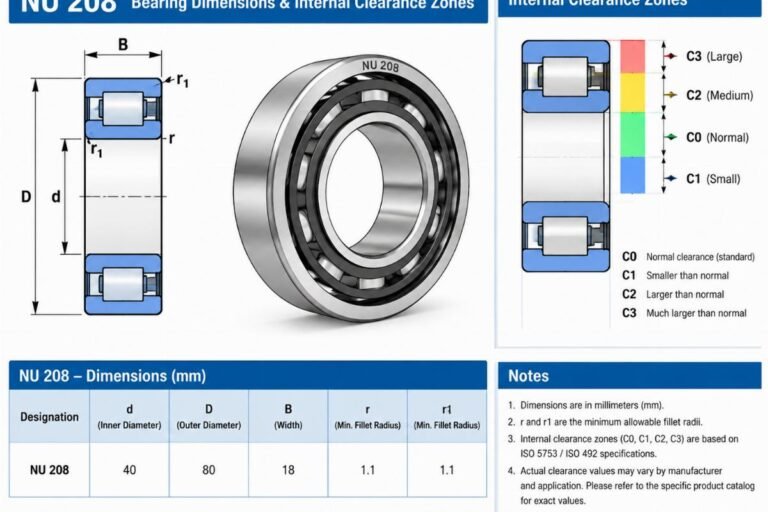
Leave a Reply