32209 Bearing Specs & Equivalents: Wholesale Supplier
Identical dimensions do not guarantee interchangeability.
The 32209 bearing specs and equivalents require strict verification of internal clearance suffixes and roller profile modifications, not just outer diameter and width measurements. Substituting a standard clearance unit for a C3 variant in high-thermal environments leads to immediate seizure, while ignoring convexity differences causes premature edge stress failures in heavy-load applications.
Standing in the humid maintenance bay of a cement plant in Southeast Asia, the heat radiating from the kiln support roller was palpable. The local procurement team had sourced a batch of replacements that matched the catalog dimensions perfectly. Yet, within weeks, the bearing cages shattered. The issue was not the steel quality or the basic size, but the omission of the C3 clearance specification required for thermal expansion compensation. This recurring scenario highlights why understanding the full 32209 bearing specs and equivalents is critical for avoiding costly downtime. [NEED_CITE: ISO standards for radial internal clearance in tapered roller bearings]
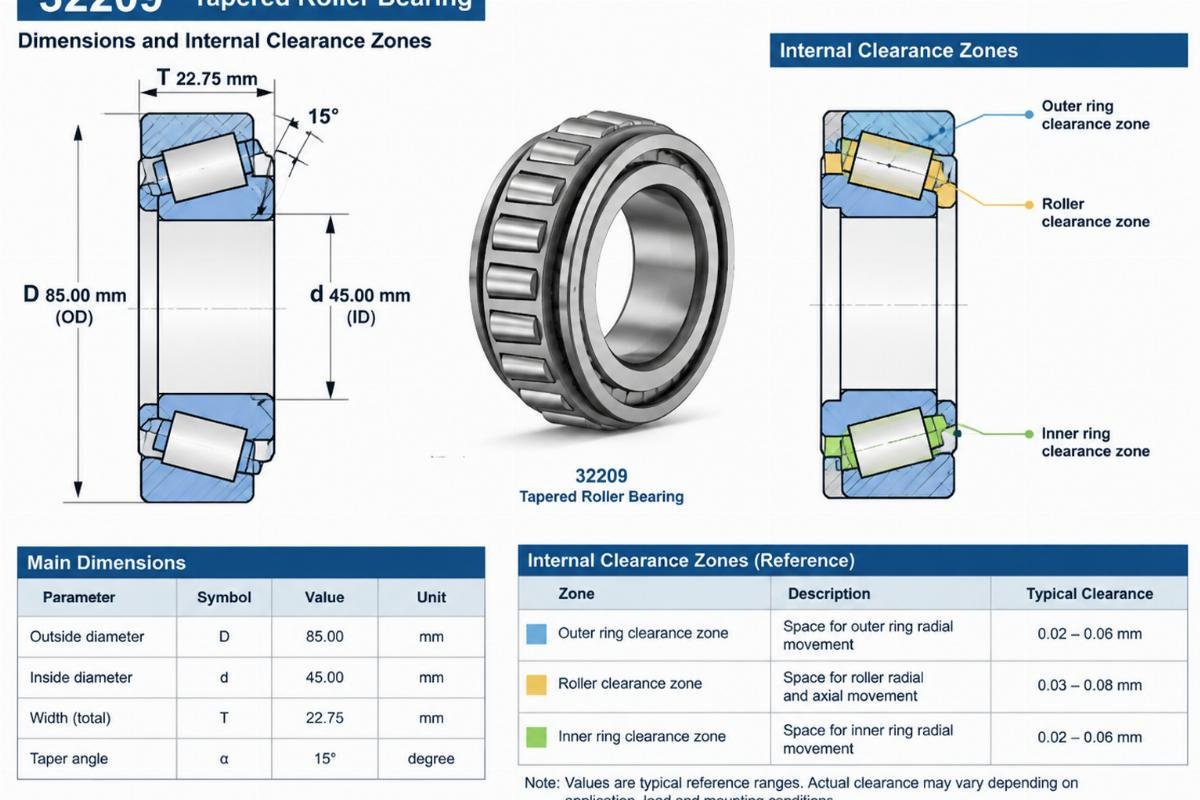
Procurement professionals often assume that any brand offering a 45x85x24.75mm unit is a viable drop-in replacement. This assumption ignores the nuanced engineering behind load distribution and thermal management. A thorough cross-reference must account for tolerance classes and internal geometry, ensuring that the selected equivalent maintains the operational integrity of the original design.
What Are the Core Specs of a 32209 Tapered Roller Bearing?
Basic dimensions are only the starting point for valid substitution.
The 32209 tapered roller bearing features a bore diameter of 45 mm, an outside diameter of 85 mm, and a total width of 24.75 mm. These physical parameters define the mounting space, but they do not dictate performance under load. The dynamic and static load ratings determine the bearing’s capacity to withstand radial and axial forces, which vary significantly between manufacturers due to differences in roller count and contact angle optimization. [NEED_CITE: General engineering principles of tapered roller bearing load ratings]
When evaluating 32209 bearing specs and equivalents, it is essential to look beyond the envelope dimensions. The internal construction, including the number of rollers and the cage material, influences friction levels and speed capabilities. Standard industrial applications typically utilize stamped steel cages, while high-performance variants may employ machined brass or polymer cages for improved lubrication retention and reduced weight.
| Specification Parameter | Standard Value / Description | Verification Requirement |
|---|---|---|
| Bore Diameter | 45 mm | Must match shaft tolerance exactly |
| Outside Diameter | 85 mm | Must match housing bore tolerance |
| Total Width | 24.75 mm | Critical for axial positioning |
| Clearance Class | Standard (CN) or C3 | Must match application thermal needs |
| Precision Grade | Normal (P0/PN) | Sufficient for most industrial uses |
A mismatch in any of these core specs can lead to improper fitment. For instance, a slightly wider equivalent might prevent proper preload adjustment in a paired arrangement, leading to slippage or excessive heat generation. Therefore, verifying the complete dimensional profile against the original equipment manufacturer’s drawings is a non-negotiable step in the sourcing process.
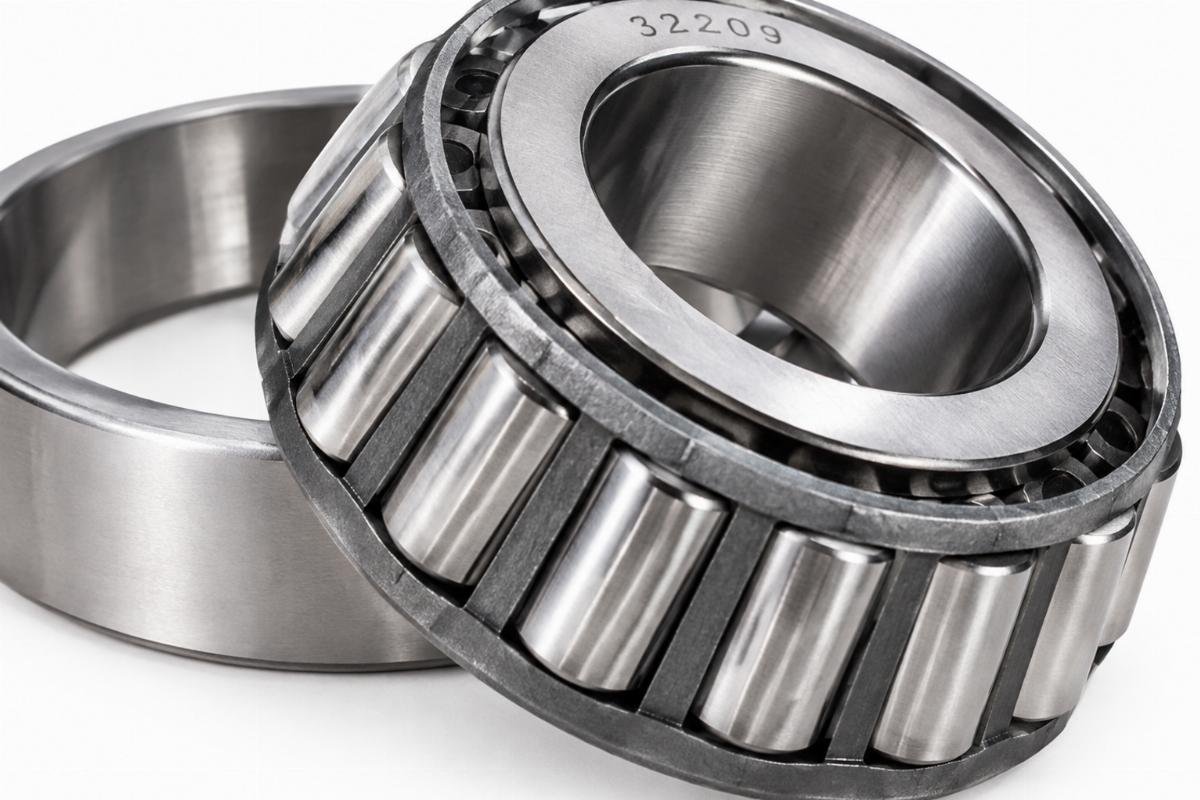
Understanding these baseline specifications allows buyers to filter out incompatible options early. However, dimensionally correct units can still fail if the internal clearance does not align with the operating environment. This leads to the critical distinction between standard and modified clearance variants.
Why Does the C3 Clearance Suffix Matter in Equivalents?
Thermal expansion dictates the necessary internal gap.
In applications involving significant heat generation, such as kilns, crushers, or gearboxes operating under heavy loads, standard internal clearance is often insufficient. As the bearing components heat up, the inner ring expands more than the outer ring due to its direct connection to the rotating shaft. This differential expansion reduces the internal clearance, potentially leading to negative clearance and catastrophic seizure. [NEED_CITE: Thermal expansion effects on bearing internal clearance]
The C3 clearance designation indicates a radial internal clearance greater than the normal standard. When searching for 32209 bearing specs and equivalents, identifying whether the original application requires C3 is vital. Substituting a standard clearance bearing in a C3-specified position removes the necessary safety margin for thermal growth. Conversely, using a C3 bearing in a precision, low-temperature application may result in excessive vibration and noise due to too much play.
The difference in clearance values is measured in microns, but the operational impact is substantial. A C3 variant provides a larger initial gap between the rollers and raceways, accommodating the expansion without inducing preload. This is particularly relevant in industries like mining and metallurgy, where ambient temperatures and operational loads fluctuate widely.
| Clearance Type | Application Context | Risk of Mismatch |
|---|---|---|
| Standard (CN) | Normal temperature, moderate load | Seizure if used in high-heat C3 spots |
| C3 | High temperature, heavy load | Vibration if used in precision low-heat spots |
| C4 | Extreme temperature variations | Premature wear if misapplied |
Selecting the wrong clearance class is a common error in emergency replacements. Maintenance teams often grab the nearest available box without checking the suffix. This oversight can turn a minor maintenance task into a major repair project. Ensuring that the 32209 tapered roller bearing dimensions include the correct clearance suffix prevents these avoidable failures.

The importance of clearance extends to the longevity of the lubricant film. Proper clearance ensures that oil or grease can effectively separate the rolling elements from the raceways, reducing friction and wear. Ignoring this parameter compromises the entire lubrication strategy, regardless of the lubricant quality.
How to Cross-Reference 32209 Across Major Brands?
Brand-specific suffixes encode critical design differences.
Cross-referencing bearings across different manufacturers requires more than matching part numbers. Each brand uses unique suffix systems to denote internal design, cage type, and tolerance class. For example, a 32209 from one manufacturer may have a different roller profile or cage material than the same part number from another. Understanding these nuances is key to finding true 32209 bearing cross reference matches. [NEED_CITE: Manufacturer catalog guidelines for bearing suffix interpretation]
Major global brands like SKF, NSK, TIMKEN, and FAG produce 32209 units, but their internal geometries may differ. Some brands optimize the roller convexity to reduce edge stress, while others focus on cage stability for high-speed applications. When substituting brands, it is crucial to verify that the equivalent offers comparable performance characteristics, not just similar dimensions.
| Brand | Typical Suffix for C3 | Cage Material Standard | Notes on Equivalence |
|---|---|---|---|
| SKF | C3 | Stamped Steel | Widely available, standard profile |
| NSK | C3 | Stamped Steel | High precision, consistent quality |
| TIMKEN | C3 | Stamped Steel | Robust design, heavy-duty focus |
| FAG | C3 | Stamped Steel | German engineering, tight tolerances |
| Domestic Premium | C3 | Stamped Steel | Cost-effective, verify traceability |
The table above provides a general overview, but specific series within each brand may have variations. For instance, some premium lines offer enhanced surface finishes or specialized heat treatments that improve fatigue life. When sourcing 32209 bearing specs and equivalents, buyers should request technical datasheets to compare these detailed parameters.
A common pitfall is assuming that all “C3” bearings are identical. While the clearance range is standardized by ISO, the manufacturing tolerances and quality control processes vary. A lower-tier equivalent might meet the minimum C3 requirement but lack the consistency needed for critical applications. This is where supplier expertise becomes valuable, ensuring that the selected alternative meets the necessary quality benchmarks.

Reliable cross-referencing also involves checking the availability of documentation. Genuine products come with certificates of conformity and traceability codes. Counterfeit or substandard units often lack this paperwork, making it difficult to verify their specifications. Ensuring that the 32209 bearing cross reference includes verified documentation protects against the risk of receiving inferior components.
What Happens When You Choose the Wrong Equivalent?
Mismatched tolerances lead to predictable failure modes.
Selecting an incorrect equivalent based solely on dimensions invites specific types of mechanical failure. Two primary failure modes dominate when clearance or profile mismatches occur: cage fragmentation due to thermal seizure and raceway spalling due to edge stress. Understanding these mechanisms helps in diagnosing past failures and preventing future ones. [NEED_CITE: ISO 15243 classification of bearing failure modes]
In the case of the cement plant mentioned earlier, the use of a standard clearance bearing in a C3 application led to thermal expansion closing the internal gap. The resulting preload caused excessive friction, heating the bearing further until the cage material could no longer withstand the stress. The cage fragmented, sending debris into the rolling elements and causing rapid destruction of the raceways. This type of failure is sudden and often results in secondary damage to the shaft and housing.
Another common issue arises from differences in roller convexity. Tapered roller bearings are designed with a slight crown on the rollers to distribute load evenly. If an equivalent has a flatter profile, the load concentrates at the edges of the contact zone. This edge stress leads to premature spalling and pitting, significantly reducing the bearing’s service life. In a mining crusher application, such a mismatch can cut the expected lifespan by a noticeable margin, leading to frequent unplanned stops.
| Failure Mode | Root Cause | Visual Indicator |
|---|---|---|
| Cage Fragmentation | Thermal seizure (Wrong Clearance) | Broken cage pieces, blue discoloration |
| Edge Spalling | Profile mismatch (Wrong Convexity) | Pitting at roller/raceway edges |
| Smearing | Lubrication failure due to excessive play | Metallic transfer on raceways |
These failures are not merely inconvenient; they are expensive. The cost of the bearing itself is negligible compared to the downtime and labor required for replacement. In heavy industry, a single hour of unplanned downtime can cost thousands of dollars. Therefore, the risk of choosing the wrong 32209 bearing specs and equivalents far outweighs the potential savings from a cheaper, unverified source.

Preventing these failures requires a disciplined approach to selection. It involves verifying not just the part number, but the suffixes, the manufacturer’s reputation, and the supply chain’s integrity. By focusing on these details, buyers can ensure that their equivalents perform as reliably as the original components.
Conclusion
Precision in specification prevents operational disaster.
The 32209 bearing specs and equivalents demand attention to clearance classes and internal geometry, not just external dimensions. Misinterpreting these details leads to thermal seizure or edge stress failures, costing far more than the component itself. Reliable sourcing requires verifying technical data and ensuring traceability to maintain equipment integrity.

Written by
authorEditor covering global sourcing, supplier verification, and industrial product knowledge. Content is compiled from manufacturer specifications, industry standards, and hands-on experience with international B2B buyers. Every article is fact-checked before publishing to help procurement professionals make informed decisions.
View all posts

Leave a Reply