Conveyor Idler Bearing Equivalents by Belt Width Wholesale Supplier
Matching dimensions is not enough when belt width increases.
Selecting conveyor idler bearing equivalents by belt width requires recalculating dynamic load capacity and adjusting internal clearance to match the higher radial loads and thermal expansion of wider belts, rather than simply copying old part numbers.
I still remember the dust choking the air at a cement plant in Saudi Arabia. The maintenance manager handed me a worn-out 6308 deep-groove ball bearing, pointing to a conveyor that had recently been upgraded with a wider belt. He expected a direct replacement. I knew better. The original design calculations were based on a narrower belt, but the new configuration carried significantly more material weight. The standard bearing failed within weeks because it could not handle the increased radial load and the resulting heat buildup. This incident reinforced a critical lesson: selecting Conveyor Idler Bearing Equivalents by Belt Width demands a holistic view of operating conditions, not just dimensional matching. [NEED_CITE: relationship between belt width and radial load distribution per CEMA guidelines]

When distributors or MRO managers request equivalents, they often focus on the outer diameter and bore size. However, the belt width directly influences the magnitude of force acting on the roller shell and subsequently on the bearing seats. Ignoring this scaling effect leads to premature fatigue and catastrophic failure.
Why Do Standard Equivalents Fail on Wider Belts?
Wider belts generate radial loads that exceed the design limits of original narrow-belt bearings.
The primary reason standard equivalents fail is that engineers often overlook the direct correlation between belt width and operational stress. A wider belt carries more bulk material, which increases the total weight supported by each idler station. If the bearing selection remains static while the load increases, the dynamic load rating becomes insufficient. [NEED_CITE: ISO standard methods for calculating equivalent dynamic bearing load]
In my experience sourcing for Middle Eastern projects, I have seen numerous cases where a simple dimension-for-dimension swap resulted in rapid overheating. The original deep-groove ball bearings were designed for a specific load range. When the belt width expanded, the radial force surged, causing the rolling elements to deform the raceways. This micro-deformation generates heat, which thins the lubricant film, leading to metal-to-metal contact and eventual seizure.
Consider a scenario in an aggregate processing plant. The operator upgraded the conveyor to handle higher throughput, widening the belt by several inches. They continued using the same bearing series as before. Within months, the failure rate spiked. The issue was not the quality of the bearing but its inability to cope with the scaled-up mechanical stress. Selecting Conveyor Idler Bearing Equivalents by Belt Width means recognizing that the load capacity must scale proportionally with the belt’s carrying capacity.
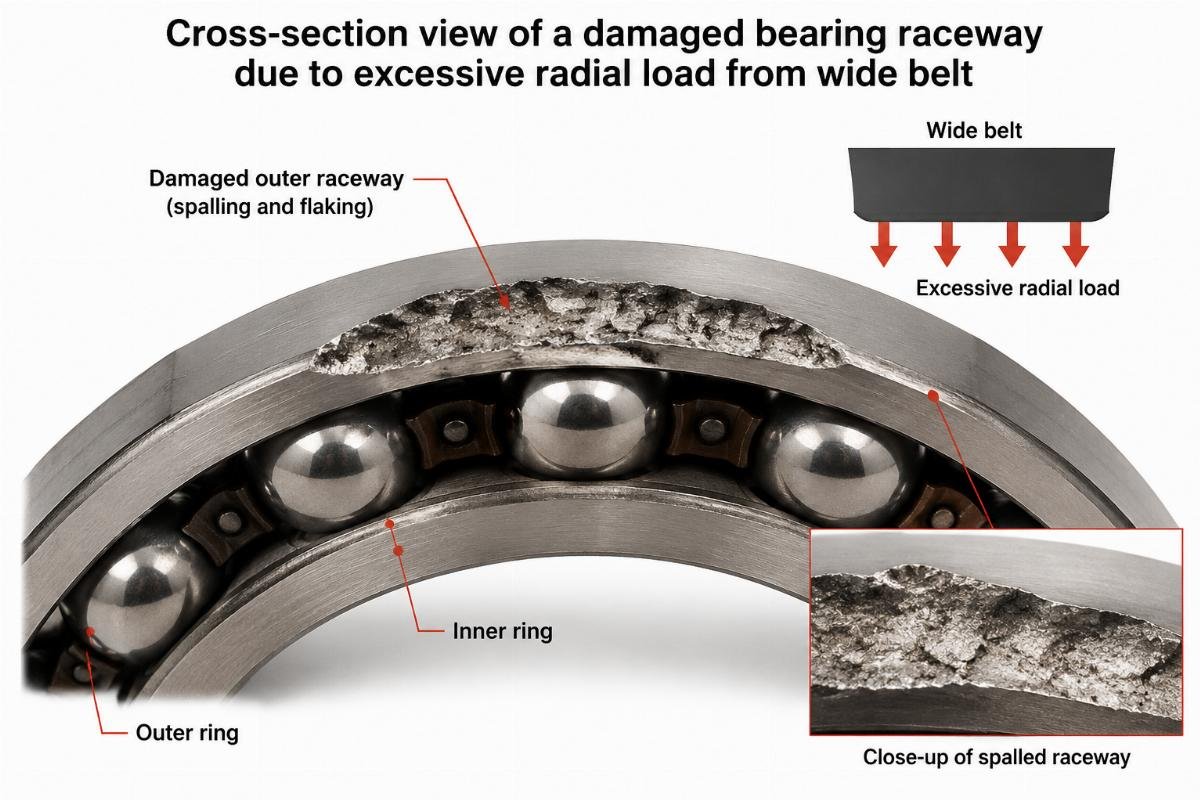
Furthermore, wider belts often run at higher tensions to prevent sagging under heavier loads. This tension translates into additional axial and radial forces on the idlers. Standard equivalents that do not account for these combined loads will suffer from brinelling and spalling much faster than anticipated. The solution lies in upgrading the bearing type or series to one with a higher dynamic load rating, ensuring it can withstand the new operational realities.
How to Calculate Load Requirements for Belt Width Upgrades?
Dynamic load ratings must be recalculated based on the new belt configuration, not just matched by physical size.
To select the correct equivalent, one must first determine the actual load acting on the idler. This involves analyzing the belt width, material density, and conveyor speed. The dynamic load rating (C) of the bearing must exceed the calculated equivalent dynamic load (P) by a sufficient safety margin. [NEED_CITE: formula for equivalent dynamic bearing load in conveyor applications]
When I consult with OEM engineers or regional distributors, I emphasize the importance of verifying the load capacity against the specific belt width. A common mistake is assuming that a bearing with the same dimensions has the same performance capability across different applications. In reality, the load distribution changes significantly with belt width. For instance, a wider belt distributes weight over a longer roller, but the total force on the bearing supports increases.
| Factor | Narrow Belt Configuration | Wide Belt Configuration | Impact on Bearing Selection |
|---|---|---|---|
| Radial Load | Low to Moderate | High | Requires higher dynamic load rating |
| Thermal Generation | Minimal | Significant | Needs enhanced heat dissipation or clearance |
| Misalignment Risk | Lower | Higher | Benefits from self-aligning features |
| Lubrication Stress | Standard | Elevated | Demands robust sealing and grease stability |
This table illustrates why a direct swap is risky. The wide belt configuration imposes higher radial loads and greater thermal stress. Therefore, when searching for Conveyor Idler Bearing Equivalents by Belt Width, the selected bearing must have a dynamic load rating that accommodates these increased forces. Simply matching the bore and outer diameter ignores the core mechanical challenge.
In practice, this means moving from a standard deep-groove ball bearing to a spherical roller bearing or a cylindrical roller bearing with a higher load capacity. These types can handle the heavier loads associated with wider belts more effectively. Additionally, the calculation should include factors for shock loading, which is common in mining and quarrying operations where material drop height varies.

By recalculating the load requirements, buyers can avoid the trap of under-specifying bearings. This approach ensures that the equivalent bearing not only fits physically but also performs reliably under the new operational conditions. It transforms the selection process from a guesswork exercise into a data-driven decision.
Which Bearing Types Serve as Best Equivalents for Heavy Loads?
Upgrading from deep-groove ball bearings to spherical roller bearings handles misalignment and shock loads inherent in wide belt systems.
When belt width increases, the likelihood of misalignment and shock loading also rises. Deep-groove ball bearings, while cost-effective, have limited ability to accommodate shaft deflection or housing misalignment. In contrast, spherical roller bearings are designed to self-align, making them ideal for heavy-load applications where perfect alignment is difficult to maintain. [NEED_CITE: advantages of spherical roller bearings in misaligned conditions per ISO standards]
I recall a project involving a mining feeder in Africa. The client was experiencing frequent bearing failures due to the high impact loads from large rocks. The original equipment used deep-groove ball bearings. After analyzing the situation, we recommended switching to spherical roller bearings as the equivalent. These bearings could absorb the shock loads and adjust to minor misalignments caused by the heavy material flow. The result was a dramatic extension in service life.
For Conveyor Idler Bearing Equivalents by Belt Width, spherical roller bearings offer a robust solution. They provide higher load-carrying capacity and better resistance to fatigue. Additionally, their design allows for some axial displacement, which is beneficial in long conveyors where thermal expansion of the shaft can occur.
Another option is the cylindrical roller bearing, which offers high radial load capacity but requires precise alignment. If the conveyor structure is rigid and well-maintained, cylindrical rollers can be an excellent choice. However, in harsh environments like mining or cement production, where vibration and misalignment are common, spherical rollers are generally preferred.

When sourcing these equivalents, it is crucial to ensure genuine quality. Counterfeit or low-quality bearings may claim to meet specifications but fail under heavy loads. Working with a supplier who provides traceable documentation and genuine products from reputable brands like SKF, FAG, or ZWZ ensures reliability. This verification step is vital for maintaining operational continuity and avoiding costly downtime.
How Does Internal Clearance Affect High-Temperature Performance?
Selecting C3 or C4 clearance prevents thermal expansion-induced jamming in harsh, high-load environments.
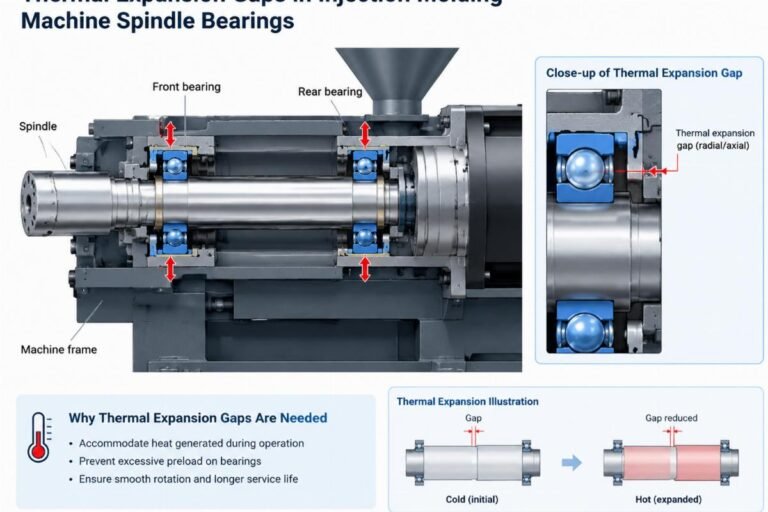
Internal clearance is a critical parameter often overlooked when selecting equivalents. As bearings operate under heavy loads, they generate heat. This heat causes the inner ring, outer ring, and rolling elements to expand. If the internal clearance is too tight, this thermal expansion can lead to preload, increasing friction and temperature further, eventually causing seizure. [NEED_CITE: effect of internal clearance on bearing operating temperature]
In hot climates like the Middle East, or in industries like steel and cement where ambient temperatures are high, standard clearance (C2 or Normal) is often insufficient. I always advise clients to opt for C3 or even C4 clearance for idler bearings in these conditions. This extra space allows for thermal expansion without creating excessive preload.
A case in point involved a steel mill in Southeast Asia. The conveyor system operated in a high-temperature environment, and the bearings were failing prematurely due to overheating. Upon inspection, we found that the bearings had zero clearance due to thermal expansion. By switching to equivalents with C3 clearance, we allowed the necessary room for expansion, stabilizing the operating temperature and extending the bearing life significantly.
When evaluating Conveyor Idler Bearing Equivalents by Belt Width, the clearance selection must align with the operating temperature and load conditions. Wider belts generate more heat due to higher friction and load. Therefore, the equivalent bearing should have sufficient internal clearance to accommodate this thermal growth.
| Clearance Class | Typical Application | Suitability for Wide Belt/High Load |
|---|---|---|
| C2 (Tight) | Precision instruments, low noise | Poor – Risk of seizure under heat |
| Normal (CN) | General industrial use | Moderate – May be insufficient for heavy loads |
| C3 (Loose) | High temperature, heavy load | Good – Accommodates thermal expansion |
| C4 (Extra Loose) | Very high temperature, severe misalignment | Excellent – Maximum tolerance for expansion |
This qualitative comparison highlights why C3 or C4 clearance is often the better choice for wide belt applications. It ensures that the bearing can operate smoothly despite the thermal stresses induced by higher loads. Ignoring this aspect can negate the benefits of upgrading to a higher load-capacity bearing type.

Proper clearance selection also affects lubrication effectiveness. Excessive preload can squeeze out the lubricant film, leading to metal-to-metal contact. By choosing the right clearance, you ensure that the lubricant remains effective, reducing wear and extending the service interval. This is particularly important for remote sites where maintenance access is limited.
Conclusion
Belt width dictates load, not just dimensions.
Selecting the right equivalent requires matching dynamic load capacity and internal clearance to the specific demands of wider belts. Ignoring these factors leads to premature failure, while proper selection ensures reliability and longevity in demanding industrial environments.

Written by
authorEditor covering global sourcing, supplier verification, and industrial product knowledge. Content is compiled from manufacturer specifications, industry standards, and hands-on experience with international B2B buyers. Every article is fact-checked before publishing to help procurement professionals make informed decisions.
View all posts

Leave a Reply