HK 2016 Needle Bearing Equivalents Wholesale Supplier
Identical outer dimensions do not guarantee identical performance in drawn cup needle roller bearings.
If you are sourcing replacements for the INA HK 2016, the direct equivalents from major manufacturers such as SKF, FAG, NTN, and NSK share the same critical boundary dimensions of 20 mm bore, 24 mm outside diameter, and 16 mm width. However, a true functional equivalent requires matching the stamped outer cup wall thickness, chamfer geometry, and radial internal clearance to the original equipment manufacturer specifications. Simply matching the bore and OD is insufficient for heavy-load or high-temperature applications where slight deviations in cup rigidity can lead to premature cage failure.
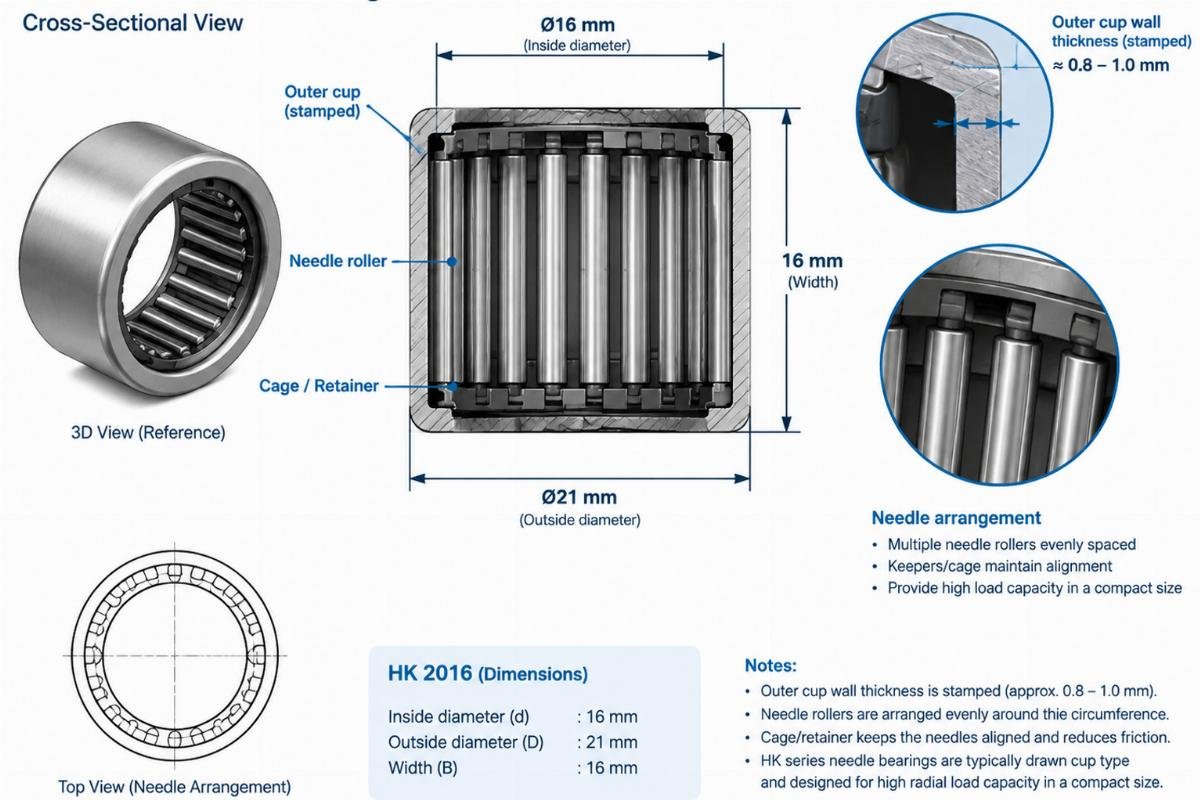
Having spent years on the shop floor in Suzhou grinding bearing rings before moving into international trade, I learned that dimensional conformity is only the baseline. The real challenge lies in the invisible tolerances. A client in Indonesia once requested a substitute for an INA HK 2532 based solely on a dimensional drawing. The local alternative matched the outer measurements perfectly but failed within weeks due to a minor discrepancy in the outer cup wall thickness and incorrect radial clearance. This experience ingrained a rigorous approach to verifying HK 2016 needle bearing equivalents beyond simple catalog matching. [NEED_CITE: ISO standards for drawn cup needle roller bearing dimensional tolerances]
What Are the Direct Equivalents for HK 2016 Needle Bearings?
Major global bearing brands produce direct interchangeables for the HK 2016 series, but availability and specific suffixes vary by region and supply chain tier.
The HK 2016 designation follows the standard naming convention for drawn cup needle roller bearings with a closed end. When sourcing HK 2016 needle bearing equivalents, you will encounter part numbers from leading manufacturers that are functionally interchangeable in most general industrial applications. Below is a comparison of common brand mappings for this specific size class.
| Brand | Typical Part Number | Cup Type | Availability Status |
|---|---|---|---|
| INA / FAG | HK 2016 | Drawn Cup | Widely Available |
| SKF | HK 2016 | Drawn Cup | Widely Available |
| NSK | B 2016 | Drawn Cup | Common Stock |
| NTN | HK 2016 | Drawn Cup | Regional Variance |
| IKO | HK 2016 | Drawn Cup | Specialized Stock |
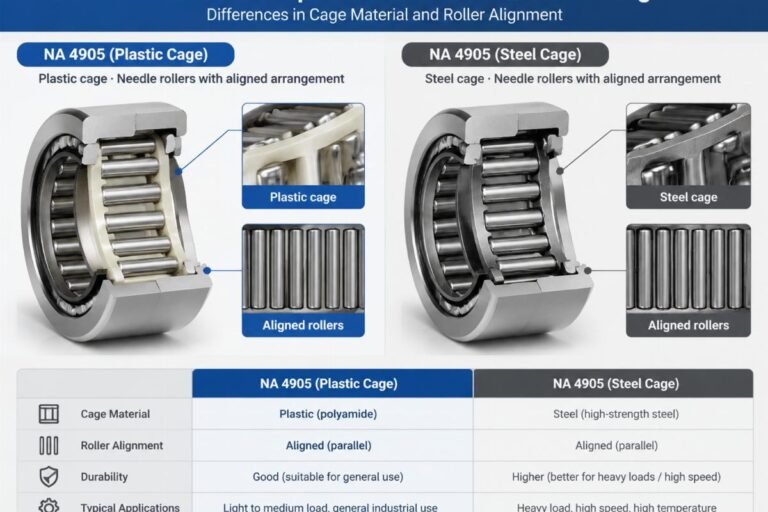
Note that while the base number remains consistent, suffixes indicating cage material, lubrication type, or precision class may differ. For instance, some manufacturers offer versions with polyamide cages for higher speed limits, while standard versions use stamped steel cages. [NEED_CITE: Manufacturer catalog data for needle roller bearing cage materials]
A distributor in Southeast Asia recently faced stockouts of the original German-branded HK 2016 units for agricultural machinery maintenance. By switching to a verified equivalent from a Japanese brand with matching radial clearance C0, they maintained operational continuity without compromising service life. The key was ensuring the substitute supplier provided traceability documentation confirming the material grade of the outer cup.
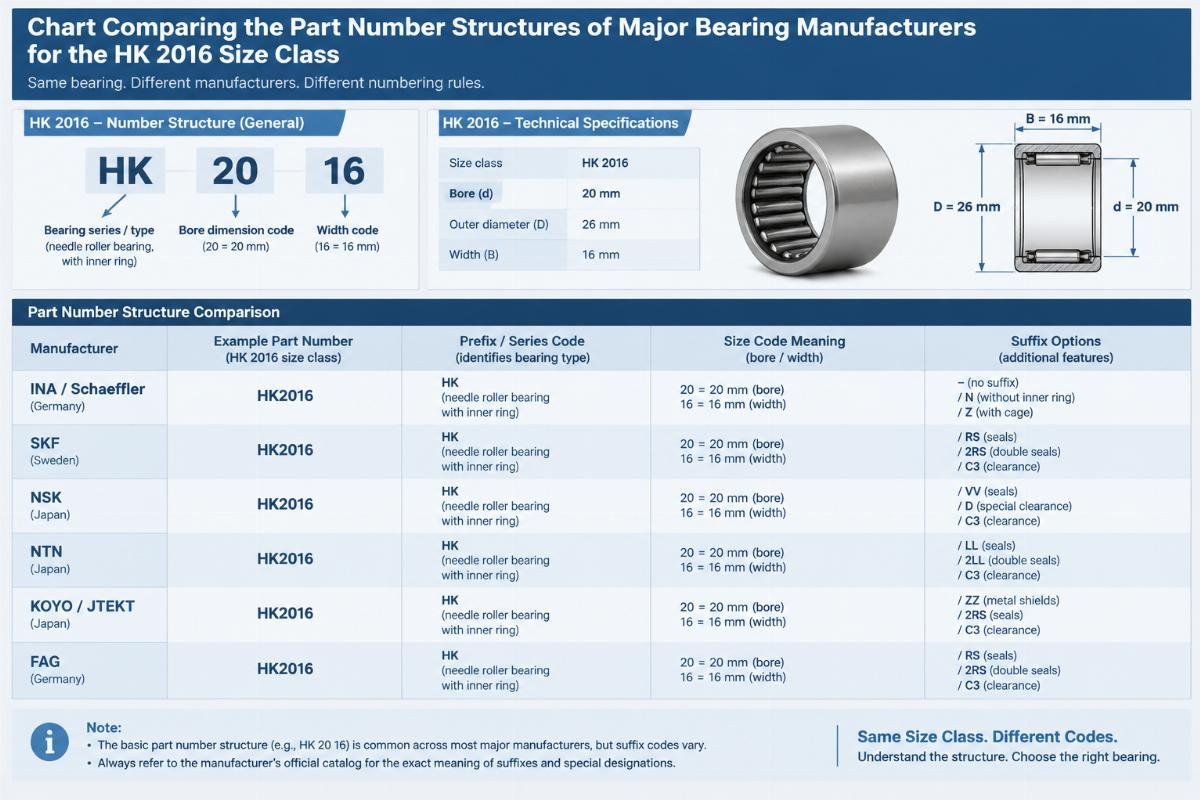
When evaluating HK 2016 needle bearing equivalents, it is crucial to request the full technical datasheet rather than relying on the part number alone. Differences in lubricant viscosity or cage design can significantly impact performance in specific environments. Our inventory includes genuine products from these mainstream brands, allowing for mixed-brand consolidation that meets diverse regional requirements.
Why Do “Same-Size” HK 2016 Substitutes Fail Prematurely?
Premature failure in substituted needle bearings is often caused by mismatches in outer cup wall thickness and radial internal clearance rather than dimensional errors.
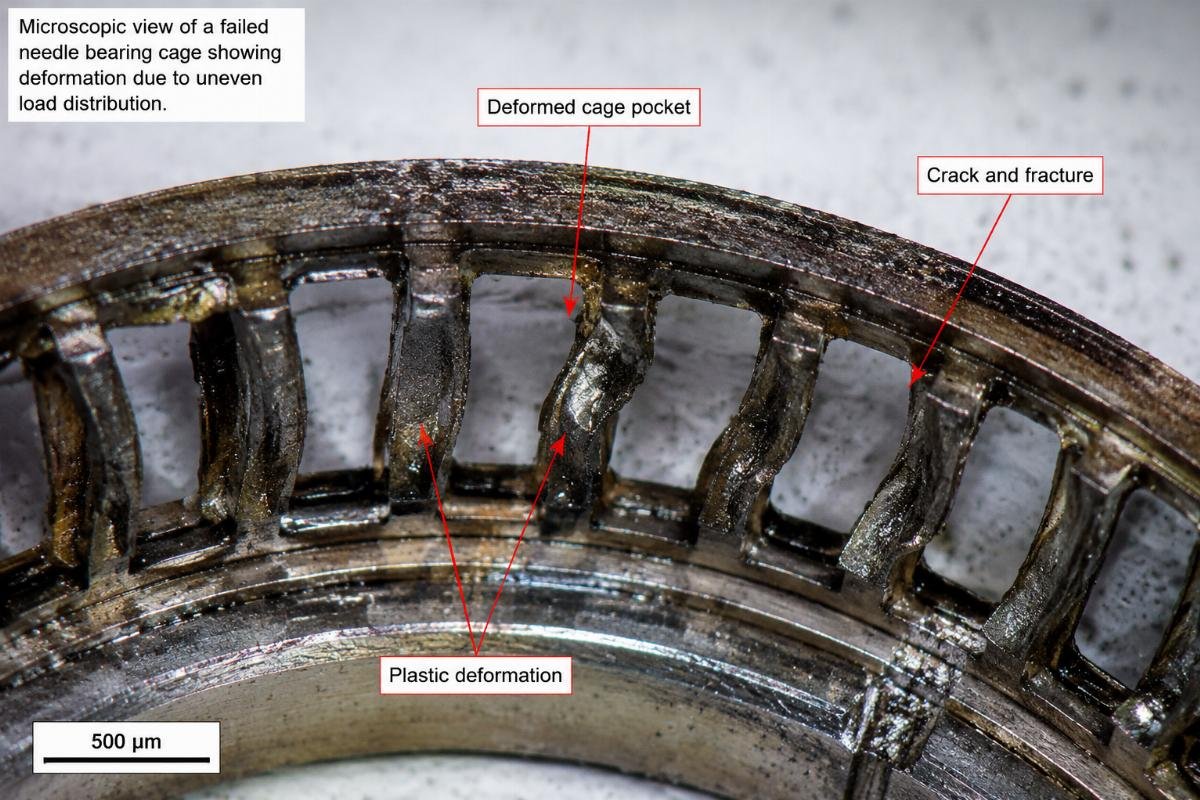
Many buyers assume that if the bore, outside diameter, and width match, the bearing will perform identically. This is a dangerous misconception for drawn cup bearings like the HK 2016. The outer cup is formed by stamping, and its rigidity depends heavily on the wall thickness and the material’s yield strength. A thinner cup may deform under heavy radial loads, altering the raceway geometry and causing uneven load distribution among the needles. [NEED_CITE: Mechanical engineering principles of stamped component rigidity under load]
Consider a case involving a mining equipment operator in Latin America. They replaced worn HK 2016 bearings with a lower-cost alternative that matched all external dimensions. Within months, the bearings exhibited severe noise and vibration. Upon inspection, it was revealed that the substitute’s outer cup had a wall thickness at the lower limit of the tolerance range, while the original was at the upper limit. Under the heavy shock loads typical of crushing equipment, the thinner cup deformed slightly, leading to edge loading on the needles and subsequent cage fracture.
Another critical factor is radial internal clearance. Standard HK 2016 bearings typically come with normal radial clearance (C0). However, operating temperatures vary widely across different industries. In a high-temperature environment, such as a steel mill conveyor, a bearing with standard clearance may expand enough to eliminate the internal gap, causing the needles to bind. Conversely, in cold climates, excessive clearance can lead to impact loading. [NEED_CITE: Thermal expansion coefficients of bearing steel and housing materials]
To avoid these issues, always verify the radial clearance group when selecting HK 2016 needle bearing equivalents. If the application involves significant temperature fluctuations or heavy shocks, consider specifying a bearing with a controlled tolerance range or a heavier-duty cup design. Our technical team assists clients in analyzing these operational parameters to ensure the selected equivalent matches the original performance criteria.
How to Verify the Quality of HK 2016 Alternatives Before Bulk Ordering?
Implementing a three-step verification process involving wall thickness measurement, radial clearance checking, and cage material inspection ensures the quality of substitute bearings.
Before committing to a large order of HK 2016 needle bearing equivalents, it is essential to conduct physical inspections on sample units. Relying solely on certificates of conformity is insufficient, as batch-to-batch variations can occur. The following steps provide a practical framework for quality assurance.
- Measure Outer Cup Wall Thickness: Use a micrometer to measure the wall thickness of the stamped outer cup at multiple points. Compare these measurements against the original bearing or the manufacturer’s specification sheet. Consistency in wall thickness indicates precise stamping processes and adequate material volume for load support. [NEED_CITE: Standard testing methods for bearing component dimensions]
- Check Radial Internal Clearance: Utilize a feeler gauge or a dedicated clearance measuring device to determine the radial play between the needles and the raceways. Ensure the measured clearance falls within the specified group (e.g., C0, C2, or C3) for your application. Significant deviation suggests poor manufacturing control or incorrect assembly.
- Inspect Cage Material and Construction: Examine the cage for signs of brittleness or poor finishing. Stamped steel cages should have smooth edges and uniform thickness. If the application involves high speeds or corrosive environments, verify if a polyamide or stainless steel cage is required. A simple hardness test can help distinguish between different steel grades used in cage production.
A European wind farm operator implemented this verification protocol after experiencing inconsistent performance from various suppliers. By rejecting batches that failed the wall thickness consistency check, they reduced unplanned downtime significantly. The initial investment in inspection equipment paid off through improved reliability and longer service intervals.
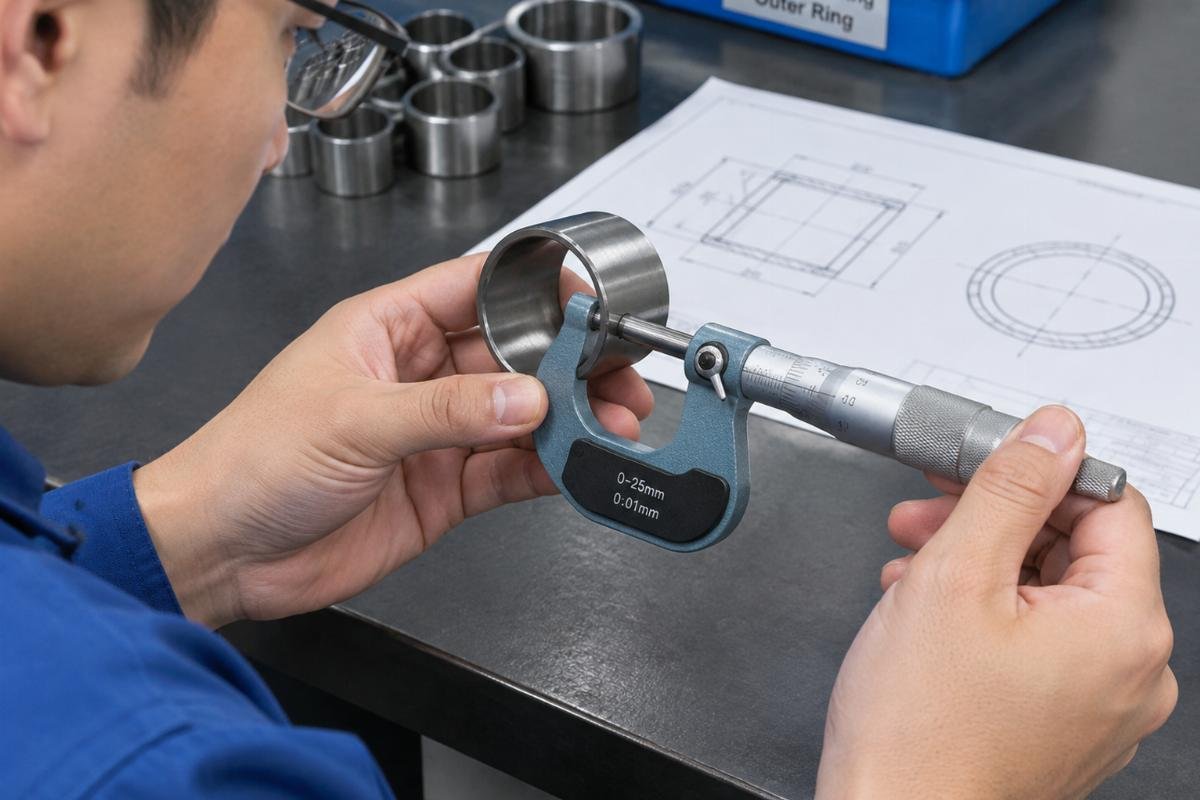
When sourcing from a HK 2016 needle bearing equivalents supplier, request sample units for these tests before finalizing the purchase order. Reputable suppliers will welcome this diligence and provide the necessary technical support to facilitate the inspection process.
Which Operating Conditions Require Upgraded HK 2016 Specifications?
Heavy loads, high temperatures, and corrosive environments necessitate upgraded specifications beyond the standard HK 2016 configuration.
Standard HK 2016 bearings are designed for general industrial applications with moderate loads and speeds. However, certain operating conditions demand enhanced features to ensure longevity and reliability. Understanding these requirements helps in selecting the appropriate HK 2016 needle bearing equivalents that offer superior performance.
In heavy-duty machinery such as excavators or agricultural harvesters, the radial loads can exceed the capacity of standard drawn cup bearings. In these cases, consider alternatives with reinforced outer cups or those made from higher-grade bearing steel with improved fatigue resistance. Some manufacturers offer “heavy series” variants that maintain the same boundary dimensions but feature thicker walls and optimized internal geometry. [NEED_CITE: Load rating calculations for needle roller bearings under dynamic conditions]
High-temperature applications, such as those found in kilns or drying ovens, require bearings with special heat-treated components and high-temperature stable lubricants. Standard grease may degrade or leak out, leading to dry running and rapid failure. Look for equivalents that specify high-temperature cage materials, such as polyetheretherketone (PEEK), and lubricants rated for continuous operation at elevated temperatures.
Corrosive environments, common in marine or chemical processing industries, demand protection against rust and chemical attack. Stainless steel outer cups and needles, or bearings with specialized coatings, provide the necessary resistance. Additionally, sealed variants with robust rubber or polymer seals can prevent contaminant ingress, extending service life in dirty or wet conditions.

A Middle East steel mill upgraded their conveyor system bearings to high-temperature rated HK 2016 equivalents after repeated failures of standard units. The new bearings, featuring heat-stable cages and specialized lubrication, operated reliably through multiple maintenance cycles, demonstrating the value of matching specifications to environmental stresses.
Conclusion
Selecting the right HK 2016 equivalent requires looking beyond basic dimensions to assess cup rigidity, clearance, and material quality.
Successful substitution depends on verifying wall thickness, radial clearance, and cage integrity against the specific demands of your application. By prioritizing these technical details over simple part number matching, you ensure reliable performance and avoid costly premature failures.

Written by
authorEditor covering global sourcing, supplier verification, and industrial product knowledge. Content is compiled from manufacturer specifications, industry standards, and hands-on experience with international B2B buyers. Every article is fact-checked before publishing to help procurement professionals make informed decisions.
View all posts
Leave a Reply