KM 10 Locknut Equivalents: Cross-Reference & Wholesale Supplier
Dimensional matching is not enough for heavy-duty applications. A locknut that fits the thread diameter but fails to match the precise metric pitch will loosen under vibration, leading to catastrophic bearing failure.
The only reliable KM 10 locknut equivalents are those that strictly adhere to ISO metric thread tolerances and use certified high-grade steel for the locking tabs. Substitutes must be verified with thread gauges and material certificates, not just visual inspection.
I learned this lesson on a dusty factory floor in Chile, watching a mining crusher sit idle. The maintenance team had replaced a failed SKF component with a locally sourced alternative that looked identical. The outer dimensions matched, and it threaded on smoothly by hand. But under load, the adapter sleeve spun. The bearing overheated, seizing the shaft. When I inspected the failed part, the issue was clear: the thread pitch was off by a fraction of a millimeter. This slight deviation prevented the nut from seating fully against the bearing inner ring, leaving no preload. The locking tab sheared off within hours of operation. That shutdown cost the client far more than the price difference between the genuine part and the cheap substitute. [NEED_CITE: impact of incorrect thread pitch on bearing preload and failure modes]
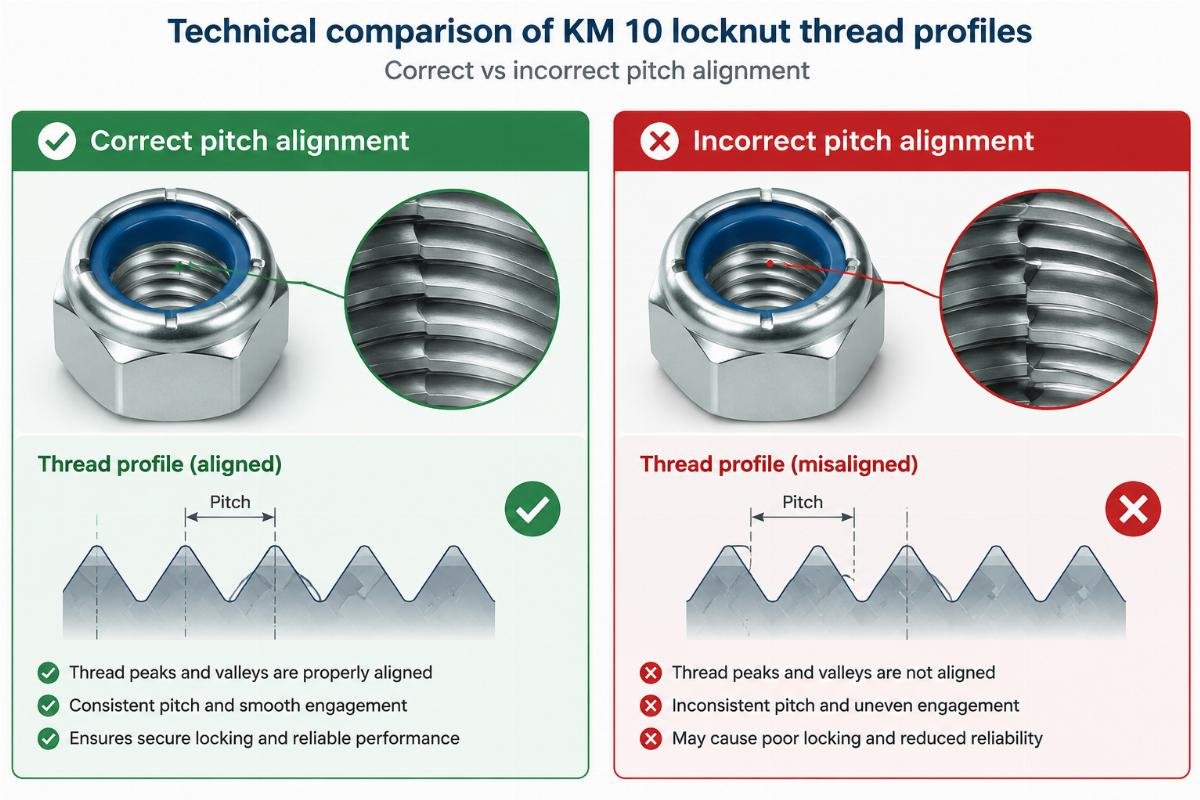
Sourcing replacements requires more than a part number cross-reference. It demands a verification of mechanical integrity. For MRO managers and distributors, understanding the specific risks of KM 10 locknut equivalents is critical to avoiding unplanned downtime.
What Are the Direct Equivalents for KM 10 Locknuts?
Not all “equivalent” locknuts are created equal, even if they share the same dimensional standards. While many manufacturers produce nuts that fit the KM 10 specification, the quality of the thread rolling and the material grade of the locking tab vary significantly.
A proper cross-reference starts with the basic specifications. The KM 10 locknut is designed for shafts with a specific diameter range and uses a fine metric thread. The primary function is to secure spherical roller bearings or self-aligning ball bearings on an adapter sleeve. The locking mechanism relies on a bent tab that engages with a slot in the nut, preventing rotation.
When evaluating KM 10 locknut equivalents, consider the following comparison of typical market options:
| Feature | Genuine OEM (e.g., SKF, FAG) | Certified Premium Equivalent | Low-Cost Generic Substitute |
|---|---|---|---|
| Thread Tolerance | Strict ISO compliance | Verified ISO compliance | Often loose or inconsistent |
| Material Grade | Certified high-carbon steel | Verified medium/high-carbon steel | Unverified or low-grade steel |
| Locking Tab | Precision stamped, high shear strength | Stamped, standard strength | Thin, prone to shearing |
| Traceability | Full batch documentation | Batch-level certification | None or self-reported |
| Surface Finish | Controlled corrosion protection | Standard protection | Variable, often poor |
[NEED_CITE: ISO standards for metric locknut thread tolerances and material requirements]
The table highlights why a simple dimensional check is insufficient. A low-cost generic substitute may thread on, but if the locking tab is made from inferior steel, it will not withstand the vibrational loads common in mining or heavy machinery. I once reviewed a batch of locks from a new supplier for a Latin American wholesaler. The nuts looked perfect, but the locking tabs snapped during routine torque testing. The supplier had used a softer steel grade to cut costs, compromising the shear strength required to keep the nut secured.

For distributors stocking multi-brand inventories, relying on unverified generics introduces significant risk. Clients expect parts that perform like the originals. Using certified premium equivalents that provide batch-level certification ensures that the KM 10 locknut equivalents in your inventory meet the necessary mechanical standards without the premium price tag of direct OEM sourcing.
Why Do Cheap KM10 Substitutes Fail in Heavy Machinery?
Failure usually stems from two hidden flaws: improper thread pitch and inadequate material hardness. These issues are not visible to the naked eye but become apparent under operational stress.
In heavy machinery, such as crushers or conveyors, vibrations are constant. A locknut must maintain a precise preload on the bearing. If the thread pitch of a KM 10 locknut equivalent deviates even slightly from the standard, the nut will not advance correctly along the adapter sleeve. This results in incomplete seating. The bearing remains loose, allowing micro-movements that generate heat and wear. [NEED_CITE: relationship between thread pitch accuracy and bearing seating torque]
Furthermore, the locking tab is the safety mechanism. It must be strong enough to resist bending back out of its slot. Cheap substitutes often use lower-grade steel that lacks the necessary hardness. Under vibration, the tab can deform or shear off entirely. Once the tab fails, the nut begins to unwind, leading to immediate bearing failure.
I recall a case involving a cement plant in Southeast Asia. They had switched to a cheaper brand of locknuts to reduce maintenance costs. Within months, they experienced a series of bearing failures on their main kiln drive. Upon analysis, we found that the locking tabs on the substitute nuts had deformed rather than staying locked. The material hardness was below the required threshold for such a high-vibration environment. The cost of replacing the bearings and the associated downtime far exceeded the savings from the cheaper nuts.

This experience underscores the importance of material verification. When sourcing KM 10 locknut equivalents, it is essential to request material certificates. These documents confirm the steel grade and heat treatment process used. Without this verification, you are gambling with the reliability of your machinery. For MRO operators, the risk of unplanned shutdowns makes the extra effort in verification worthwhile.
How to Verify KM 10 Equivalents Before Bulk Procurement?
Verification must happen before the parts enter your inventory, not after they fail in the field. A systematic approach using simple tools can prevent costly mistakes.
The first step is to check the thread pitch. Use a metric thread gauge to measure the threads of the KM 10 locknut equivalent. The gauge should fit snugly without any play. If the gauge wobbles or does not engage fully, the pitch is incorrect. This simple test can identify batches with poor manufacturing tolerances. [NEED_CITE: standard procedures for verifying metric thread pitch using go/no-go gauges]
Next, inspect the locking tab. It should be firmly attached and show no signs of cracking or poor stamping. Try to bend the tab slightly; it should offer resistance and return to its original shape if it is within elastic limits. If it bends easily or feels brittle, the material quality is suspect.
Finally, review the documentation. Request a material certificate from the supplier. This document should specify the steel grade and confirm that the product meets relevant international standards. For bulk orders, ask for sample units to perform these tests before committing to the full shipment.
I implemented this verification process for a client in the Middle East who was consolidating orders from multiple suppliers. By testing samples from each batch, we identified one supplier whose KM 10 locknut equivalents had inconsistent thread pitches. We rejected that batch and worked with the supplier to improve their quality control. This proactive step saved the client from potential field failures and maintained their reputation for reliability.
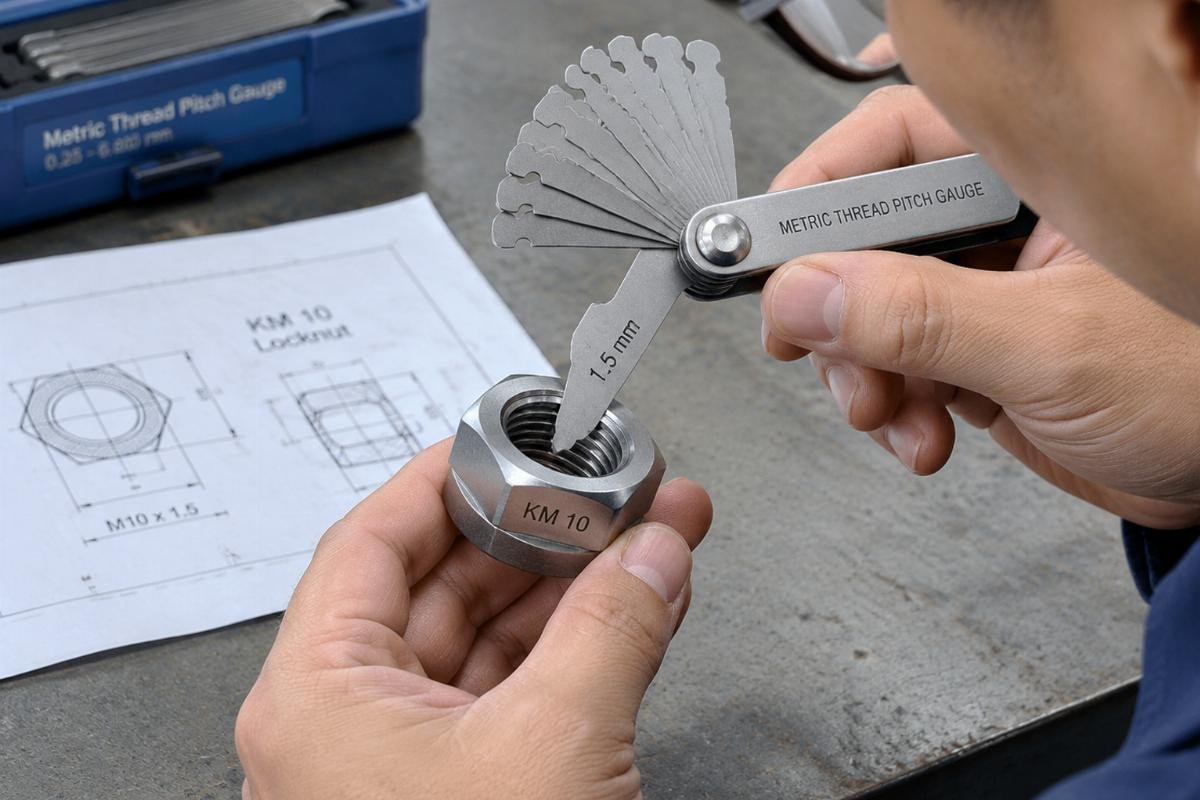
This methodical approach ensures that every KM 10 locknut equivalent in your stock is ready for heavy-duty use. It transforms sourcing from a guessing game into a controlled technical process.
Where to Source Genuine KM10 Alternatives with Traceability?
Reliable sourcing depends on supply chain transparency and technical support, not just price. Finding a partner who understands the technical nuances of bearing components is crucial.
Many distributors struggle with mixed-brand sourcing. They need to stock various brands to meet diverse client needs but lack the resources to verify each part individually. This is where a specialized global supplier adds value. By consolidating orders from reputable manufacturers, such a supplier can provide genuine KM 10 locknut equivalents with full traceability.
Traceability means that every part can be linked back to its production batch and material source. This is vital for quality assurance and liability management. When a client asks for documentation, you can provide it immediately, proving the authenticity and quality of the parts.
Additionally, technical support is key. A good supplier will not just sell you a part number; they will help you verify the specifications. They can provide cross-reference data, material certificates, and advice on proper installation. This level of support reduces the risk of errors and builds trust with your end customers.

For regional distributors in Africa, Latin America, or Asia, accessing such a network simplifies procurement. Instead of dealing with multiple vendors, you can consolidate your bearing needs, including KM 10 locknut equivalents, into single shipments. This reduces logistics complexity and ensures consistent quality across your inventory.
Conclusion
Precision and verification are non-negotiable for KM 10 locknut equivalents. Relying on dimensional matches alone invites failure in heavy-duty applications.
Ensure thread pitch accuracy and material quality through rigorous testing and documentation. Partner with suppliers who offer traceability and technical expertise to safeguard your operations and maintain equipment reliability.

Written by
authorEditor covering global sourcing, supplier verification, and industrial product knowledge. Content is compiled from manufacturer specifications, industry standards, and hands-on experience with international B2B buyers. Every article is fact-checked before publishing to help procurement professionals make informed decisions.
View all posts


Leave a Reply