Plant BOM to Standard Bearings: Cross-Reference & Wholesale Supplier
Premium brands are not always mandatory for operational stability.
Converting an original equipment manufacturer (OEM) bill of materials to standard, cross-brand equivalent bearings optimizes procurement costs and shortens lead times without compromising mechanical performance. This strategy relies on strict dimensional tolerance verification and load capacity parameter matching rather than brand loyalty alone. By leveraging ISO-compliant quality assurance and massive spot inventory, operators can replace delayed imports with reliable domestic or alternative international stock, ensuring continuous production while reducing logistics overheads.
I still remember the smell of stagnant seawater and the panic in a client’s voice when a full container of deep-groove ball bearings got stuck at Yantian Port due to an upstream documentation error. The demurrage fees were climbing daily, and the factory line was scheduled to halt within days. The client insisted on waiting for that specific premium brand listed in their BOM. I suggested swapping to a domestically produced equivalent that met the same P0 precision class and C3 clearance specifications. They hesitated, fearing quality drift. We pulled the technical datasheets, verified the internal geometry against ISO standards, and shipped the alternative stock from our warehouse. The machinery ran smoothly, the downtime was avoided, and the cost savings covered the expedited freight. That incident shifted my perspective entirely. Now, when I see a rigid BOM causing supply chain bottlenecks, I look for the engineering equivalence first. [NEED_CITE: ISO 15243 failure classification and bearing interchangeability guidelines]
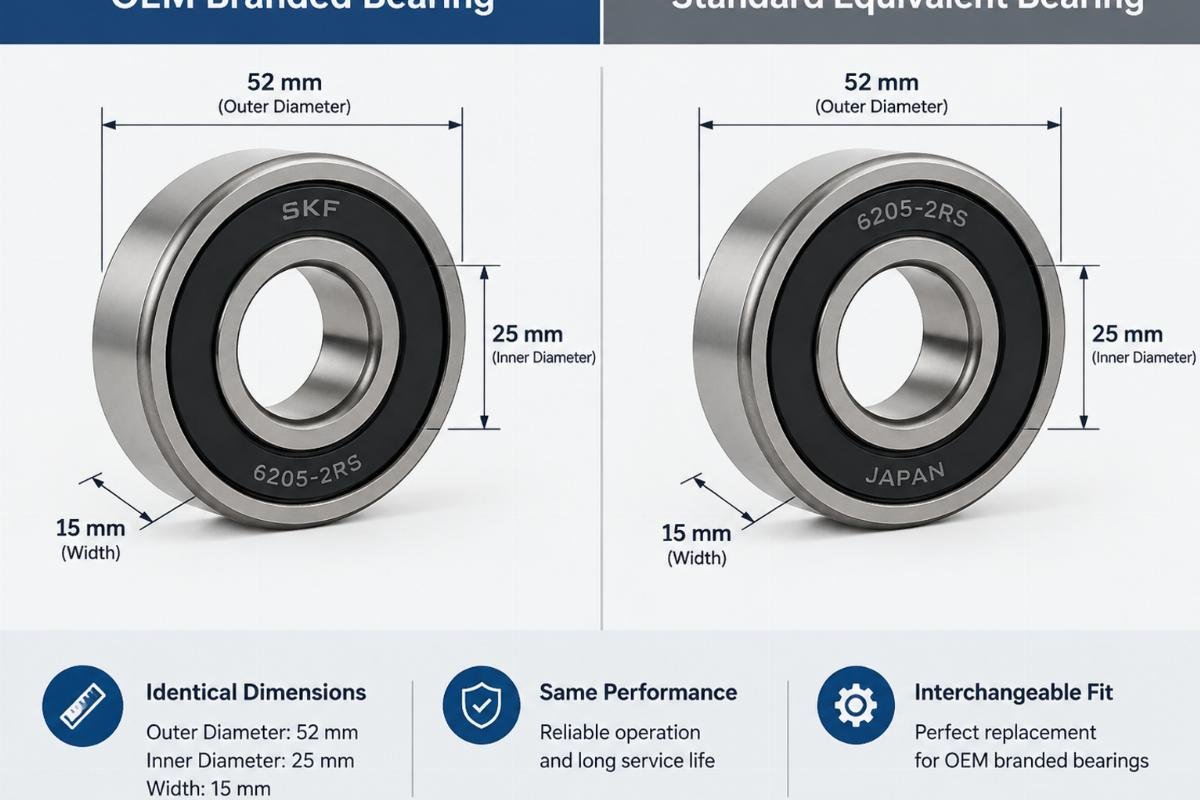
This approach is not about cutting corners. It is about understanding that for many general industrial applications, the performance gap between a top-tier global brand and a certified standard alternative is negligible when the operating conditions are within design limits. The real value lies in agility.
Why Convert Plant BOMs to Standard Bearings?
Procurement agility often outweighs marginal performance gains in non-critical applications.
Many maintenance managers believe that sticking to the original brand specified in the machine manual is the only way to ensure reliability. However, this mindset ignores the reality of global supply chain volatility. When a specific SKU from a major European or Japanese manufacturer faces long lead times, the entire maintenance schedule collapses. Converting the plant BOM to standard bearings allows for multi-brand mixed-batch sourcing, which diversifies risk.
The core argument here is balancing performance with procurement speed. In sectors like mining, construction machinery, or general manufacturing, the operational environment is harsh, but the bearing requirements are often standardized. A spherical roller bearing from one reputable manufacturer will fit and function identically to another if the outer diameter, bore size, width, and internal clearance match. [NEED_CITE: ABMA standard dimensions for radial bearings]
Consider a scenario where a steel plant in Southeast Asia needed urgent replacements for conveyor idlers. The specified brand had a six-month lead time. By converting the BOM to accept standard equivalents from our massive spot inventory, we sourced compatible units from reliable Chinese lines like ZWZ or HRB. These manufacturers produce bearings that adhere to strict international tolerances. The result was not just a faster delivery but a significant reduction in total cost of ownership. The plant did not suffer from premature failures because the replacement bearings were selected based on dynamic load ratings and fatigue life calculations, not just the logo on the box.

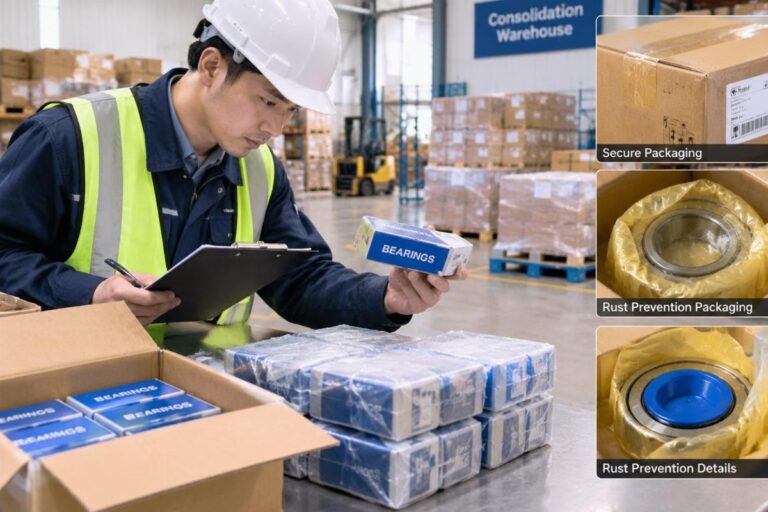
This conversion process also opens the door to mixed-brand container consolidation. Instead of ordering small batches from multiple official distributors at high prices, buyers can combine various standard sizes into one shipment. This logistics optimization drastically reduces freight costs per unit, making the overall procurement strategy more resilient against market fluctuations.
How to Execute Cross-Brand Equivalent Replacement?
Parameter matching and technical verification are the safeguards against quality risks.
The fear of quality compromise is the primary barrier to BOM conversion. Most think BOM conversion risks quality; the true reason proper parameter matching and traceability docs ensure reliability. To execute this safely, one must move beyond simple part number cross-referencing and delve into technical specifications.
The first step is dimensional tolerance verification. Bearings are classified by precision classes such as P0, P6, or P5. For most industrial MRO applications, P0 (Normal Class) is sufficient. Ensuring that the replacement bearing matches the original’s precision class prevents issues with fitment and vibration. [NEED_CITE: ISO 492 tolerance standards for rolling bearings]
Next, load capacity parameter matching is critical. The dynamic load rating (C) and static load rating (C0) must meet or exceed the original specifications. If the application involves heavy shock loads, such as in a crusher or vibrating screen, the replacement bearing must have robust cage design and appropriate heat treatment. We use cross-reference lookup methods that consider these mechanical properties, not just the physical dimensions.
| Verification Parameter | Standard Requirement | Risk if Ignored |
|---|---|---|
| Dimensional Tolerance | ISO P0 / ABMA Class 0 | Improper fit, overheating |
| Internal Clearance | C3 / C4 (as per application) | Premature fatigue, noise |
| Dynamic Load Rating | Equal to or greater than OEM | Reduced service life |
| Cage Material | Steel / Brass / Polyamide (match env.) | Cage fracture under stress |
| Seal Type | RS / ZZ / Open (match contamination level) | Ingress of debris, lubrication loss |
A common mistake is ignoring the internal clearance. A standard deep-groove ball bearing might come in C2, C3, or C4 clearances. Using a C2 clearance in a high-temperature environment where thermal expansion occurs will lead to seizure. Conversely, using C4 in a precision spindle application causes excessive vibration. Our technical consultation service helps clients identify these nuances, ensuring that the substituted bearing performs reliably in its specific context.
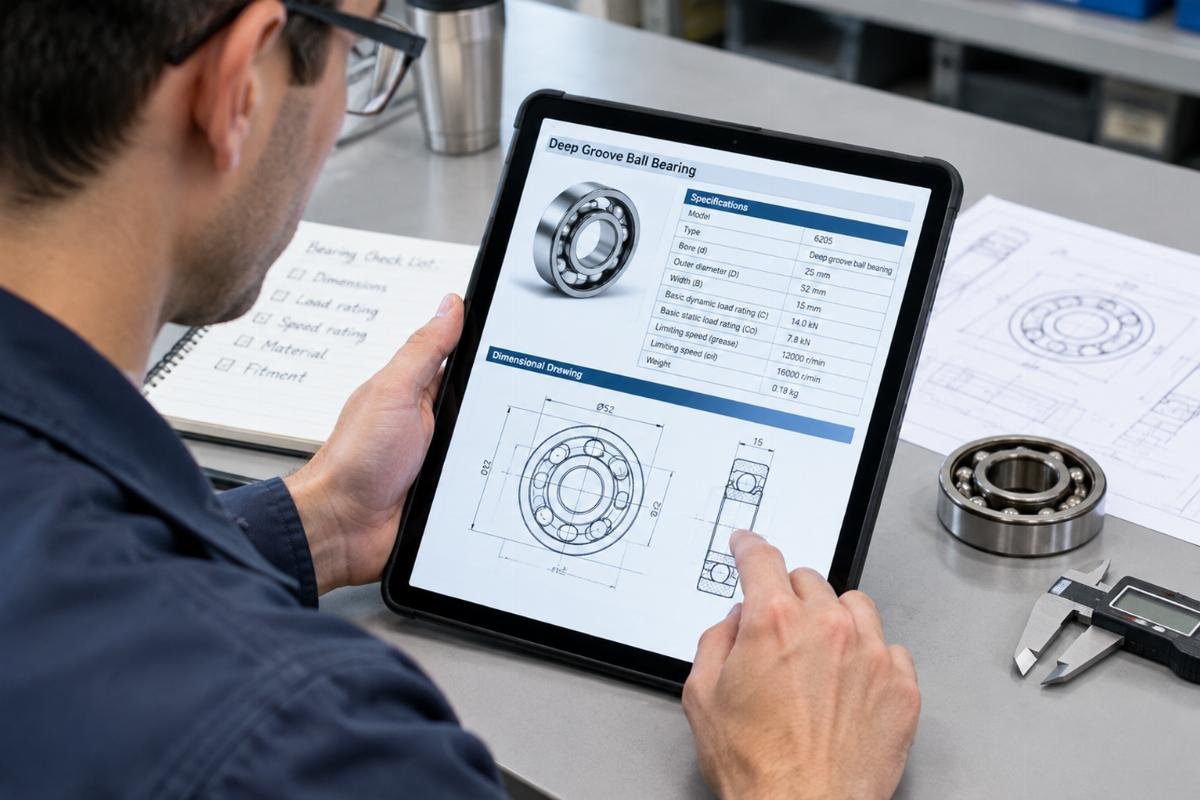
Traceability is another pillar of this process. Every batch of bearings we supply comes with complete documentation, including material certificates and inspection reports. This transparency allows MRO operators to verify the origin and quality of the components, mitigating the risk of counterfeit parts that plague the aftermarket.
Real Case: Overcoming Supply Chain Bottlenecks
Substituting delayed imports with reliable domestic stock saves production timelines.
The global bearing market has seen significant disruptions in recent years, with port congestions and raw material shortages affecting lead times for premium brands. In one notable case, a large agricultural machinery manufacturer in Latin America faced a critical shortage of tapered roller bearings for their harvesters. The original supplier quoted a delivery time that would miss the harvesting season entirely.
We intervened by proposing a cross-brand equivalent replacement using high-quality domestic brands. The client was initially skeptical, concerned about the durability of the bearings under heavy field loads. We provided detailed test reports showing that the substitute bearings met the same ISO standards for fatigue life and hardness. [NEED_CITE: Industry data on bearing steel cleanliness and fatigue life correlation]
We arranged for a sample batch to be tested on non-critical units first. The results were positive, with no significant difference in temperature rise or noise levels compared to the original brand. Encouraged by this, the client placed a full order for the remaining fleet. We consolidated the order with other standard items, shipping them in a single container. This mixed-batch consolidation not only solved the immediate shortage but also reduced the overall logistics cost by a noticeable margin.
The key takeaway from this case is that supply chain resilience requires flexibility. By maintaining a massive spot inventory of both premium global brands like SKF, FAG, and NSK, and reliable domestic lines like ZWZ and LYC, we can offer alternatives when one source fails. This dual-source strategy ensures that our clients never face a complete stoppage due to a single brand’s unavailability.
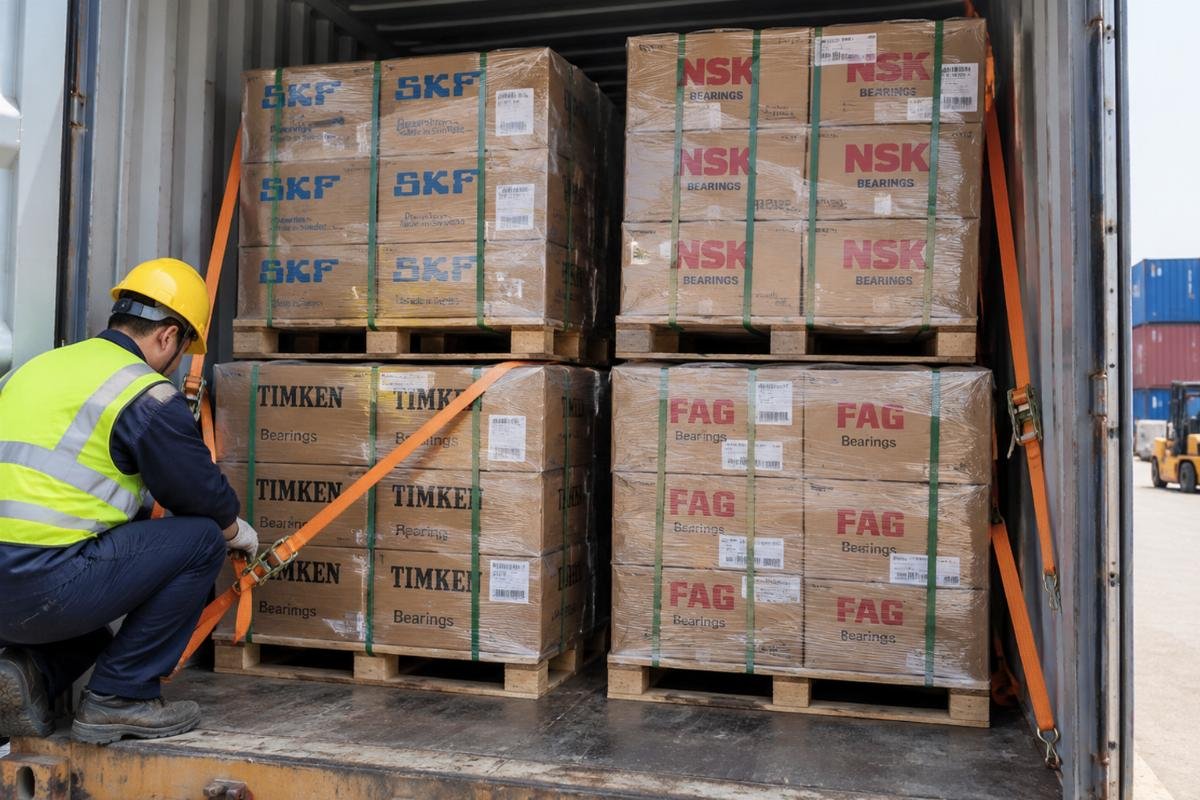
This approach is particularly valuable for MRO operators who need to minimize unplanned downtime. When a machine breaks down, waiting weeks for a specific brand is not an option. Having access to a broad range of equivalent models allows for immediate replacement, keeping operations running.
Key Benefits of Standardized BOM Sourcing
Lower costs, flexible MOQ, and faster delivery define the competitive edge.
Standardizing the BOM around available, high-quality equivalents offers several tangible benefits for industrial buyers. First, it significantly lowers procurement costs. Premium brands often carry a price premium due to marketing and brand equity. While they are essential for ultra-high-precision or extreme-condition applications, many standard industrial tasks do not require this level of expenditure. Switching to certified equivalents can reduce unit costs substantially, freeing up budget for other maintenance needs.
Second, it enables flexible minimum order quantities (MOQ). Official brand channels often require large volume commitments, which ties up capital and warehouse space. By sourcing from a global supplier with massive spot inventory, buyers can order exact quantities needed for specific projects or emergency repairs. This flexibility is crucial for small to medium-sized enterprises and independent workshops that cannot afford to hold large stocks.
Third, it accelerates delivery times. With thousands of standard part numbers in stock, we can ship urgent spares within hours rather than weeks. This speed is vital for minimizing downtime in critical industries like wind power, metallurgy, and marine operations. [NEED_CITE: Market research on supply chain resilience and inventory turnover rates]
Additionally, standardized sourcing simplifies inventory management. Instead of tracking dozens of unique part numbers for similar applications, facilities can consolidate to a fewer number of standard types that serve multiple machines. This reduction in SKU complexity lowers administrative overhead and reduces the risk of ordering errors.
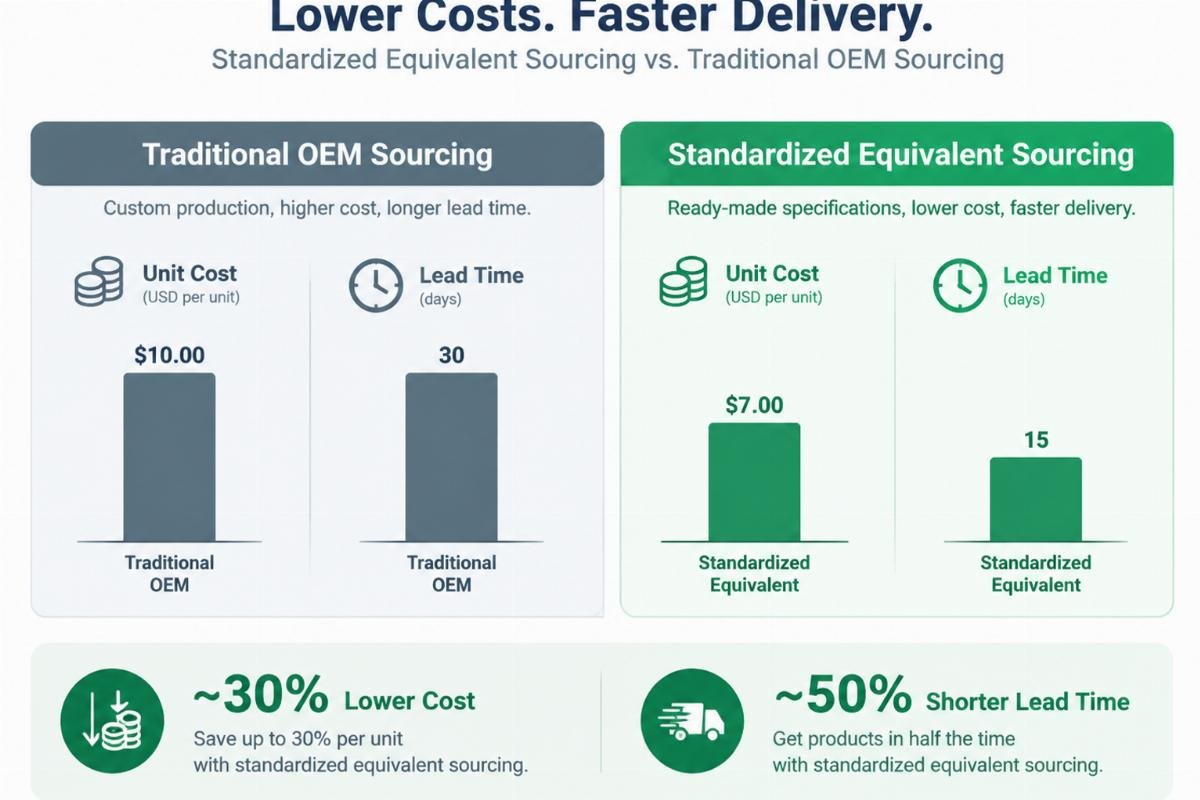
For distributors and wholesalers, this model supports better margin management. By offering mixed-brand solutions, they can cater to a wider range of customer budgets and requirements, enhancing their competitiveness in local markets. The ability to provide technical cross-reference support further adds value, positioning them as trusted partners rather than just box movers.
Conclusion
Smart sourcing prioritizes availability and verified specs over blind brand adherence.
Converting plant BOMs to standard bearings is a strategic move that enhances supply chain resilience, reduces costs, and maintains operational continuity. By focusing on dimensional accuracy, load capacity, and traceable quality, industries can safely leverage cross-brand equivalents. This approach transforms procurement from a rigid constraint into a flexible advantage, ensuring that machinery keeps running regardless of global market fluctuations.

Written by
authorEditor covering global sourcing, supplier verification, and industrial product knowledge. Content is compiled from manufacturer specifications, industry standards, and hands-on experience with international B2B buyers. Every article is fact-checked before publishing to help procurement professionals make informed decisions.
View all posts

Leave a Reply