Volume Discounts on SKF FAG NSK TIMKEN Bearings Wholesale Supplier
Lower unit prices on mixed-brand bearing orders often result in higher total landed costs due to hidden customs and consolidation fees.
True volume discounts across multiple brands require factoring in hidden consolidation and customs compliance costs, not just unit prices. Many global wholesalers focus exclusively on the per-unit price reduction when combining SKUs from different manufacturers like SKF, FAG, NSK, and TIMKEN. However, without precise HS code mapping and professional consolidation, the savings from bulk purchasing are frequently erased by port storage fees, customs holds, and re-declaration charges. A compliant, professionally managed mixed-container strategy is the only way to secure genuine net savings while maintaining supply chain velocity.
I learned this lesson the hard way at Yantian Port. Early in my career, I helped a client consolidate an order of TIMKEN tapered roller bearings and SKF deep groove ball bearings to meet a full-container threshold for better rates. We declared them under a generic mechanical parts code to simplify the paperwork. The shipment was held for inspection due to incorrect HS classification for mixed premium brands. The resulting warehouse rent and delay penalties cost several times the initial freight savings, and the client’s mining installation project in the Middle East nearly missed its critical deadline. That incident shifted my focus from simple price negotiation to holistic landed cost management. [NEED_CITE: impact of customs delays on MRO project timelines]

Understanding how to navigate these complexities is essential for any buyer looking to optimize their procurement strategy. Below, we break down the mechanics of mixed-brand sourcing, the specific risks involved, and how to calculate the real cost of your orders.
How Do Mixed-Brand Volume Discounts Actually Work?
True savings in mixed-brand sourcing come from freight and consolidation efficiency, not just unit price drops.
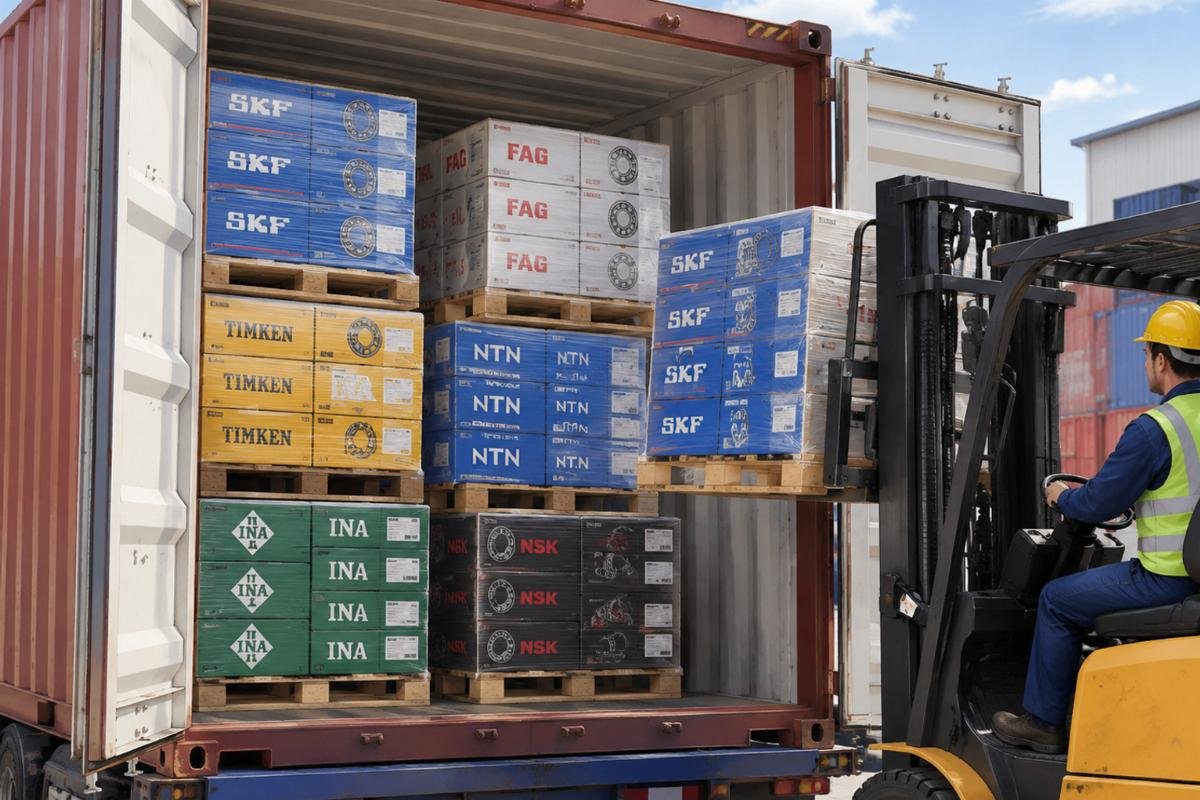
When sourcing from a volume discounts across multiple brands supplier, the primary advantage is the ability to combine slow-moving and fast-moving stock into a single shipment. This allows distributors to meet Full Container Load (FCL) thresholds without overstocking on a single brand. For example, a distributor might need a large quantity of standard NSK deep groove bearings but only a few boxes of specialized FAG angular contact bearings. Buying them separately would mean paying for Less than Container Load (LCL) services, which are significantly more expensive per cubic meter and carry higher risks of damage and loss.
By consolidating these items, buyers can access FCL freight rates, which are substantially lower. However, this model relies on the supplier’s ability to manage complex inventory from various manufacturers. A professional supplier maintains spot inventory across thousands of part numbers from brands like INA, NTN, KOYO, and domestic lines such as ZWZ and HRB. This diversity enables the creation of customized mixed containers that match the specific demand profile of regional wholesalers in Africa, Latin America, or Southeast Asia.
The key is that the discount is not merely a reduction in the bearing price. It is a structural saving achieved by eliminating the inefficiencies of multiple small shipments. Without a supplier capable of handling multi-brand consolidation, the buyer is forced to choose between high LCL costs or excessive inventory holding costs for single-brand bulk orders. [NEED_CITE: comparison of LCL vs FCL logistics costs for industrial parts]
What Are the Hidden Customs Risks in Multi-Brand Containers?
Improper HS code mapping for mixed SKF/TIMKEN/FAG/NSK orders causes severe port delays and financial penalties.
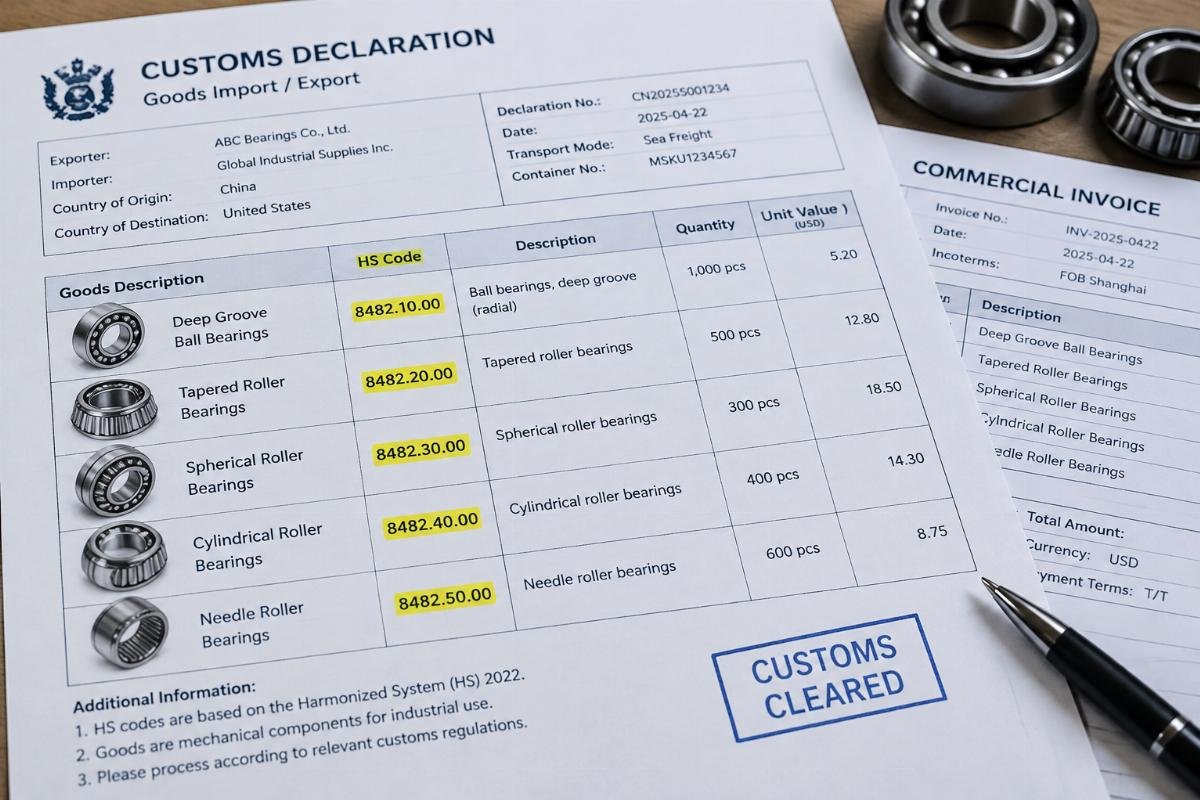
The most significant risk in mixed-brand sourcing is customs compliance. Different bearing types and brands may fall under slightly different sub-headings within the Harmonized System (HS). While many bearings share the same general code, specific precision grades or applications can trigger different scrutiny levels. Declaring a mixed container under a single, generic code is a common mistake that leads to inspections.
Consider a case where a European wind farm operator sourced a mix of high-precision spherical roller bearings and standard cylindrical roller bearings from various premium brands. The declaration did not distinguish between the precision classes adequately. Customs authorities flagged the shipment for verification, leading to a hold that lasted for days. The storage fees accumulated rapidly, and the urgent need for replacement parts meant the downtime cost far exceeded the value of the bearings themselves.
To avoid this, every item in a mixed container must be mapped to its correct HS code based on its type, size, and precision class. This requires detailed knowledge of World Customs Organization guidelines and local import regulations. A reputable volume discounts across multiple brands supplier will provide pre-shipment documentation that aligns with these requirements, ensuring that each SKU is declared accurately. This prevents the “one wrong code stops the whole container” scenario. [NEED_CITE: WCO guidelines on classification of mechanical bearings]
How to Calculate the Real Landed Cost of Mixed Orders?
Factor in port storage, declaration fees, and compliance documentation to determine the true cost.
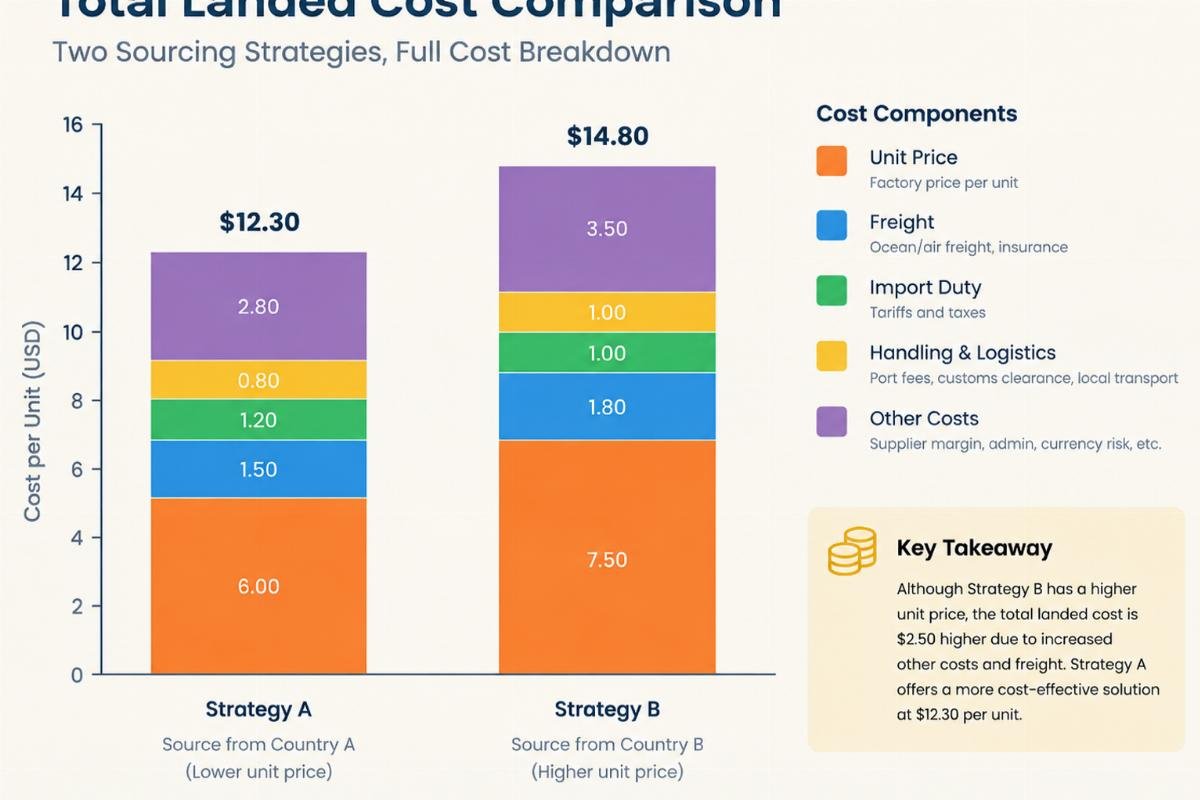
Many buyers make the mistake of comparing only the FOB (Free on Board) price when evaluating offers. To understand the real value of a mixed-brand order, you must calculate the landed cost. This includes the product price, freight, insurance, duties, and any potential compliance-related fees.
For mixed containers, the compliance cost is variable. If the documentation is incomplete or inaccurate, you face potential fines and storage charges. In contrast, a well-prepared shipment with complete traceability documents and accurate declarations incurs minimal additional costs. The table below illustrates the qualitative difference in cost components between a poorly managed mixed order and a professionally consolidated one.
| Cost Component | Poorly Managed Mixed Order | Professionally Consolidated Order |
|---|---|---|
| Unit Price | Low (apparent discount) | Competitive (market rate) |
| Freight Rate | High (if LCL used) or Standard (FCL) | Optimized FCL rate |
| Customs Clearance | Delayed (high risk of inspection) | Smooth (accurate HS mapping) |
| Storage Fees | Significant (due to delays) | Minimal or None |
| Documentation | Incomplete (risk of rejection) | Complete (traceability provided) |
| Total Landed Cost | High (hidden fees erase savings) | Lower (true net savings) |
This qualitative comparison shows that the “cheaper” unit price often comes with higher downstream costs. A professional supplier mitigates these risks by providing full traceability documentation, including original manufacturer certificates and packing lists that detail each brand and part number. This level of transparency allows customs brokers to process the shipment quickly, avoiding unnecessary hold-ups. [NEED_CITE: elements of total landed cost calculation for industrial imports]
What Documents Guarantee Smooth Customs for Mixed Brands?
Complete traceability and distinct packing lists prevent compliance failures and ensure quick clearance.
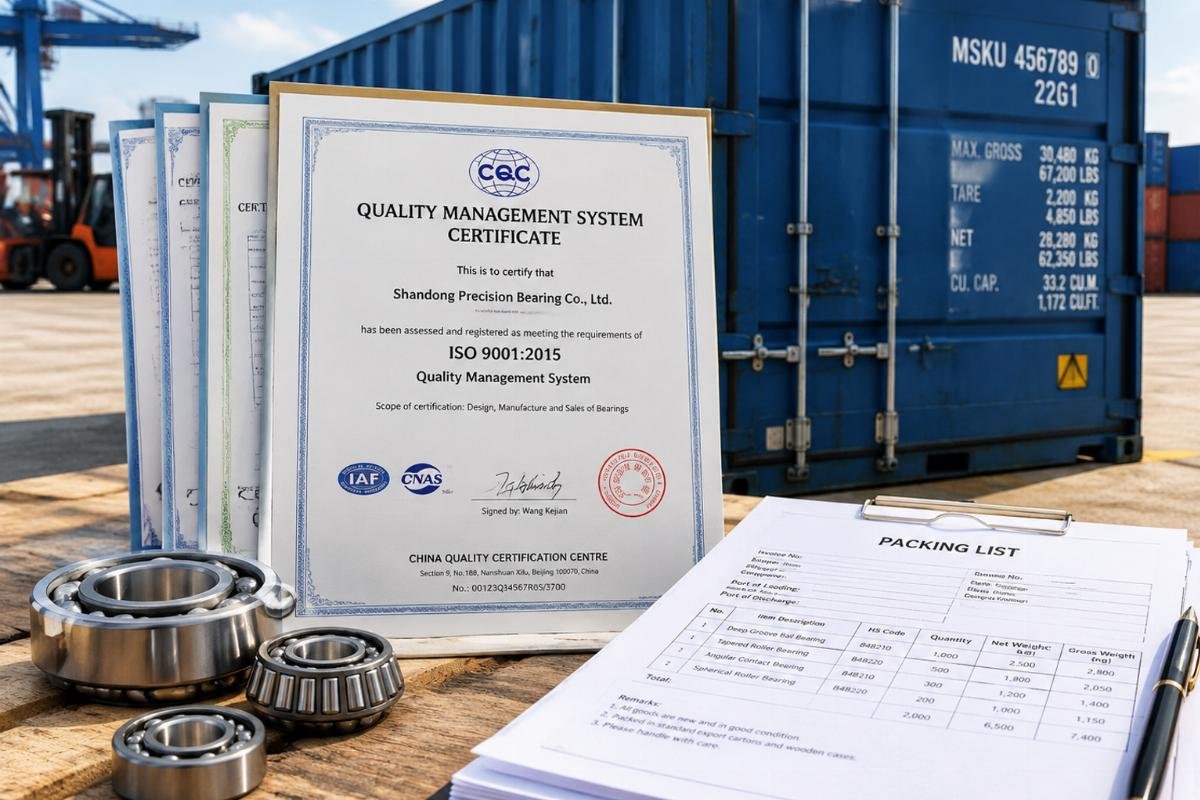
The backbone of a smooth customs process for mixed-brand bearings is documentation. When a container holds products from SKF, FAG, NSK, TIMKEN, and other brands, the packing list must be meticulously detailed. It should not just list “bearings,” but specify the brand, part number, quantity, and HS code for each line item. This granularity allows customs officers to verify the contents against the declaration without needing to physically inspect every box.
Traceability documents are equally important. These include original quality certificates from the manufacturers, which prove the authenticity of the goods. For premium brands, this is crucial to avoid accusations of counterfeit goods, which can lead to seizure of the entire shipment. A reliable volume discounts across multiple brands supplier will provide these documents as part of the standard service, ensuring that every bearing in the container is verifiable.
In one instance, a Middle East steel mill received a mixed container with full traceability docs. When customs requested proof of origin for the TIMKEN and SKF items, the supplier provided the necessary certificates within hours. The shipment was cleared the same day, allowing the plant to proceed with its maintenance schedule without interruption. This level of support is what separates a transactional seller from a strategic procurement partner. [NEED_CITE: importance of traceability documentation in international trade compliance]
Conclusion
Genuine volume discounts require a holistic view of costs, not just unit prices.
Sourcing bearings from multiple brands offers significant advantages in terms of inventory flexibility and freight efficiency. However, these benefits are only realized when customs compliance and consolidation logistics are managed professionally. By focusing on landed cost rather than just unit price, and by partnering with a supplier who provides accurate HS mapping and complete traceability, buyers can secure true savings. This approach minimizes the risk of costly delays and ensures that your supply chain remains resilient and efficient.

Written by
authorEditor covering global sourcing, supplier verification, and industrial product knowledge. Content is compiled from manufacturer specifications, industry standards, and hands-on experience with international B2B buyers. Every article is fact-checked before publishing to help procurement professionals make informed decisions.
View all posts

Leave a Reply