Cage Suffix Table by Brand – Wholesale Supplier
The letter on the bearing suffix is not a universal code.
Bearing cage suffixes are proprietary to each manufacturer and do not map one-to-one across brands. Correct cross-brand substitution requires verifying cage material, guiding method, and clearance tolerance against specific operating conditions rather than relying on identical letter codes. A mismatch in these hidden parameters leads to premature fragmentation, overheating, or lubrication failure.
I learned this lesson the hard way during my early years supporting operations at a copper mine in Chile. The maintenance team followed a parts list that specified a stamped steel cage for a large spherical roller bearing in a primary crusher application. On paper, the specification looked standard. In reality, the combination of high ambient heat, abrasive dust, and heavy shock loads caused the steel cage to fracture within three months. The resulting debris contaminated the lubricant and scored the raceways, forcing an unplanned shutdown. We replaced it with a machined brass cage, which stabilized the operation and extended the service life significantly. That incident taught me that suffixes reflect proprietary design philosophies, not just material composition. When sourcing replacements, assuming that an ‘M’ suffix from one brand equals an ‘M’ from another is a dangerous oversimplification. This guide breaks down how to interpret these codes correctly to avoid costly misapplications.
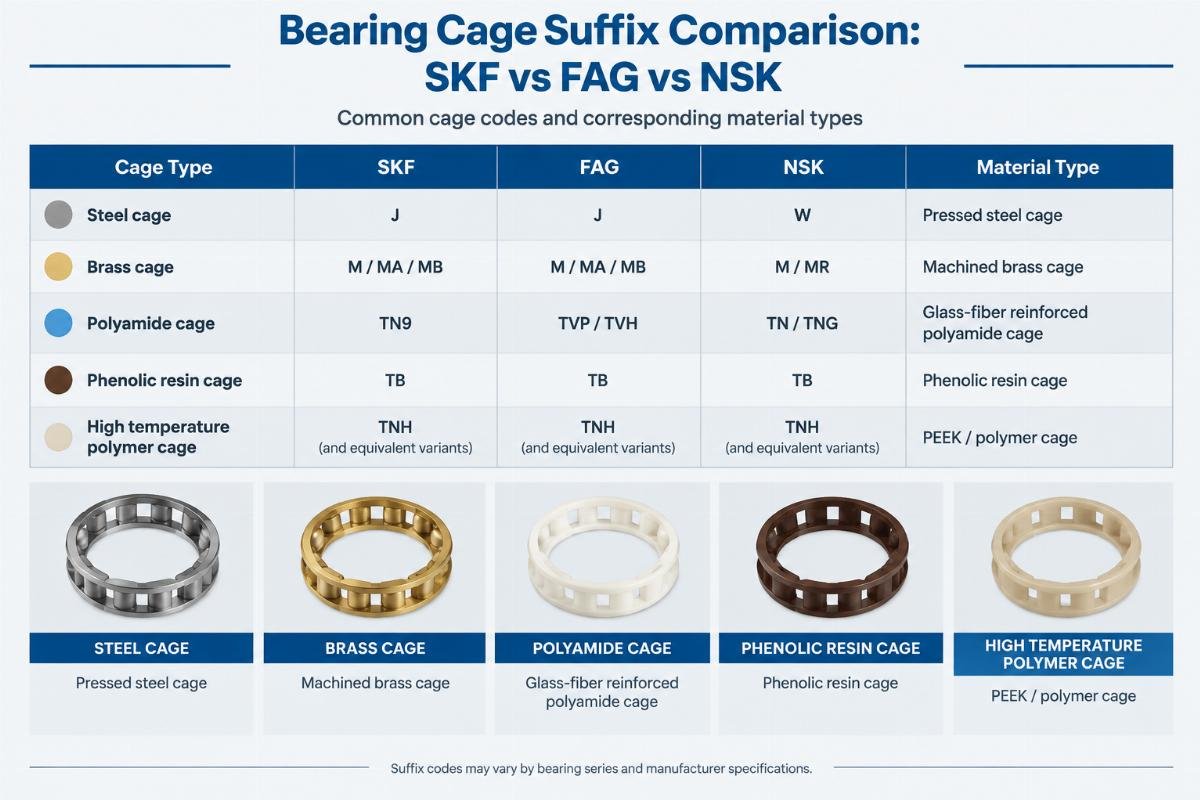
Understanding these nuances is critical for MRO buyers and OEM engineers who manage mixed-brand inventories. As a global supplier dealing with diverse industrial requirements, we frequently see clients attempt direct suffix swaps without checking the underlying engineering constraints. This article provides the technical framework needed to make accurate decisions when navigating a Cage Suffix Table by Brand.
Why Do Cage Suffixes Differ Across Brands?
Suffixes are not standardized across the industry because each manufacturer develops cage designs based on their specific production capabilities and performance targets. While ISO standards define boundary dimensions and tolerances, they do not mandate uniform suffix coding for internal components like cages. [NEED_CITE: ISO standard scope regarding internal bearing component coding] Consequently, a suffix that indicates a machined brass cage in one brand might denote a polyamide cage in another, or imply a different guiding surface entirely.
The primary differences lie in three areas: material composition, guiding method, and manufacturing process. For instance, some brands use suffixes to distinguish between sheet metal cages and machined solid cages, even if both are made of steel. Others use specific letters to indicate whether the cage is guided by the inner ring, outer ring, or rolling elements. These design choices affect how the bearing handles speed, acceleration, and misalignment.
Consider the case of a high-temperature fan motor in a cement plant. The original equipment used a bearing with a polyamide cage, suitable for moderate temperatures. When a replacement was sourced using a direct suffix match from a different brand, the new bearing arrived with a similar suffix but a lower thermal resistance threshold. Under continuous operation above 120°C, the polyamide softened, leading to cage deformation and eventual seizure. A machined brass cage would have withstood temperatures up to 250°C without issue. This failure was not due to poor quality but to a mismatch in material properties hidden behind similar alphanumeric codes.
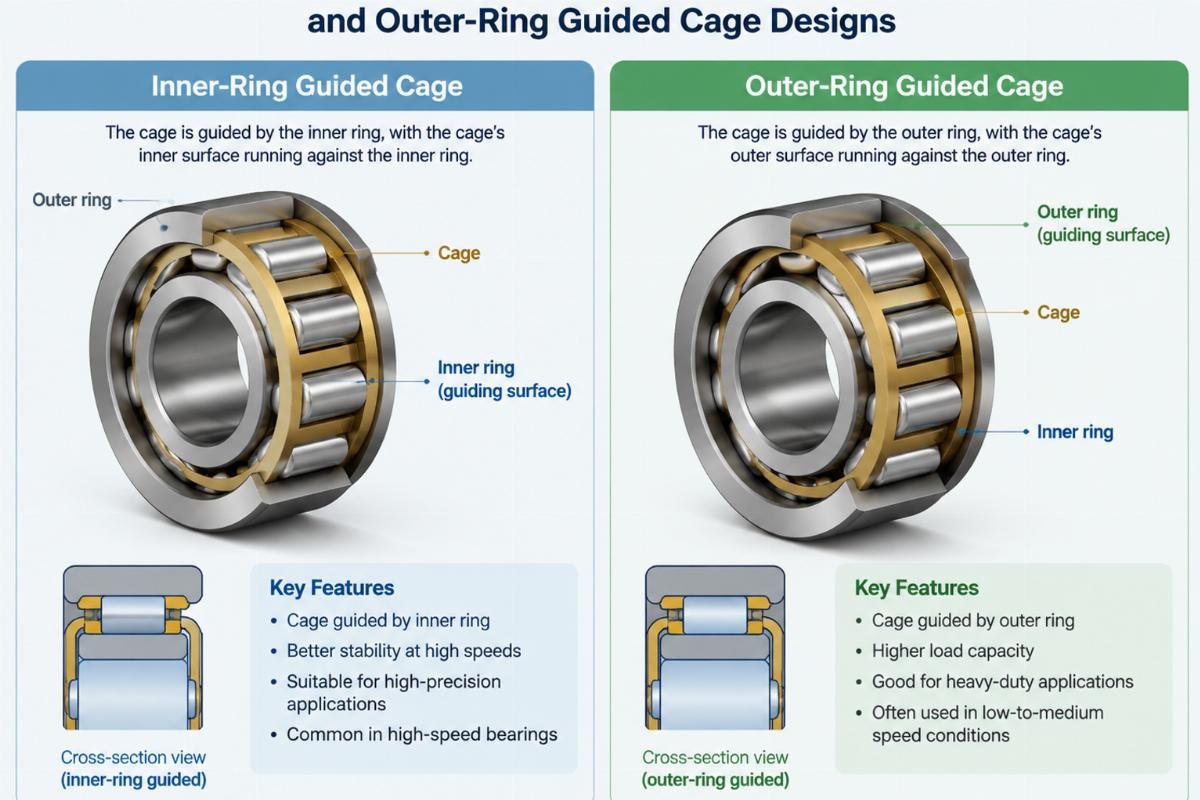
For distributors and procurement specialists, recognizing that suffixes are brand-specific is the first step toward reliable sourcing. Relying on a generic Cage Suffix Table by Brand without understanding these underlying design principles can lead to inventory errors and field failures. It is essential to look beyond the letter and verify the physical characteristics of the cage relative to the application environment.
How to Read the Cross-Brand Cage Suffix Table?
Mapping suffixes across major brands like SKF, FAG, NSK, and NTN requires a detailed reference approach. There is no single universal translator, so engineers must consult specific cross-reference data that accounts for material and design equivalents. Below is a qualitative comparison of common cage suffixes for deep groove ball bearings and spherical roller bearings, focusing on material and construction type.
| Feature | SKF Common Suffixes | FAG/INA Common Suffixes | NSK Common Suffixes | Material/Design Note |
|---|---|---|---|---|
| Sheet Steel Cage | J, Y | No specific suffix (standard) | No specific suffix (standard) | Standard for general purpose, low cost |
| Machined Brass Cage | M | M | M | Good for high speed, moderate temp |
| Polyamide Cage | TN9, P66 | TVH, T | CA, TY | Lightweight, low friction, temp limited |
| Machined Steel Cage | F | F | L | High strength, heavy load applications |
| Roller Guided Cage | V | No specific suffix | E | Specific to certain roller bearing types |
Note that this table represents common conventions and exceptions exist. For example, while ‘M’ often denotes machined brass across several brands, the exact alloy composition and machining tolerance may vary. [NEED_CITE: Manufacturer technical manuals for cage material specifications] Additionally, some brands use suffixes to indicate cage clearance modifications, which further complicates direct substitution.
A European wind farm operator once faced issues with gearbox retrofits. They replaced SKF bearings with FAG equivalents using a basic suffix match. However, the FAG bearings had a different cage clearance class that interacted poorly with the existing housing fits. This mismatch caused premature wear on the cage pockets, leading to increased vibration levels. The issue was resolved only after adjusting the housing tolerance to accommodate the specific cage design of the replacement brand. This highlights the importance of not just matching the suffix letter but also verifying the dimensional and clearance implications.

When using a Cage Suffix Table by Brand, always cross-check the specific series and size. Small variations in pocket design can affect lubrication flow and heat dissipation. For critical applications, requesting detailed technical drawings or datasheets from the supplier is a prudent step to ensure compatibility. Our technical team assists clients in verifying these details before shipment to prevent such mismatches.
What Are the Hidden Risks of Wrong Cage Selection?
Selecting the wrong cage type can lead to catastrophic failure modes that are often misdiagnosed as lubrication or load issues. The cage plays a vital role in maintaining rolling element spacing and guiding them through the load zone. If the cage material or design is unsuitable for the operating conditions, it can fail in several ways.
One significant risk is thermal degradation. Polyamide cages, while excellent for reducing weight and friction, have strict temperature limits. In high-heat environments such as steel mills or near kilns, exceeding these limits causes the material to lose structural integrity. This can result in the cage melting or deforming, leading to rolling element jamming. In contrast, machined brass or steel cages offer higher thermal stability but may generate more friction at very high speeds if not properly lubricated.
Another risk is mechanical fatigue in harsh environments. Stamped steel cages are cost-effective but vulnerable to shock loads and vibration. In applications like mining crushers or vibrating screens, the repeated impact can cause cracks to initiate at the rivet points or pocket edges. Once a crack forms, the cage can fragment, sending metal debris into the bearing assembly. This debris acts as an abrasive, accelerating wear on the races and rolling elements. A case from a Middle East steel mill demonstrated this when stamped cages in conveyor idlers failed repeatedly until switched to solid machined steel cages, which provided the necessary robustness.

Lubrication compatibility is also a hidden factor. Some cage materials absorb certain types of lubricants or react chemically with additives. For instance, certain polyamide formulations may swell or become brittle when exposed to specific synthetic oils. Ensuring that the cage material is compatible with the lubrication regime is crucial for long-term reliability. [NEED_CITE: Chemical compatibility guidelines for bearing cage materials]
Navigating these risks requires a deep understanding of the application environment. When consulting a Cage Suffix Table by Brand, it is not enough to match the letter; one must evaluate the operational stresses. Our supply chain includes genuine products from multiple premium brands, allowing us to recommend the most suitable cage type based on actual operating conditions rather than just part number equivalence.
How to Verify Cage Compatibility Before Ordering?
Before finalizing a cross-brand substitution, a systematic verification process is essential. This checklist helps ensure that the selected bearing will perform reliably in its intended application.
First, confirm the cage material. Identify whether the original bearing uses steel, brass, or polyamide. Check the operating temperature range of the application. If temperatures exceed the limit of polyamide, switch to brass or steel. Verify the speed rating, as some materials perform better at high rotational speeds due to lower mass.
Second, examine the guiding method. Determine if the cage is guided by the inner ring, outer ring, or rolling elements. This affects how the bearing handles misalignment and axial loads. Mismatched guiding methods can lead to uneven wear and increased friction. Consult the manufacturer’s catalog to understand the guiding principle associated with the specific suffix. [NEED_CITE: ABMA guidelines on cage guiding methods]
Third, check clearance classes. Cage design often interacts with internal clearance. Ensure that the replacement bearing has a compatible clearance class (e.g., C3, C4). A mismatch here can alter the internal geometry, affecting load distribution and heat generation. In precision applications, even small deviations can impact performance.
Fourth, validate lubrication compatibility. Confirm that the cage material is resistant to the lubricant used in the application. If switching from a standard mineral oil to a synthetic ester, verify that the cage material remains stable. Some advanced polymers offer better resistance but may have other trade-offs.
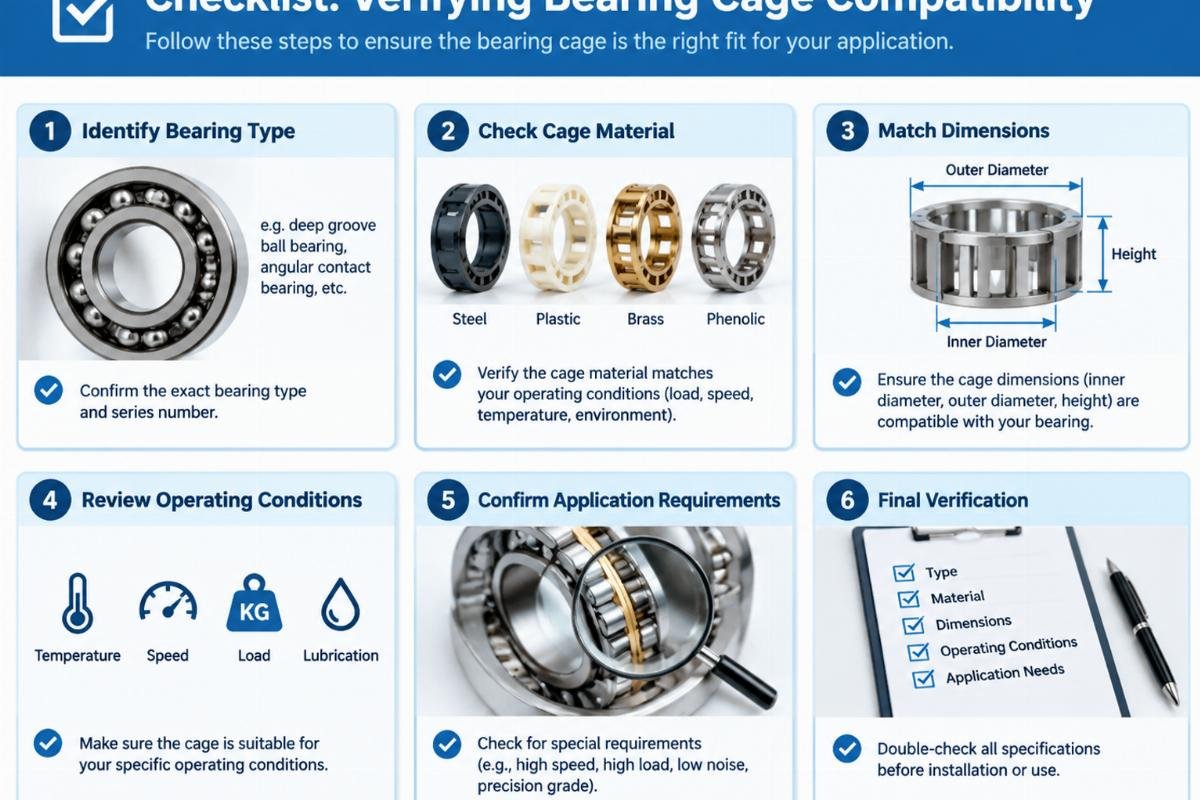
Finally, request traceability documentation. Genuine bearings come with certificates that specify material grades and manufacturing standards. This documentation provides assurance that the cage meets the claimed specifications. As a supplier with extensive stock across multiple brands, we provide full traceability for all items, ensuring that clients receive authentic components that meet rigorous quality standards.
Using a reliable Cage Suffix Table by Brand is a starting point, but these verification steps add the necessary depth to ensure success. By combining technical knowledge with genuine product sourcing, engineers and buyers can minimize the risk of unexpected failures.
Conclusion
Accurate cage selection prevents premature bearing failure.
Bearing cage suffixes are brand-specific codes that reflect distinct design and material choices. Direct substitution based solely on letter matches ignores critical differences in guiding methods, thermal limits, and clearance interactions. Successful cross-brand replacement requires verifying material suitability, guiding principles, and environmental compatibility. Leveraging detailed technical resources and genuine multi-brand sourcing ensures reliability in demanding industrial applications.

Written by
authorEditor covering global sourcing, supplier verification, and industrial product knowledge. Content is compiled from manufacturer specifications, industry standards, and hands-on experience with international B2B buyers. Every article is fact-checked before publishing to help procurement professionals make informed decisions.
View all posts

Leave a Reply