Excavator Swing Bearing Interchange: Cross-Reference & Wholesale Supplier
Matching outer and inner diameters is not enough for a safe excavator swing bearing interchange.
True interchangeability requires verifying internal clearances, load zone hardening patterns, and mounting hole precision against OEM specifications. Relying solely on basic dimensional data often leads to immediate structural failure or premature fatigue under dynamic loads.
I still remember the heat of the Las Vegas desert during CONEXPO. A contractor handed me a worn excavator swing bearing, desperate for a cross-reference to a premium brand. I matched the basic dimensions and shipped a domestic alternative. Two weeks later, he called furious. The mounting holes did not align, and his machine was dead in the dirt. That failure taught me that interchange is not just about measurements. It is about load zones and internal clearances. Now, when buyers ask for equivalents, I do not just quote part numbers. I dig into the exact application to ensure the swap will not cost them a day of downtime. This approach defines how we handle every request for excavator swing bearing interchange.

Understanding these technical nuances is essential for minimizing downtime. Let us explore why basic dimensions fail and how to verify the right components for heavy-duty applications.
Why Basic Dimensions Fail in Swing Bearing Interchange?
Matching diameters without considering load zones leads to immediate structural failure.
Many operators assume that if the outer diameter, inner diameter, and height match, the bearing will fit. This is a dangerous oversimplification. Excavator swing bearings operate under complex combined loads, including axial, radial, and tilting moment forces. The critical factor is the load zone, a hardened area within the raceway designed to withstand maximum stress during specific digging angles.
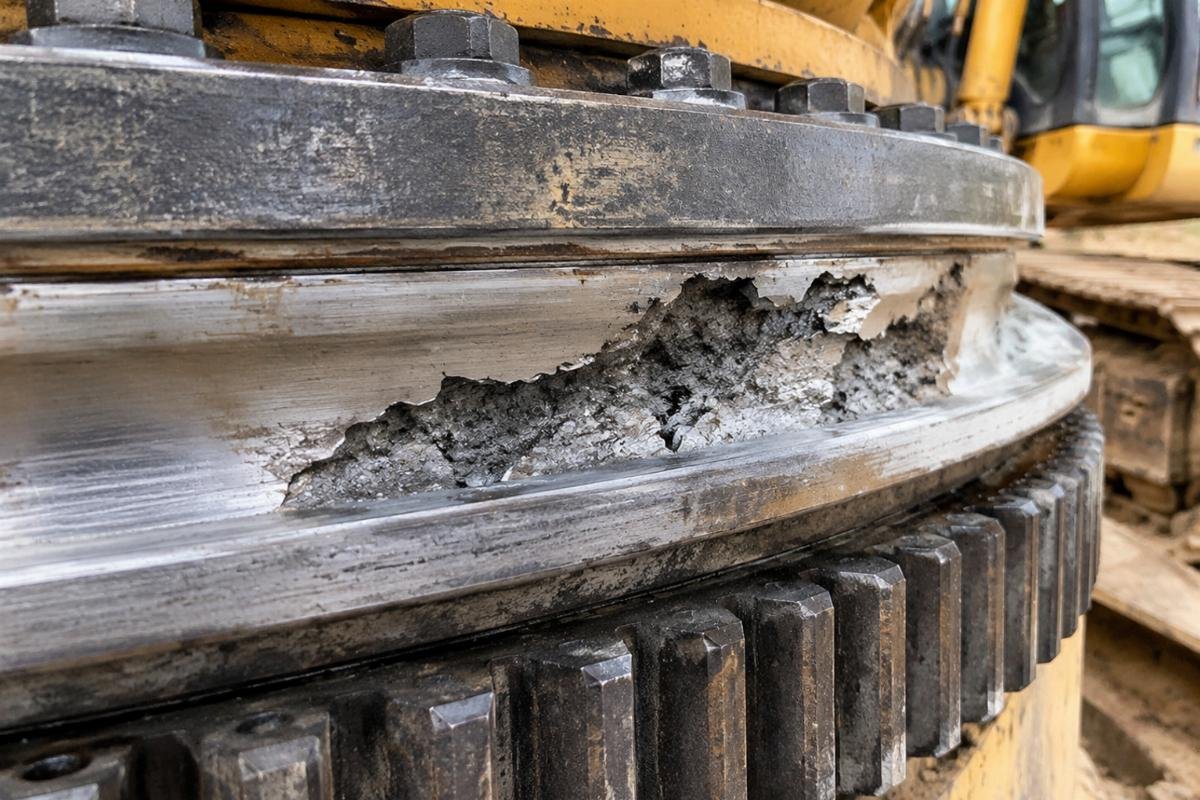
If a replacement bearing has a different load zone configuration than the original, the hardened track may not align with the actual load path. This misalignment causes the softer, unhardened portion of the raceway to bear the brunt of the force. The result is rapid spalling, cracking, and catastrophic failure. [NEED_CITE: ISO standards for slewing bearing load distribution]
Consider a case involving a regional distributor in Southeast Asia. He received a bulk order for mixed-batch replacements. One client installed a bearing with correct dimensions but an incorrect load zone orientation. Within months, the raceway showed severe wear patterns outside the expected contact area. The machine required re-machining of the upper structure, costing several times the price of the bearing itself.
| Feature | Basic Dimension Match | Full Technical Interchange |
|---|---|---|
| Outer/Inner Diameter | Verified | Verified |
| Height/Width | Verified | Verified |
| Load Zone Pattern | Ignored | Verified against OEM specs |
| Internal Clearance | Assumed Standard | Measured per application |
| Mounting Hole Precision | Basic Tolerance | Micron-level precision |
This table highlights the gap between a simple size check and a true excavator slew ring cross reference. Ignoring the load zone is akin to installing a tire with the wrong tread pattern for the road conditions. It might fit the wheel, but it will not perform safely.
To avoid such failures, one must look beyond the catalog dimensions. The next step is understanding the internal mechanics that govern bearing life.
How to Verify Internal Clearances for Heavy-Duty Swaps?
Proper clearance measurement prevents premature fatigue under dynamic excavator loads.
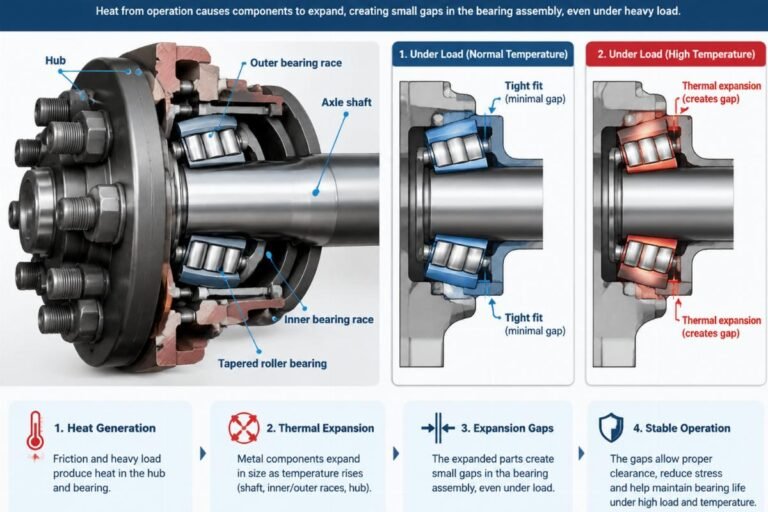
Internal clearance is the space between the rolling elements and the raceways. In excavators, this clearance is not static. It changes with temperature, load, and mounting pressure. If the clearance is too tight, the bearing generates excessive heat and seizes. If it is too loose, the rolling elements skid rather than roll, causing vibration and early fatigue. [NEED_CITE: Bearing industry association guidelines on internal clearance]
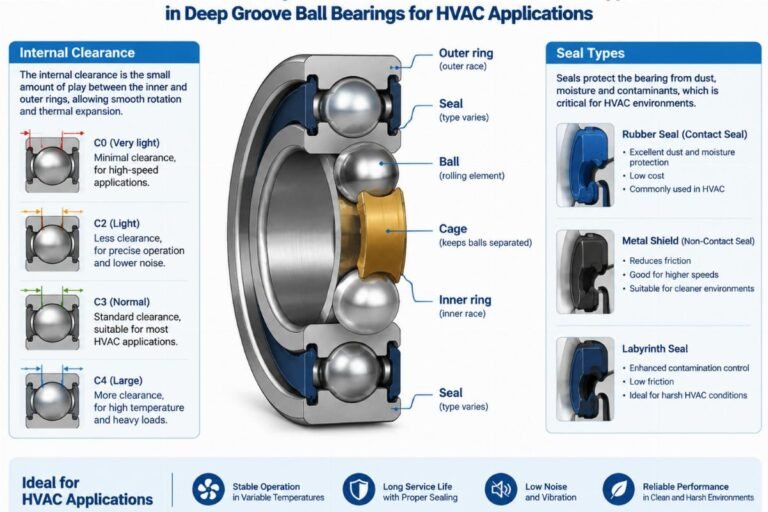
Most assume premium brands guarantee perfect swaps. The real issue is unverified internal clearances causing premature fatigue. Different manufacturers use different standard clearances for similar-sized bearings. A C3 clearance from one brand may not equate to a C3 from another due to variations in material thermal expansion coefficients.
I once consulted for an MRO operator facing repeated failures in a mining excavator. The replacement bearings were from a reputable brand, yet they failed within hundreds of hours. Upon inspection, we found that the internal clearance was too tight for the high-temperature environment of the mine. The bearing expanded during operation, eliminating the necessary running gap. Switching to a bearing with a verified, slightly larger initial clearance resolved the issue.
Verifying clearance requires precise measurement tools, such as dial indicators or feeler gauges, following strict protocols. It is not a task for rough estimation. When sourcing replacement swing bearing dimensions, always request the specific clearance class and verify it against the OEM manual. Do not assume that “standard” means “compatible.”

This attention to detail separates a reliable repair from a recurring breakdown. But measurements alone are not enough. Documentation plays a crucial role in ensuring authenticity.
What Documents Guarantee a Reliable Cross-Reference?
Traceability and material certs are mandatory for safe aftermarket interchange.
In the global bearing market, counterfeits and substandard products are prevalent. A bearing may look identical to a genuine part but lack the metallurgical integrity required for heavy equipment. Without proper documentation, you are gambling with your machinery’s health.
Key documents include material certificates, heat treatment records, and dimensional inspection reports. These papers prove that the bearing steel meets specific purity standards and that the hardening process was controlled. [NEED_CITE: OEM technical service manuals for material requirements]
A European wind farm operator once shared his experience with a supplier who could not provide batch-specific traceability. The bearings failed prematurely, and without documentation, he had no recourse. In contrast, working with suppliers who offer full traceability allows for root cause analysis if issues arise. It also ensures that the excavator slewing bearing interchange chart you rely on is based on genuine, tested products.
When evaluating a supplier, ask for:
- Material certification (e.g., steel grade verification).
- Heat treatment logs (confirming hardness depth and uniformity).
- Dimensional inspection reports (verifying tolerances).
- Proof of origin (ensuring genuine brand or certified equivalent).
These documents are not just paperwork. They are your insurance policy against costly downtime.

With the right documentation in hand, you can confidently source components that meet your technical needs. But finding such suppliers requires a strategic approach.
How to Source Interchangeable Bearings Globally?
Partnering with full-range suppliers ensures technical validation and flexible MOQ.
Sourcing excavator swing bearing interchange solutions globally involves more than finding the lowest price. It requires a partner who understands the technical complexities and can provide consistent quality across different brands.
Regional distributors often face challenges with mixed-batch orders. They need to consolidate shipments from various brands to meet local demand. A full-range supplier can streamline this process by offering cross-brand equivalent consultation. This service helps identify reliable alternatives when original parts are unavailable or lead times are prohibitive.
For example, a distributor in Latin America needed to fulfill an urgent order for a mix of SKF and FAG bearings. By working with a supplier who stocks multiple premium brands and reliable domestic lines, he was able to consolidate the shipment into a single container. This reduced logistics costs and simplified customs clearance. The supplier also provided technical datasheets for each equivalent, ensuring the end-users could install them with confidence.
Key factors in selecting a global sourcing partner include:
- Inventory Depth: Access to thousands of standard and special part numbers.
- Technical Support: Ability to validate cross-references and provide selection guidance.
- Flexible MOQ: Options for single-unit emergency spares or full container loads.
- Traceability: Complete documentation for all supplied products.
By focusing on these criteria, you can build a supply chain that supports your operational reliability.

This strategic approach ensures that you are not just buying parts, but investing in uptime and performance.
Conclusion
True interchange is about engineering compatibility, not just physical fit.
Successful excavator swing bearing interchange demands a holistic view of dimensions, load zones, internal clearances, and documentation. Ignoring any of these elements risks catastrophic failure and extended downtime. By prioritizing technical validation and partnering with knowledgeable suppliers, you can secure reliable replacements that keep your equipment running. Always verify the specifics before installation, and never compromise on traceability.

Written by
authorEditor covering global sourcing, supplier verification, and industrial product knowledge. Content is compiled from manufacturer specifications, industry standards, and hands-on experience with international B2B buyers. Every article is fact-checked before publishing to help procurement professionals make informed decisions.
View all posts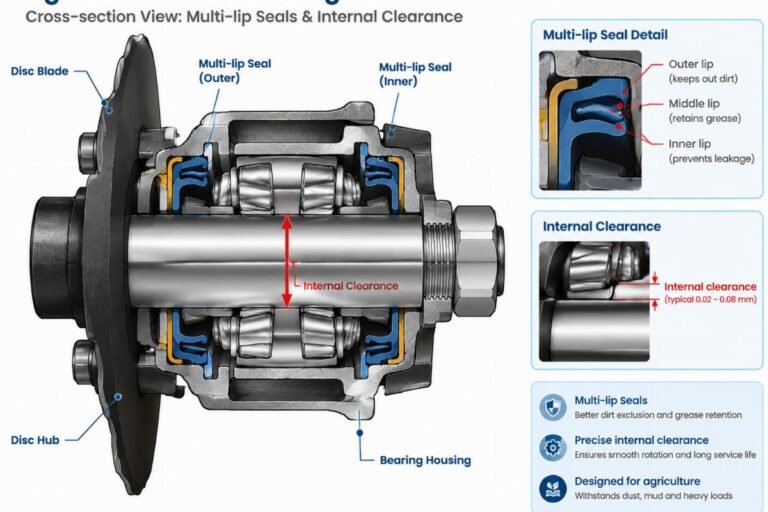
Leave a Reply