Find Equivalent Bearing: 5 Steps from Global Wholesale Supplier
Identical outer and inner diameters do not guarantee interchangeability.
Finding an equivalent bearing requires matching internal clearance, cage material, and application conditions, not just basic dimensions, to prevent premature failure. A true cross-reference goes beyond the part number to verify load ratings, speed limits, and environmental compatibility.
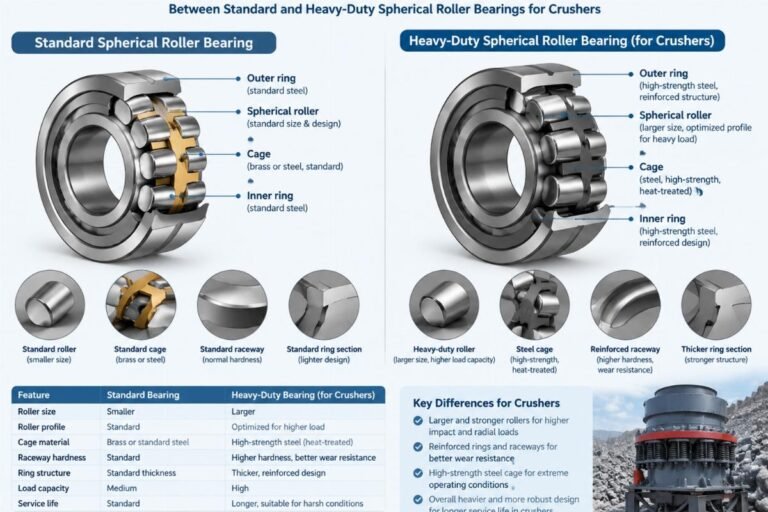
I learned this the hard way early in my career while handling documentation for a mining client. They needed a substitute for a specific spherical roller bearing used in high-temperature crushers. I matched the basic dimensions perfectly, assuming the swap would be seamless. The bearings failed within weeks, halting the entire site. The airfreight cost for emergency replacements wiped out our margin completely. That disaster taught me that finding an equivalent bearing is not about copying part numbers. It is about understanding the physics of the application. You must match the load, speed, and environment, or you will pay double in emergency logistics.

This guide breaks down the process into five actionable steps. We will move beyond simple dimension checks to ensure your substitution strategy minimizes downtime and optimizes costs.
Why Basic Dimensions Aren’t Enough for Bearing Substitution?
Most buyers assume that if the bore diameter, outer diameter, and width match, the bearings are interchangeable. This is a dangerous misconception. Internal geometry dictates lifespan under load, not just the external envelope. Two bearings with identical ISO dimensions can have vastly different internal clearances, cage designs, and heat treatments.
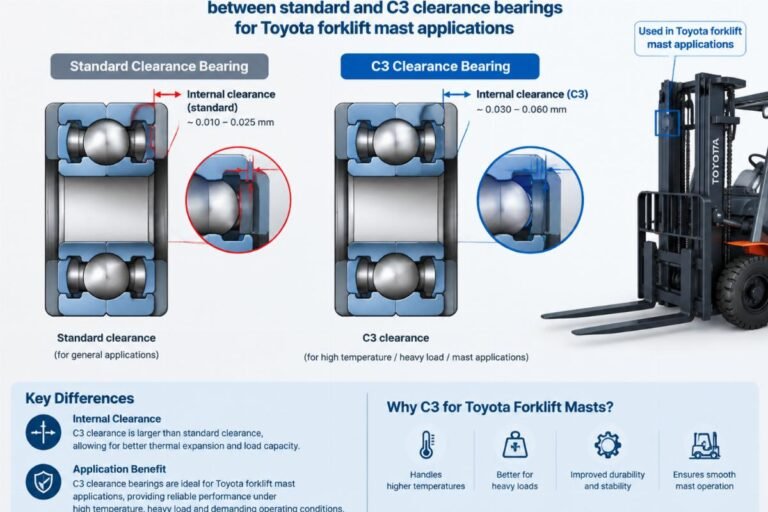
The core argument here is simple: internal clearance and cage material dictate real-world performance. Ignoring these factors leads to premature failure, especially in harsh environments. For instance, a standard clearance bearing might seize in a high-heat application where a C3 clearance unit would thrive. Similarly, a polymer cage might melt in conditions where a brass cage would remain stable.
[NEED_CITE: impact of internal clearance on bearing life in high temperature applications]
When sourcing an equivalent bearing, you are not just buying steel rings. You are buying a system designed to handle specific stress profiles. A mismatch in internal geometry can cause uneven load distribution, leading to spalling or fatigue cracks long before the rated service life is reached. This is why professional distributors dig into the application conditions first. They do not just look at the catalog; they look at the machine.

Step 1-2: How to Verify Dimensional and Load Equivalency?
The first two steps involve rigorous cross-checking of ISO standards and load ratings. This is the foundation of any reliable substitution. You must ensure that the physical fit and the mechanical capacity align with the original specification.
Start by verifying the dimensional tolerances against ISO standards. While the basic dimensions might match, the tolerance class (e.g., P0, P6, P5) must also align. A tighter tolerance in the original design is not optional; it is critical for precision applications. Next, compare the dynamic and static load ratings. These values determine how much weight the bearing can handle while rotating and when stationary.
| Parameter | Original Specification | Equivalent Candidate | Verification Status |
|---|---|---|---|
| Bore Diameter | Standard ISO Value | Standard ISO Value | Matched |
| Outer Diameter | Standard ISO Value | Standard ISO Value | Matched |
| Width | Standard ISO Value | Standard ISO Value | Matched |
| Dynamic Load Rating | Certified Value | Certified Value | Verified |
| Static Load Rating | Certified Value | Certified Value | Verified |
| Tolerance Class | Standard Grade | Standard Grade | Confirmed |
A US buyer once sourced a cheaper substitute for a heavy-load conveyor system. The dimensions matched, but the dynamic load rating was slightly lower. Under continuous operation, the bearing deformed prematurely. The cost of replacing the shaft and housing far exceeded the initial savings on the bearing. This highlights why load rating verification is non-negotiable.
[NEED_CITE: ABMA standards for dynamic and static load rating calculations]
When evaluating an equivalent bearing, always request the technical datasheet. Do not rely on marketing brochures. The datasheet provides the verified load capacities and tolerance classes. If a supplier cannot provide this documentation, consider it a red flag. Genuine products come with complete traceability, allowing you to verify these critical parameters.

Step 3-4: How to Match Speed Limits and Internal Clearances?
Speed and clearance are intertwined. As a bearing rotates, it generates heat. This heat causes expansion, which reduces internal clearance. If the initial clearance is too tight, the bearing will seize. If it is too loose, vibration and noise will increase, leading to premature wear.
Aligning nG limits (limiting speed) and C3/C4 clearances with specific operating temperatures is crucial. For high-temperature applications, such as mining crushers or steel mills, standard clearance is often insufficient. You need C3 or even C4 clearance to accommodate thermal expansion. Ignoring this can lead to catastrophic failure.
Consider a case from a Middle East steel plant. They replaced a standard clearance bearing with another standard clearance unit, ignoring the ambient heat. The bearing seized within days. Switching to a C3 clearance variant resolved the issue immediately. The key was matching the internal clearance to the thermal environment.
[NEED_CITE: relationship between operating temperature and required internal clearance codes]
Verifying the speed limit is equally important. Exceeding the nG limit can cause cage failure or lubricant breakdown. Always check the manufacturer’s catalog for the limiting speed based on the lubrication method. Oil lubrication typically allows for higher speeds than grease. When selecting an equivalent bearing, ensure that its speed rating meets or exceeds the original specification.

Step 5: How to Validate Cage and Seal Materials for Your Environment?
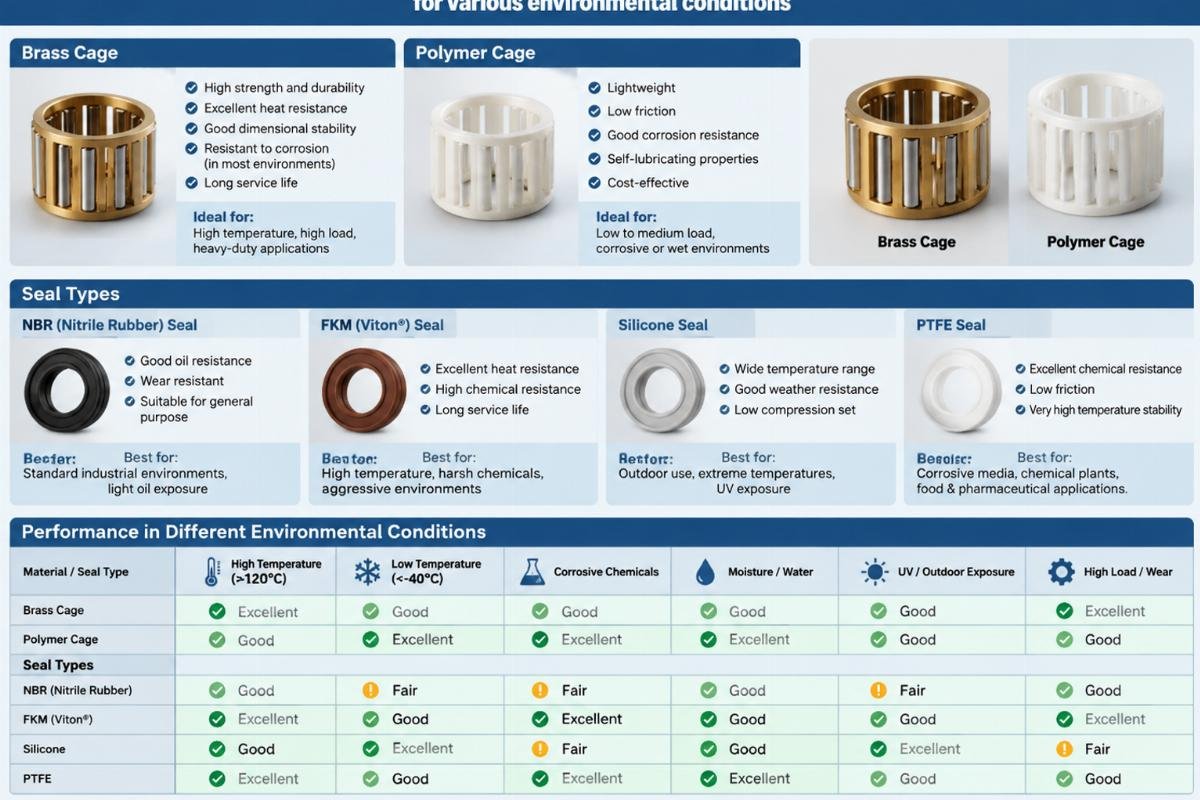
The final step involves selecting the right cage and seal materials based on contamination and heat. This is often overlooked but is critical for longevity. Cage material affects stability at high speeds and temperatures. Seal type determines protection against contaminants and retention of lubricant.
Brass cages are robust and handle high temperatures well, making them suitable for heavy industrial applications. Polymer cages are lighter and offer better damping properties but may not withstand extreme heat. Seals come in various types, such as RS (contact seal) or 2Z (shield). Contact seals offer better protection but generate more heat. Shields allow for higher speeds but less protection.
A European wind farm operator faced repeated failures due to incorrect seal selection. They used open bearings in a dusty environment, leading to rapid contamination. Switching to bearings with robust contact seals extended the service life meaningfully. The right material choice prevents ingress of dirt and moisture, which are primary causes of bearing failure.
[NEED_CITE: influence of cage material on bearing performance at high speeds]
When sourcing an equivalent bearing, specify the environmental conditions. Is there dust? Moisture? High heat? Chemical exposure? Your supplier should recommend the appropriate cage and seal combination. For harsh environments, brass cages and contact seals are often the safer choice. For clean, high-speed applications, polymer cages and shields might be preferable.
Our team provides cross-brand equivalent consultation to ensure buyers get the right specs. We analyze the application conditions before recommending a substitute. This technical selection support prevents the mistakes that lead to costly downtime. It is not just about selling a part; it is about ensuring it works.
Conclusion
Substitution success depends on holistic specification matching, not just dimensional parity.
Finding an equivalent bearing requires a disciplined approach to verifying dimensions, load ratings, speed limits, internal clearances, and material compatibility. By following these five steps, you can avoid the hidden costs of premature failure and emergency logistics. Always prioritize technical data over price alone. A reliable partner will guide you through these complexities, ensuring your machinery runs smoothly and efficiently.

Written by
authorEditor covering global sourcing, supplier verification, and industrial product knowledge. Content is compiled from manufacturer specifications, industry standards, and hands-on experience with international B2B buyers. Every article is fact-checked before publishing to help procurement professionals make informed decisions.
View all posts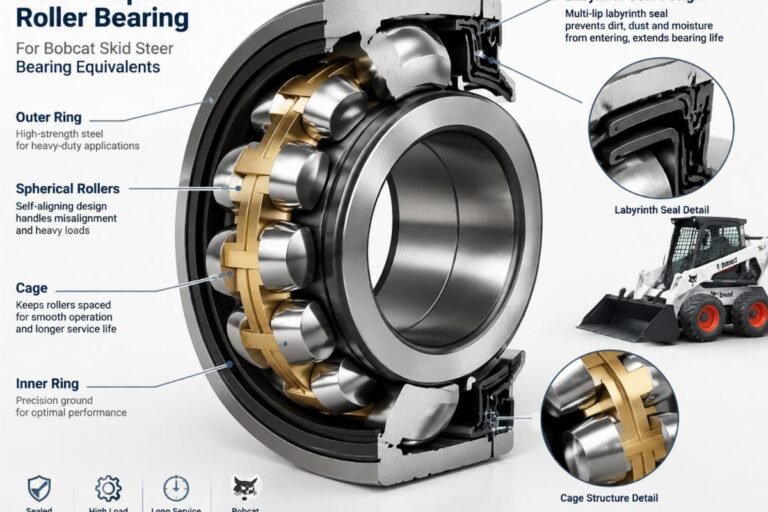
Leave a Reply