New Bearing Brand Installation Monitoring: Genuine Wholesale Supplier
New bearings do not arrive ready for service; they arrive as potential liabilities until proven otherwise.
The first 48 hours of operation are the most critical phase in a bearing’s lifecycle, dictating whether it will serve for years or fail within weeks. Effective bearing installation monitoring requires immediate verification of internal clearance, continuous tracking of thermal baselines, and the establishment of vibration signatures before full load is applied. Skipping these steps transforms a precision component into a ticking time bomb, regardless of the brand’s reputation.
I still remember the dust choking the air at a copper mine in Chile, where the silence was louder than the grinding machinery. A massive ball mill had shut down unexpectedly, not because of a design flaw, but because a batch of spherical roller bearings was installed without checking the residual clearance. The maintenance team assumed “new” meant “perfect.” They were wrong. The inner rings had expanded during mounting, eliminating the necessary running gap. Within months, the heat built up until the lubricant carbonized and the rollers seized. That downtime cost far more than the price of the bearings themselves. It was a harsh lesson that shifted my focus from simply selling parts to ensuring their survival through rigorous bearing installation monitoring.
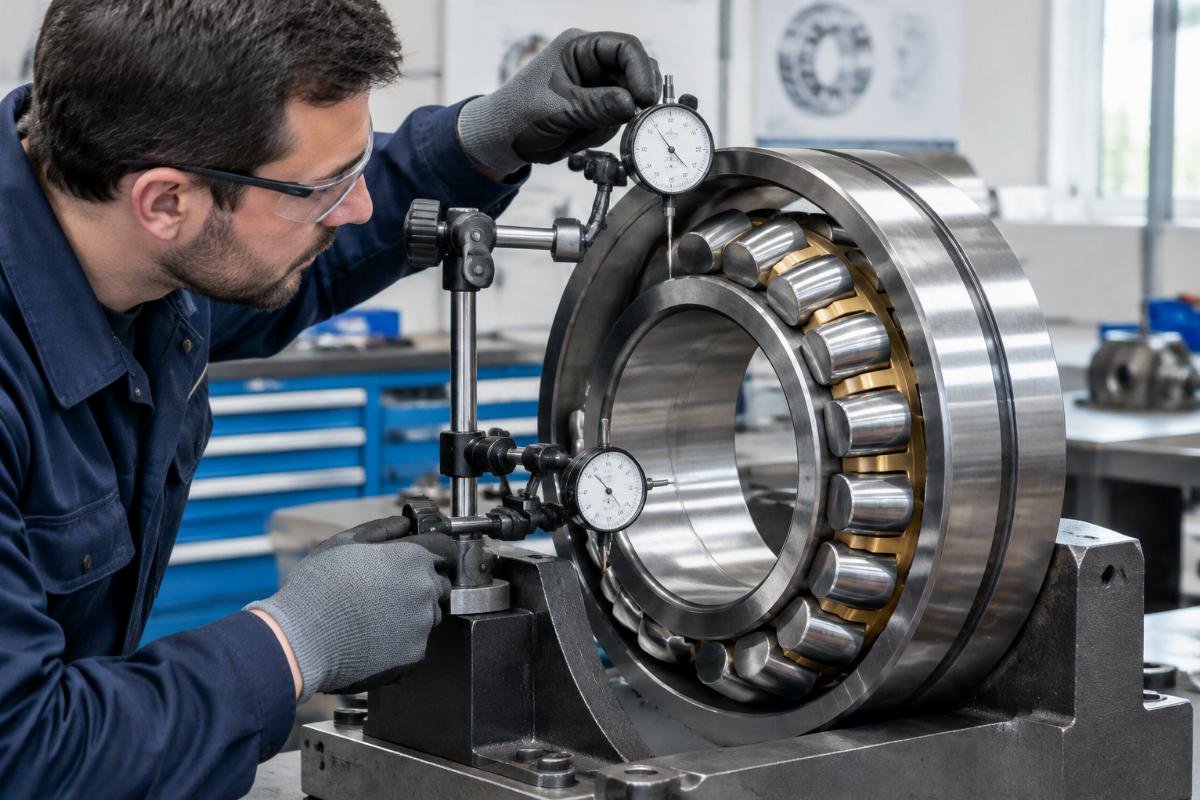
This experience underscores a fundamental truth in heavy industry: installation quality and initial validation dictate the majority of a bearing’s operational lifespan. Many operators mistakenly believe that premium brands eliminate the need for post-installation scrutiny. In reality, even the highest-grade steel requires precise handling to maintain its integrity. The following guide details how to implement effective bearing installation monitoring protocols to prevent premature failures and ensure operational reliability.
Why is the first 48 hours critical for new bearings?
The initial run-in period establishes the baseline data that all future condition monitoring relies upon.
When a new bearing starts rotating, it undergoes microscopic adjustments. The rolling elements settle into their raceways, and the lubricant film begins to form uniformly. If there are minor installation errors—such as slight misalignment or excessive preload—they manifest as subtle temperature spikes or unusual vibration patterns during this window. Ignoring these early signs means missing the only opportunity to catch issues before they escalate into catastrophic damage.
Most maintenance teams assume new bearings need no monitoring, believing that factory testing guarantees performance. However, factory tests occur under controlled conditions, not in the harsh reality of a mining crusher or a steel mill conveyor. The first two days of operation provide a unique fingerprint for the asset. By capturing vibration spectra and thermal readings immediately after startup, you create a reference point. Future deviations can then be measured against this baseline rather than generic industry standards, which may not account for specific load conditions or environmental factors.
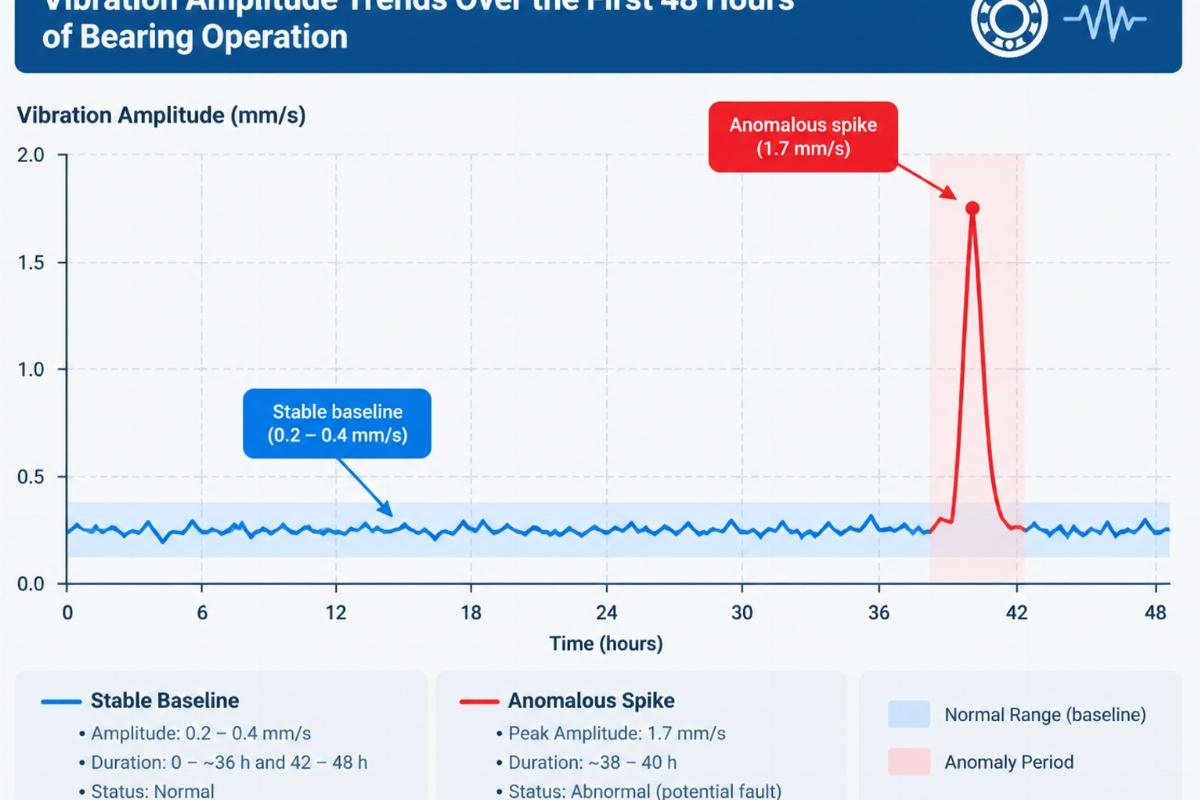
Establishing this baseline is not just about detecting faults; it is about validating the installation process itself. If the initial readings are clean, you have confidence in the assembly. If they show irregularities, you can intervene before the bearing suffers irreversible damage. This proactive approach is the core of effective bearing installation monitoring. Without it, you are flying blind, waiting for failure instead of managing health. [NEED_CITE: importance of baseline data in predictive maintenance]
How to verify installation clearance and alignment?
Proper initial clearance prevents immediate thermal runaway and ensures the lubricant film can function correctly.
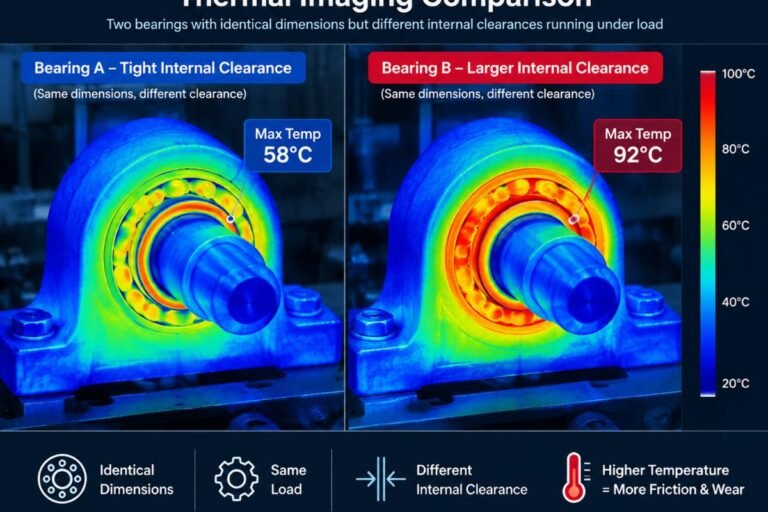
Clearance is the space between the rolling elements and the raceways. It is not a static value; it changes during installation due to interference fits and thermal expansion. If the clearance is too tight, friction increases, generating heat that further expands the metal, leading to a vicious cycle known as thermal runaway. If it is too loose, vibration increases, causing fatigue and premature wear. Verifying this parameter is the first step in any bearing installation monitoring protocol.
Alignment is equally critical. Misaligned bearings carry uneven loads, concentrating stress on a small section of the raceway. This leads to spalling and early failure. Even high-precision bearings cannot compensate for poor shaft or housing alignment. Therefore, checking both clearance and alignment before startup is non-negotiable.
| Parameter | Risk if Ignored | Verification Method |
|---|---|---|
| Internal Clearance | Thermal seizure, lubricant breakdown | Feeler gauges, dial indicators, or ultrasonic measurement |
| Shaft Alignment | Uneven load distribution, edge loading | Laser alignment tools, reverse indicator method |
| Housing Fit | Outer ring rotation, fretting corrosion | Visual inspection, torque checks on housing bolts |
In a cement plant fan application, misaligned bearings caused overheating that went unnoticed until the temperature rose by double-digit Celsius degrees. Had the team performed a proper alignment check and verified clearance beforehand, the anomaly would have been prevented. Instead, they faced an emergency shutdown. Adding continuous temperature sensors later helped catch similar issues early, but prevention is always superior to detection. [NEED_CITE: ISO standards for shaft alignment tolerances]
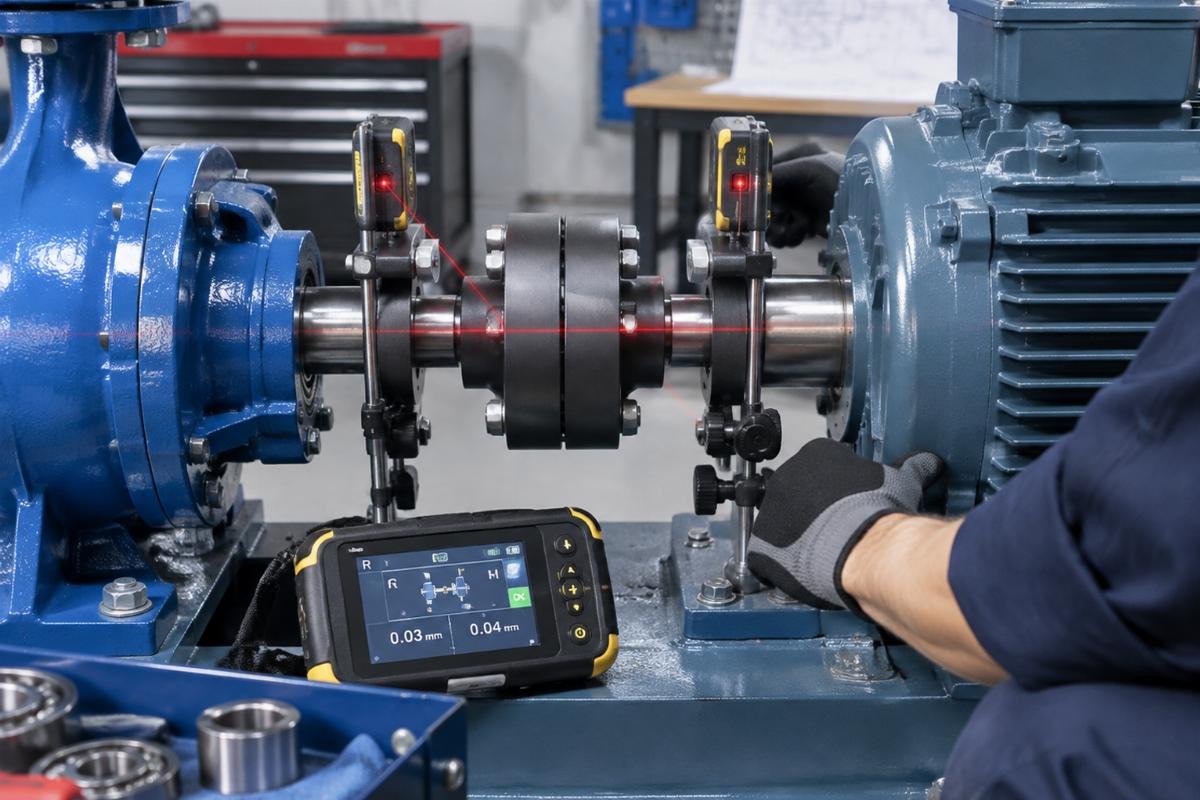
Verifying these parameters requires precision tools and patience. It is not a task to be rushed. The effort invested here pays dividends in extended service life and reduced unplanned downtime. This is why bearing installation monitoring must begin before the machine even turns on.
What sensors should be installed immediately after startup?
Temperature and vibration sensors catch early anomalies before they evolve into catastrophic failures.
Once the mechanical checks are complete, the next layer of protection involves electronic monitoring. Installing sensors immediately after startup allows you to capture the true “healthy” state of the bearing. Waiting weeks or months to install monitoring equipment means you miss the crucial initial data, making it harder to distinguish between normal run-in behavior and actual faults.
Vibration sensors are the primary tool for detecting mechanical issues such as imbalance, misalignment, or looseness. They measure the acceleration or velocity of the bearing housing, providing a spectrum analysis that reveals specific fault frequencies. Temperature sensors, on the other hand, monitor the thermal state of the bearing. A sudden rise in temperature often indicates lubrication failure or excessive friction, which may not yet show up in vibration data.
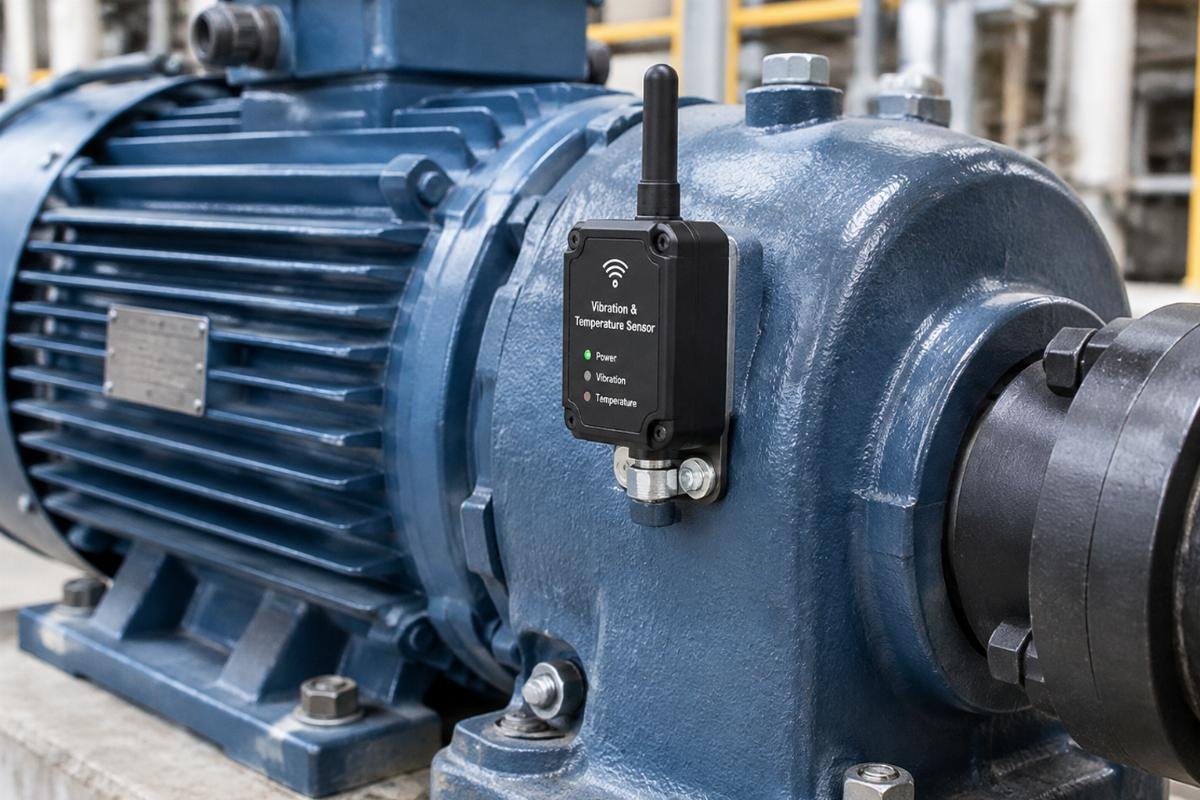
In a steel mill conveyor project, vibration monitoring established baseline data right after startup. This allowed the maintenance team to detect subtle changes in the vibration signature months later, significantly extending replacement intervals. The lifecycle extension was substantial, proving that early sensor deployment is a key component of bearing installation monitoring. Without these sensors, the team would have relied on reactive maintenance, replacing bearings only after they failed.
Choosing the right sensors depends on the application. For slow-speed heavy loads, temperature monitoring might be more indicative of health. For high-speed applications, vibration analysis is essential. In many cases, a combination of both provides the most comprehensive view. Integrating these sensors into your maintenance strategy ensures that you are not just guessing about the bearing’s condition but knowing it with precision. [NEED_CITE: best practices for sensor placement on bearing housings]
How to interpret the initial monitoring data?
Comparing early readings against manufacturer baselines ensures operational safety and validates the installation.
Data without context is noise. The values collected from vibration and temperature sensors must be interpreted against known standards and manufacturer guidelines. This is where many teams struggle. They see a number but do not know if it is good or bad. Effective bearing installation monitoring requires understanding what constitutes a normal range for your specific bearing type, speed, and load.
Manufacturer guidelines provide the starting point. They specify acceptable vibration levels and operating temperature ranges. However, these are general values. Your baseline data, collected during the first 48 hours, provides the specific context for your asset. If the initial vibration level is low and stable, that is your new normal. If it is higher, investigate why. Is it due to the machine’s inherent characteristics, or is there an installation issue?
| Data Type | Normal Indicator | Warning Sign | Action Required |
|---|---|---|---|
| Vibration Amplitude | Stable, low frequency | Increasing trend, high frequency peaks | Investigate alignment, balance, or lubrication |
| Temperature | Stable, within manufacturer range | Rapid rise, exceeding baseline by significant margin | Check lubrication, load, or cooling system |
| Lubrication Film | Consistent thickness | Thinning or irregularity | Adjust lubrication schedule or type |
Interpreting this data also involves looking for trends rather than single points. A single high reading might be a glitch. A consistent upward trend is a problem. In the mining crusher case mentioned earlier, skipped post-installation clearance checks led to premature failure. Had the team monitored the temperature trend closely, they might have seen the gradual increase and intervened before the seizure.
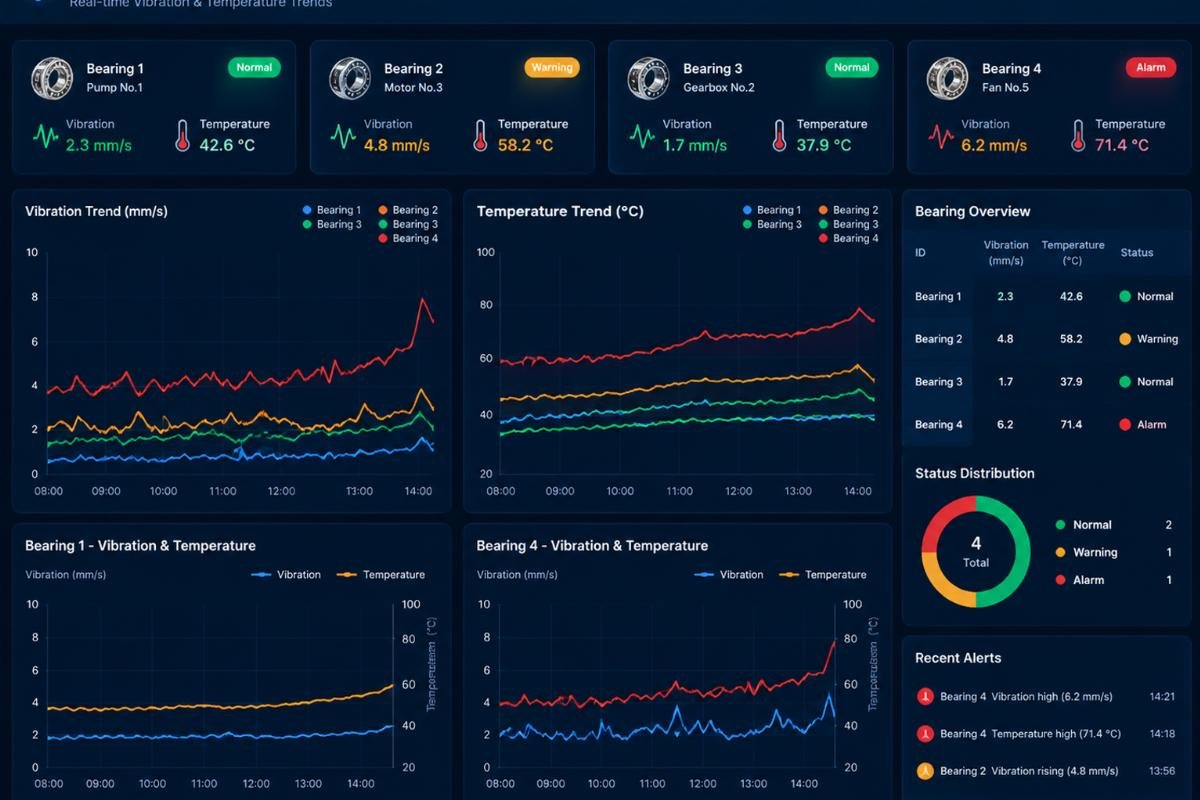
This interpretation process is not a one-time event. It is ongoing. As the bearing ages, the baseline may shift slightly. Regular comparison ensures that these shifts are understood and managed. This dynamic approach to data interpretation is what separates reactive maintenance from proactive asset management. It transforms bearing installation monitoring from a checkbox exercise into a strategic advantage. [NEED_CITE: methods for interpreting vibration spectrum analysis]
Conclusion
Monitoring is not an optional extra; it is the bridge between installation and reliability.
The difference between a bearing that lasts for years and one that fails in months often lies in the attention paid during the first few days of operation. By verifying clearance, establishing baselines, and installing sensors early, you take control of the asset’s health. This approach minimizes the risk of unexpected downtime and maximizes the return on your investment.
Effective bearing installation monitoring requires a blend of mechanical precision and digital insight. It demands that we look beyond the brand name and focus on the physical reality of the installation. Whether you are managing a single pump or a fleet of crushers, these principles remain constant. Treat the first 48 hours as the foundation of your maintenance strategy, and your bearings will reward you with sustained performance.

Written by
authorEditor covering global sourcing, supplier verification, and industrial product knowledge. Content is compiled from manufacturer specifications, industry standards, and hands-on experience with international B2B buyers. Every article is fact-checked before publishing to help procurement professionals make informed decisions.
View all posts

Leave a Reply