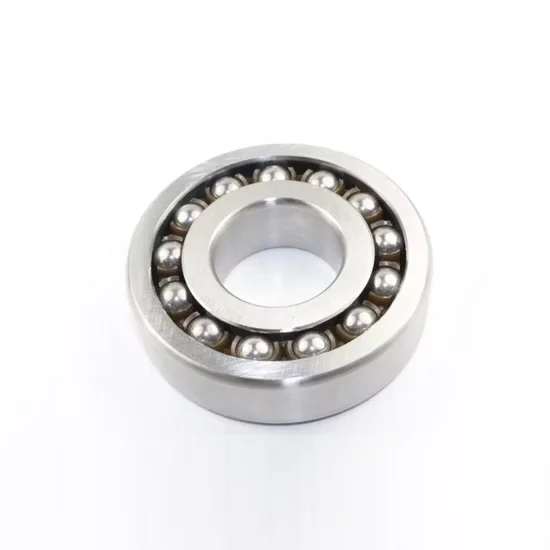
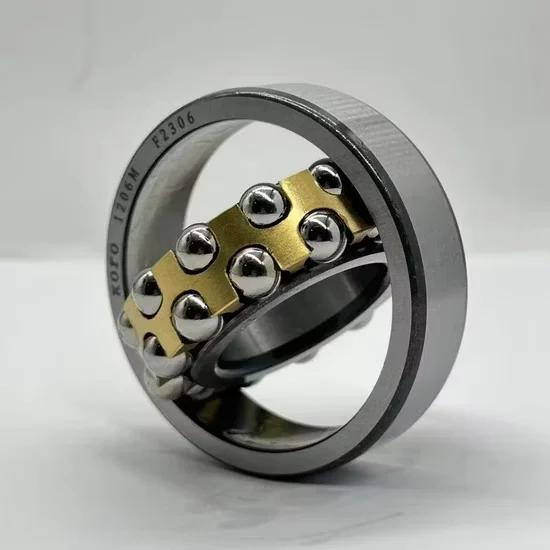
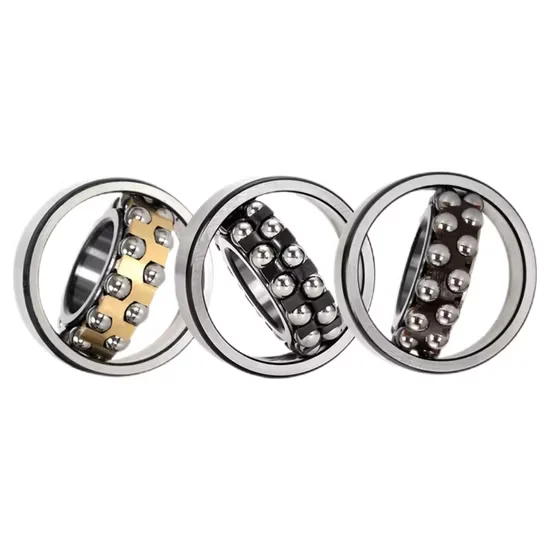
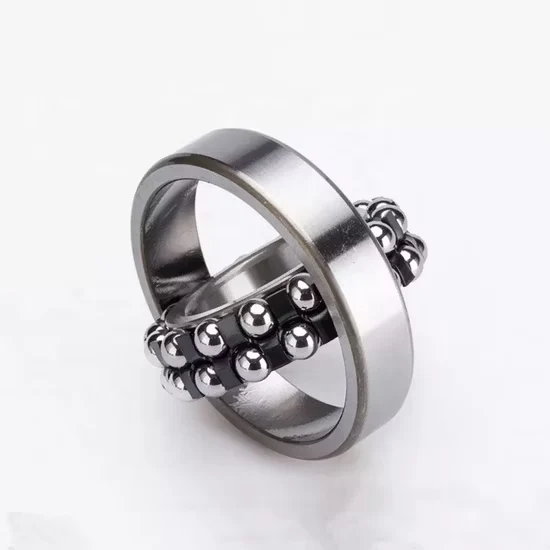
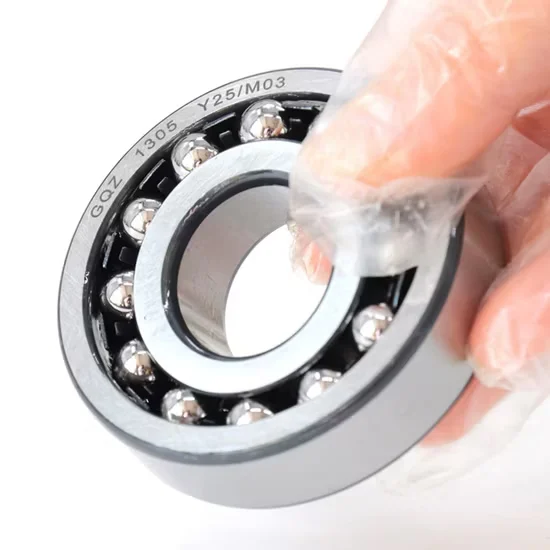
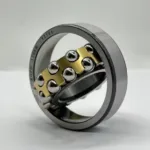
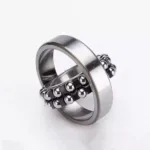
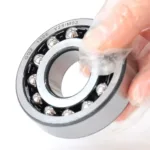
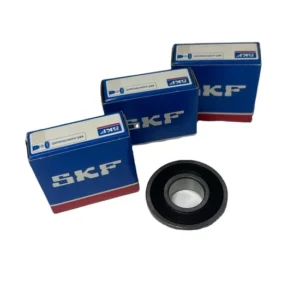
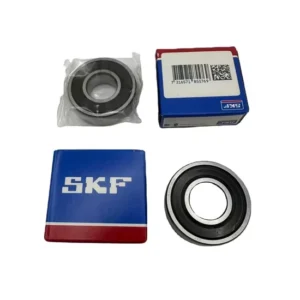
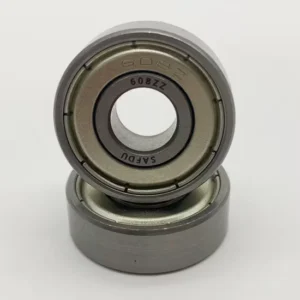
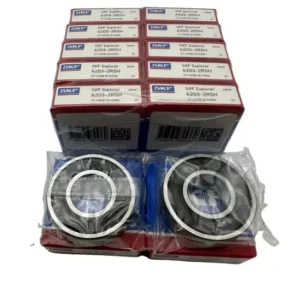
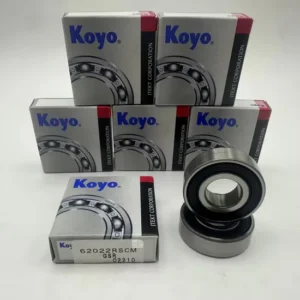
Unified Brand Sourcing — Consolidate mixed-brand orders without coordinating multiple suppliers for your 1210 self-aligning ball bearing requirements.
Technical Specifications
| Parameter | Value |
|---|
| Designation | 1210 |
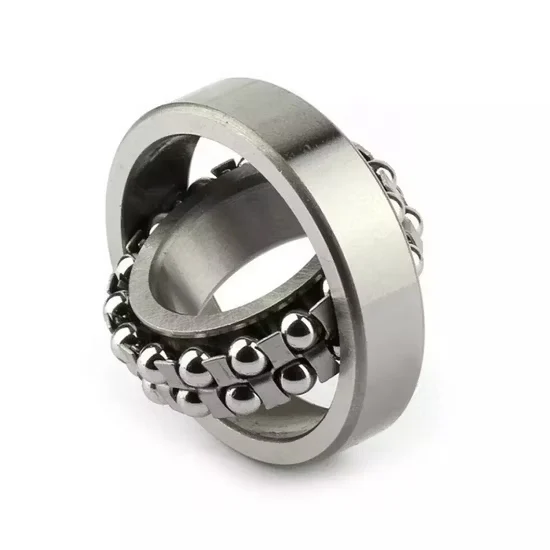
| Bearing Type | Self-Aligning Ball Bearing |
| Dynamic Load Rating (C) | 12.7 kN |
| Static Load Rating (C₀) | 3.7 kN |
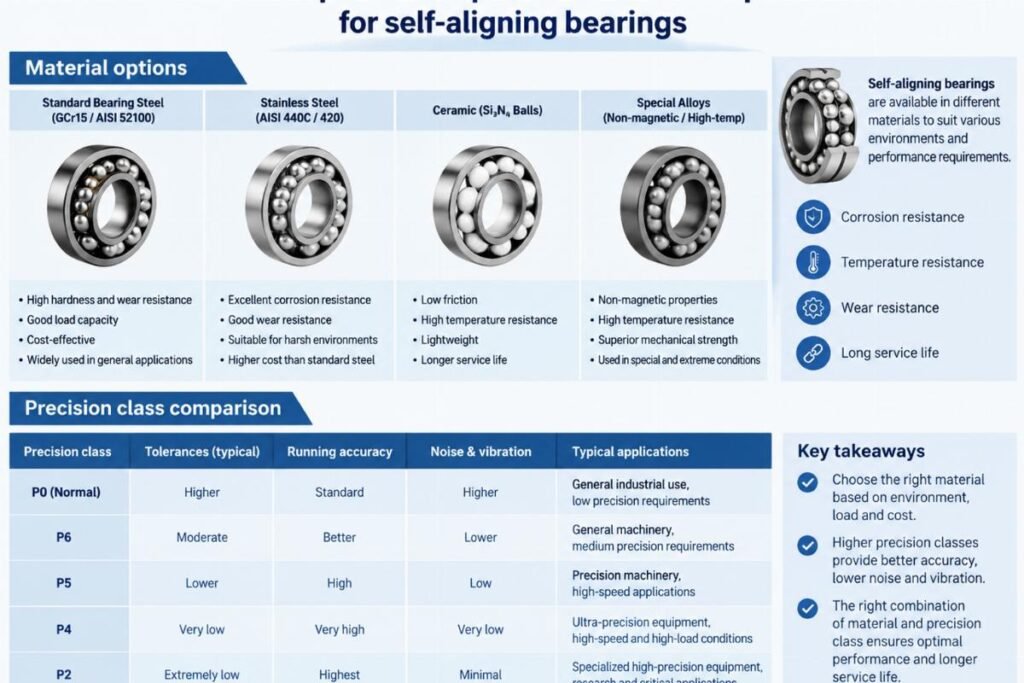
| Precision Class | P6 |
| Material | Available in chrome steel or stainless steel variants |
Application Suitability
| Industry | Typical Applications |
|---|
| Agricultural Machinery | Harvester conveyor drives and auger shafts |
| Material Handling | Belt conveyor pulley bearings and transfer roll supports |
| Textile Machines | Spinning frame drafting rollers |
Misalignment Tolerances in the 1210 self-aligning ball bearing
Proper internal clearance selection prevents edge loading when shafts deflect under heavy agricultural loads.
When shaft deflection exceeds design limits in harvesting equipment, rigid bearings experience severe edge loading. This localized stress accelerates fatigue and leads to premature raceway spalling [NEED_CITE: rolling bearing failure mode classification per ISO 15243]. Selecting the appropriate clearance class ensures the rolling elements maintain optimal contact even during significant misalignment. Furthermore, ignoring the dynamic interaction between the spherical outer ring and the housing bore can restrict this self-aligning movement, effectively turning a flexible component into a rigid one and accelerating catastrophic failure.

Matching Bearing Geometry to Conveyor Deflection
Conveyor systems frequently suffer from frame flexing and pulley misalignment due to uneven material loading. The spherical outer ring raceway of the 1210 self-aligning ball bearing accommodates these angular errors without binding the rolling elements. Our technical team provides cross-brand equivalent model consultation to ensure the selected geometry matches your specific conveyor deflection parameters. By analyzing the exact misalignment angles and load distribution, we help engineers avoid the common pitfall of oversizing the component when a geometrically optimized solution would perform significantly better.
Managing Contamination and Lubrication in Harsh Environments
Agricultural and material handling environments expose components to heavy particulate contamination and moisture ingress. Inadequate sealing allows abrasive dust to infiltrate the raceway, drastically increasing friction and operating temperatures [NEED_CITE: bearing contamination impact on fatigue life per ISO 281]. Choosing the right lubrication interval and seal configuration is critical to prevent grease degradation and maintain the protective elastohydrodynamic film. Proper installation practices further ensure that the self-aligning capability is not restricted by tight housing fits, which is a frequent oversight during field maintenance.
Decoding Precision and Material Options for Extended Service
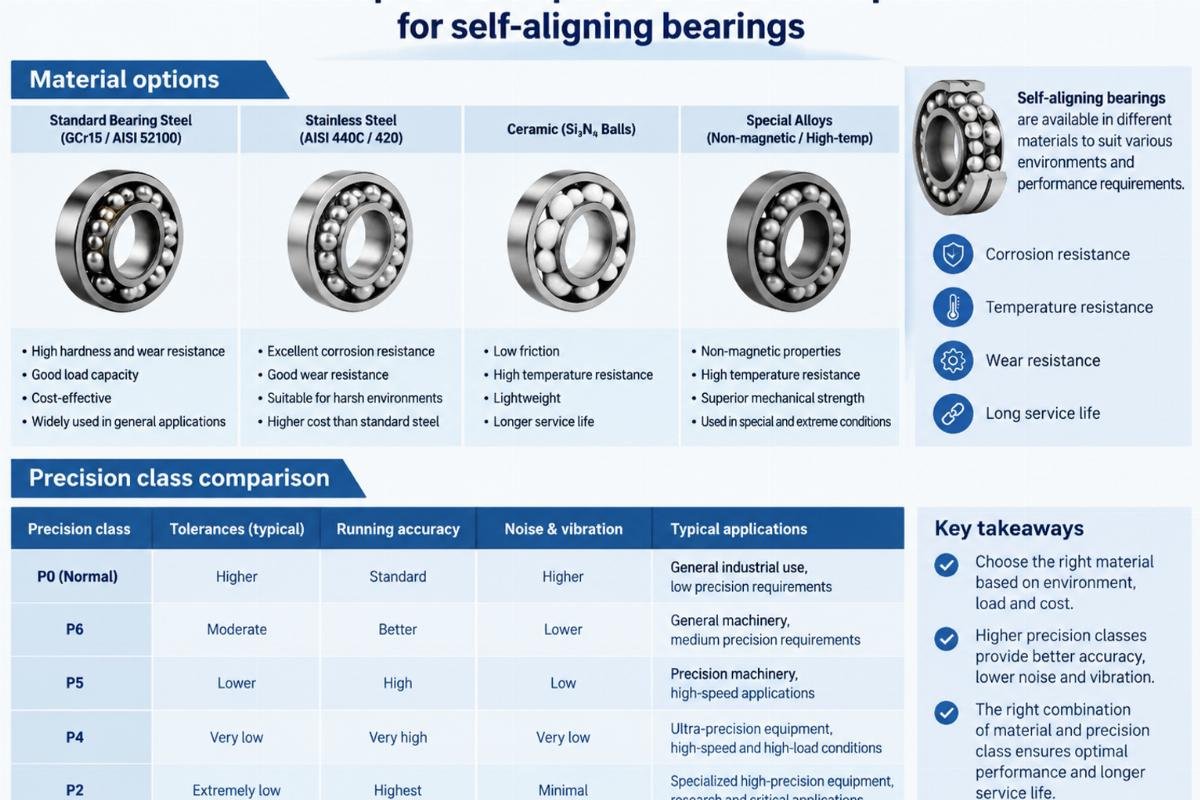
The P6 precision class provides tighter dimensional and running accuracy compared to standard tolerances, which is essential for minimizing vibration in high-speed textile machinery. Regarding material composition, these components are available in chrome steel or stainless steel variants to suit different operational environments. Chrome steel offers high load-carrying capacity for standard industrial use, while stainless options provide enhanced corrosion resistance for washdown areas in food processing or outdoor agricultural equipment. Understanding these material options allows engineers to balance load requirements against environmental degradation. Additionally, the tighter tolerances of the P6 class ensure smoother operation and reduced noise levels, which is particularly beneficial in automated material handling systems where acoustic emissions are monitored.
The Operational Impact of Incorrect Clearance Selection
Specifying an incorrect internal clearance for misaligned shafts leads to unplanned downtime and catastrophic damage to adjacent housing components. When the bearing cannot compensate for angular errors, the resulting internal preload generates excessive heat and rapid lubricant failure [NEED_CITE: thermal instability and lubricant degradation per ISO 281]. This premature failure voids equipment warranties and forces costly emergency replacements during peak production cycles. Moreover, the secondary damage to shafts and housings often requires extensive machining and realignment, multiplying the initial repair costs and extending the total equipment downtime significantly.
Securing Traceable Quality and Technical Alignment
Sourcing genuine components with complete traceability documentation ensures that the P6 precision tolerances are authentically met. We maintain massive spot inventory covering thousands of standard part numbers, enabling rapid dispatch for urgent maintenance requirements. Our engineers offer technical selection support to verify that the chosen material variant aligns with your specific washdown or heavy-load conditions. Furthermore, competitive sourcing costs compared to direct official channels make bulk project orders highly economical without sacrificing ISO-compliant quality assurance. This comprehensive approach eliminates the friction of coordinating multiple suppliers and guarantees that every component meets the rigorous demands of your operational environment.
Documentation & Authenticity
- Certificate of Conformity verifying P6 dimensional tolerances for the 1210 self-aligning ball bearing.
- Mill test reports confirming the specific chrome steel or stainless steel material variant supplied.
- Factory batch traceability records linking the physical component to its original production run.
- Running accuracy inspection reports validating internal clearance before dispatch.
Storage, Handling & Mounting
- Store the P6 precision components in original packaging to prevent moisture ingress and raceway corrosion.
- Avoid using carbon steel tools during mounting to prevent cross-contamination on stainless steel variants.
- Ensure housing fits do not restrict the spherical outer ring, preserving the self-aligning capability.
- Apply appropriate induction heating for inner ring mounting to protect the delicate P6 tolerance zones.
Engineering Data Required for Selection Verification
Please provide detailed operational parameters, including radial and axial loads, operating speeds, and expected shaft deflection angles. Sharing the OEM equipment model number allows our engineering team to perform accurate cross-reference verification and identify any obsolete part numbers. Specifying the environmental exposure helps us recommend the optimal material variant and sealing configuration for your application. Supplying housing bore tolerances and shaft fit specifications also enables us to calculate the final internal clearance after mounting, ensuring optimal performance under actual operating conditions.
Frequently Asked Questions
Q: How do I verify the P6 precision class tolerances for this specific bearing?
A: Verification requires comparing the physical dimensions and running accuracy against the manufacturer's official P6 tolerance tables. We supply comprehensive dimensional inspection reports with every shipment, ensuring the bore, outside diameter, and width strictly conform to the specified precision class before installation.
Q: What are the common failure modes in agricultural machinery applications?
A: Agricultural environments typically cause failures through abrasive contamination entering the raceway or moisture inducing corrosion. Misalignment from frame flexing also causes edge loading if the self-aligning capability is restricted by improper housing fits. Regular relubrication and correct seal selection mitigate these specific failure modes.
Q: How does the chrome steel option compare to stainless steel for washdown environments?
A: Chrome steel provides superior load-carrying capacity and fatigue resistance for standard dry or lightly lubricated applications. In contrast, stainless steel variants offer substantially higher corrosion resistance, making them essential for environments requiring frequent chemical washdowns or exposure to harsh outdoor moisture.
Q: How should I determine the correct internal clearance for shaft misalignment?
A: Determining the correct clearance involves calculating the expected shaft deflection angle and the thermal expansion during operation. A standard clearance might suffice for minor misalignments, but heavier loads and greater deflections often require a larger internal clearance to prevent internal preload and subsequent overheating.