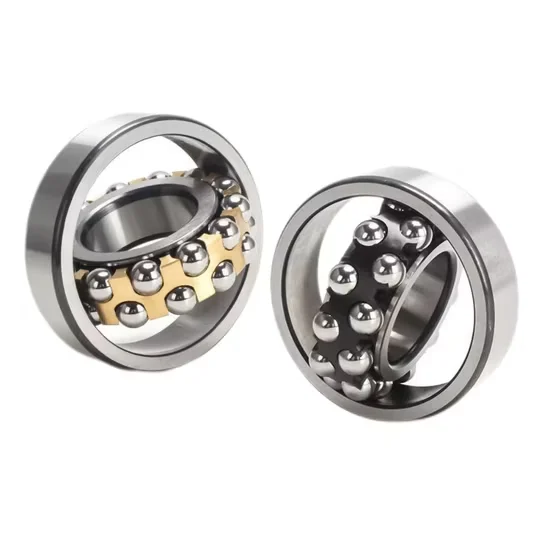
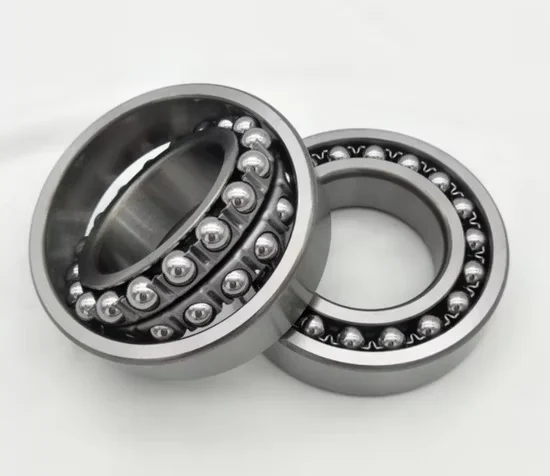
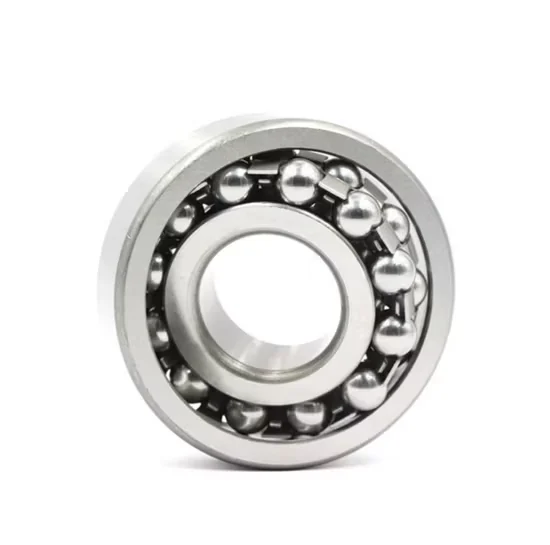
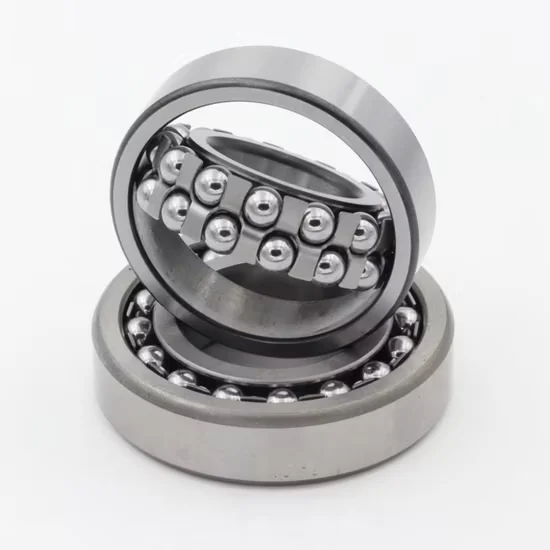
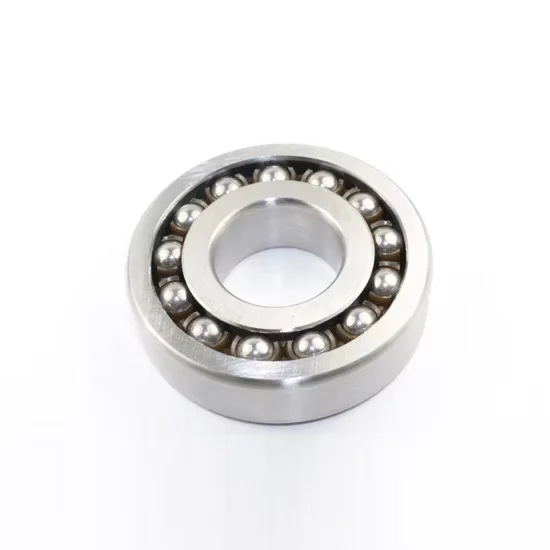
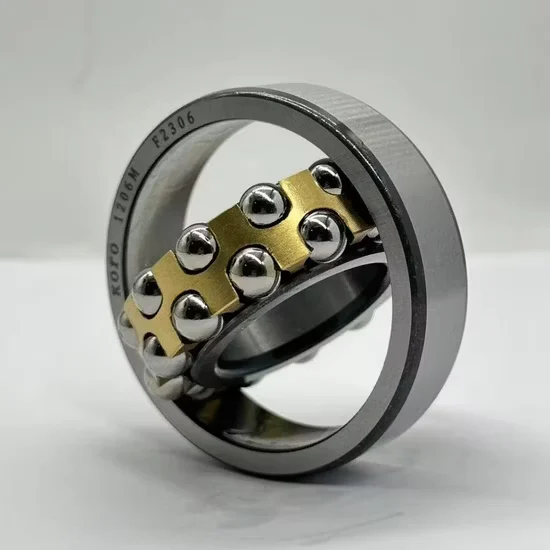
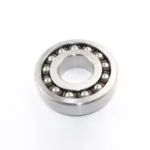
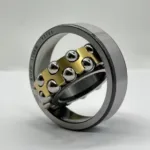
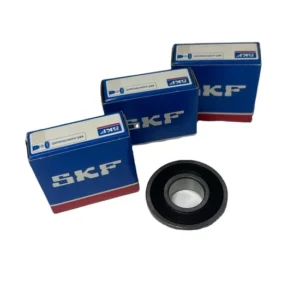
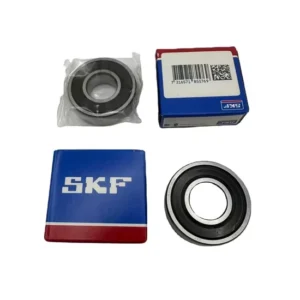
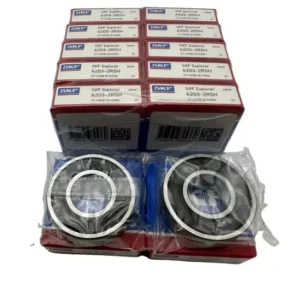
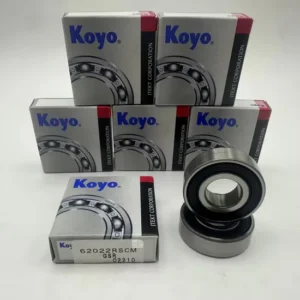
Original Batch Traceability — Every 1305K self-aligning ball bearing ships with verifiable factory lot records to guarantee material integrity for sensitive medical equipment.
Technical Specifications
| Parameter | Value |
|---|
| Designation | 1305K |
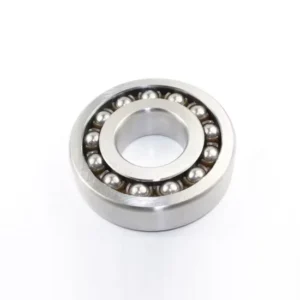
| Bearing Type | Self-Aligning Ball Bearing |
| Number of Rows | Double-Row |
| Bore Type | 1:12 Tapered Bore (K suffix) |
| Material | Chrome Steel Gcr15 / 100cr6 |
| Dynamic Load Rating (C) | 12.7 kN |
| Static Load Rating (C₀) | 3.7 kN |
| Origin | Shandong, China |
Application Suitability
| Industry | Typical Applications |
|---|
| Medical Equipment | Precision diagnostic imaging tables and adjustable patient positioning mechanisms |
| Textile Manufacturing | Yarn tensioning rollers and high-speed spindle support assemblies |
| Material Handling | Conveyor belt return idlers and automated sorting diverter joints |
| Agricultural Machinery | Seed metering drive shafts and adjustable harrow angle pivots |
Why Standard Cages Shatter Inside Precision Medical Tables
Misaligned shafts and high-speed vibrations rapidly fatigue stamped steel cages without proper clearance verification.
Early in my career, a standard cage fractured inside a medical imaging device, generating excessive noise and halting operations. Sourcing a 1305K self-aligning ball bearing requires strict suffix and clearance validation to prevent catastrophic internal friction. [NEED_CITE: rolling bearing failure mode classification per ISO 15243]
Matching Component Geometry to Precision Environments
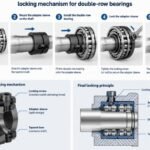
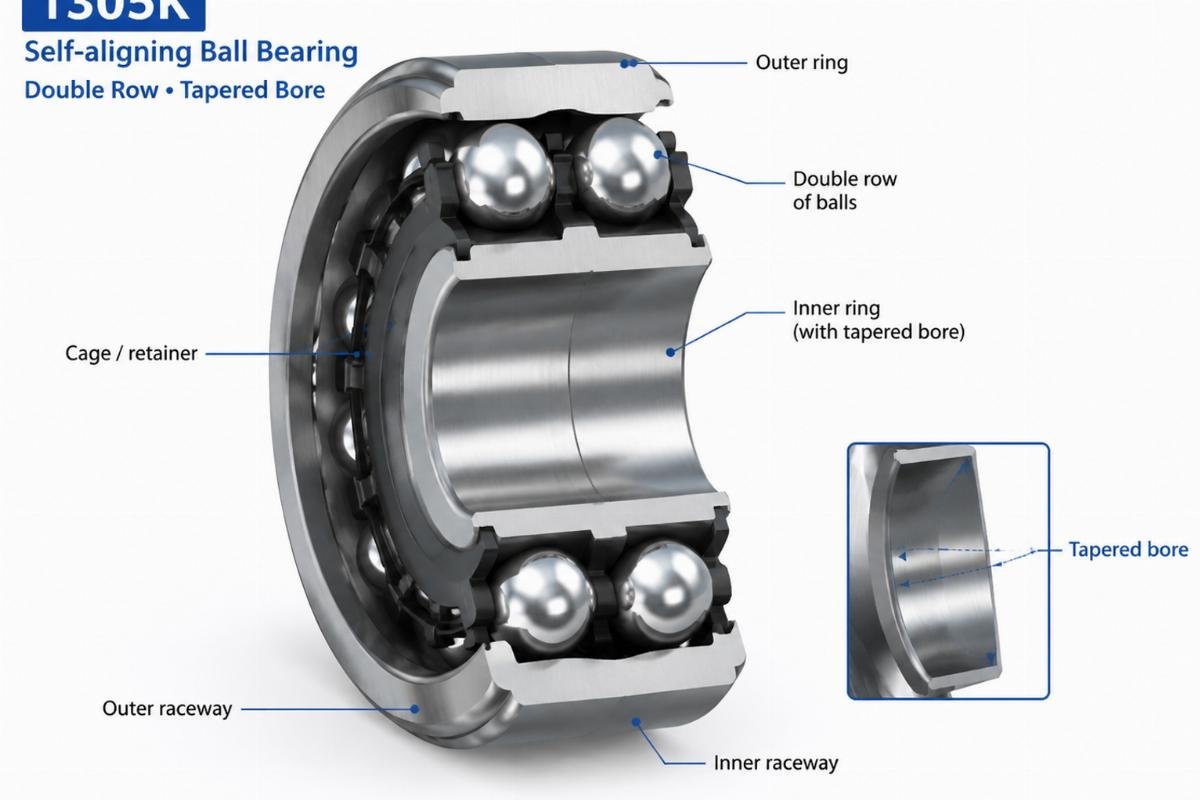
Matching the 1305K self-aligning ball bearing to precision medical or textile applications demands much more than simply matching basic dimensional outlines. The double-row configuration inherently accommodates shaft deflection, while the tapered bore ensures secure locking on adapter sleeves without slippage. Our engineering team cross-references clearance classes to ensure the internal geometry survives the specific thermal expansion profiles of diagnostic equipment. We also evaluate the cage material compatibility to prevent the high-speed failures I witnessed early in my procurement career.
Navigating Thermal Dynamics and Load Profiles
Medical positioning tables and textile spindles routinely subject bearings to combined radial loads and continuous high-speed rotation. In these demanding environments, thermal expansion generated from internal friction can entirely eliminate internal clearance, leading to severe cage stress and eventual fracture. Establishing proper lubrication intervals and verifying the exact clearance class before installation are critical steps to prevent the rolling elements from skidding. Ignoring these thermal dynamics frequently results in excessive noise and catastrophic operational halts in sensitive facilities. [NEED_CITE: thermal expansion effects on bearing internal clearance per ISO 281]
Decoding the Tapered Bore and Load Boundaries
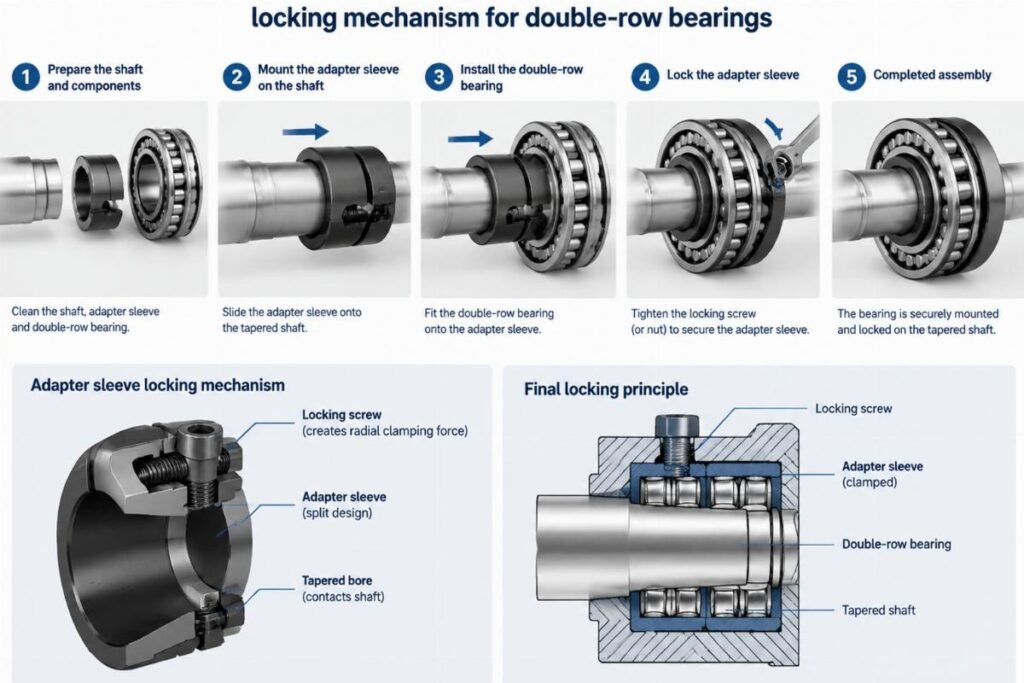
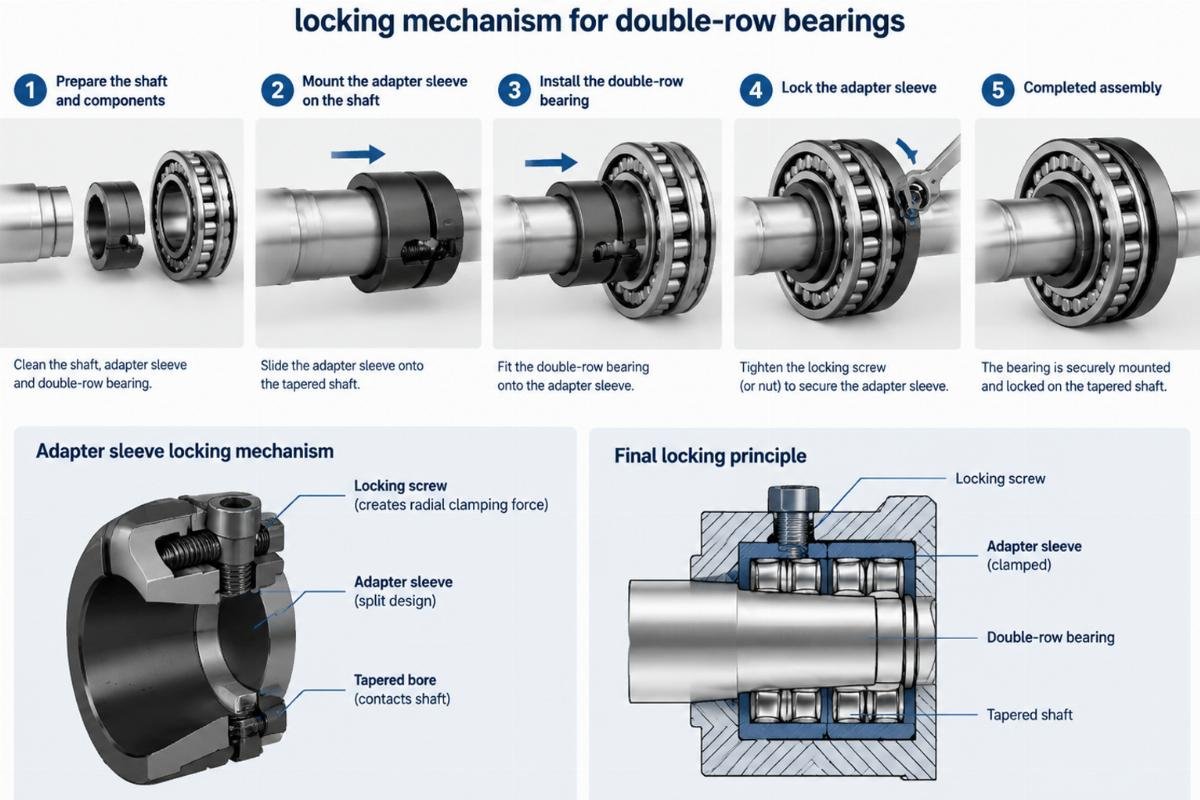
The "K" suffix designates a 1:12 tapered bore, which requires precise drive-up measurements during mounting to achieve the correct residual clearance. The double-row self-aligning design allows the inner ring to pivot freely relative to the outer ring, effectively compensating for static misalignment in the housing. Constructed from Chrome Steel Gcr15, the rings and rolling elements offer high structural durability for moderate load profiles. The dynamic load rating of 12.7 kN and static rating of 3.7 kN define the operational boundaries for continuous medical table adjustments. Furthermore, verifying the exact cage type is essential, as stamped steel variants may fail under the specific vibration frequencies of high-speed textile spindles.
The Hidden Costs of Ignoring Suffix Variations
Selecting an incorrect clearance class or ignoring the tapered bore mounting specifications inevitably leads to premature operational failure. When internal clearance is entirely consumed by thermal growth, the bearing experiences excessive friction, rapid temperature spikes, and accelerated fatigue. This sequence of events results in unplanned downtime, catastrophic damage to the surrounding medical housing, and immediate warranty voidance. Relying on generic replacements without verifying the specific suffix and internal geometry compromises the entire precision assembly. [NEED_CITE: premature bearing failure consequences in precision machinery]
Securing Genuine Replacements for Critical Machinery
Procuring the correct 1305K self-aligning ball bearing involves navigating complex suffix variations that generic catalogs frequently obscure or mislabel. We rigorously verify the exact bore taper and clearance class against your specific equipment requirements before dispatch. Our inventory includes fully traceable batches from premium global and reliable domestic brands, ensuring you receive genuine components rather than questionable substitutes. We provide comprehensive dimensional inspection reports and flexible consolidation shipping for mixed MRO packages, eliminating the risk of receiving mismatched replacements that cause secondary equipment damage.
Documentation & Authenticity
- Certificate of Conformity verifying Gcr15 material composition for the 1305K rings and rolling elements.
- Original factory batch traceability records linking the specific tapered bore bearing to its production date.
- Dimensional inspection reports confirming the 1:12 taper angle and double-row raceway geometry.
- Running accuracy test results validating smooth rotation for noise-sensitive medical device applications.
Storage, Handling & Mounting
- Store the 1305K units in original packaging to protect the tapered bore from ambient humidity and corrosion.
- Use induction heating for the inner ring during mounting to avoid damaging the Gcr15 raceway surfaces.
- Measure the drive-up distance carefully on the adapter sleeve to retain the specified internal clearance.
- Apply clean gloves when handling to prevent skin acids from initiating surface corrosion on the chrome steel components.
Inquiry Guidance for Technical Verification
To ensure the selected 1305K self-aligning ball bearing perfectly matches your application, please share your specific radial and axial load profiles along with operational speeds. Providing the original equipment manufacturer part number allows our team to perform a precise cross-reference check. Detailing the operating temperature and housing tolerances helps us verify the optimal clearance class and mounting adapter requirements.
Frequently Asked Questions
Q: What does the K suffix indicate on this self-aligning ball bearing?
A: The K suffix specifies a 1:12 tapered bore, meaning the inner ring diameter narrows along its width. This design requires an adapter sleeve for secure mounting on standard cylindrical shafts, allowing precise adjustment of internal radial clearance during installation to suit specific medical or textile equipment loads.
Q: How do I verify the correct clearance class for medical imaging tables?
A: Medical imaging tables often experience thermal growth during continuous operation, which reduces internal clearance. We cross-reference your specific operating temperatures and housing tolerances to recommend the appropriate clearance class, ensuring the double-row configuration maintains optimal rolling contact without generating excessive friction or cage stress.
Q: Can this bearing accommodate significant shaft misalignment?
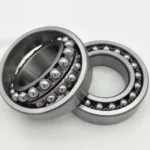
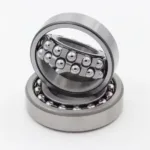
A: Yes, the double-row self-aligning design features a spherical outer raceway that allows the inner ring and ball assembly to pivot. This accommodates static angular misalignment caused by shaft deflection or housing machining tolerances, making it highly effective for conveyor systems and agricultural machinery where perfect alignment is difficult.
Q: What mounting tools are required for the tapered bore design?
A: Installing the tapered bore requires a matching adapter sleeve, a lock washer, and a lock nut. We recommend using specialized spanner wrenches and feeler gauges to measure the drive-up distance accurately. This ensures the inner ring expands correctly on the sleeve, achieving the precise residual clearance needed for high-speed rotation.