SKF Explorer vs Standard Class: Genuine Wholesale Supplier
SKF Explorer is not always the right choice.
SKF Explorer outperforms Standard Class in harsh conditions via optimized metallurgy, but only genuine parts with full traceability deliver this value; equivalent choices must match application severity. For heavy-load mining or steel mill applications, Explorer extends service life meaningfully. For light-duty general machinery, Standard Class suffices and saves significant cost. The critical risk is not choosing the wrong tier, but receiving Standard bearings disguised as Explorer due to missing traceability documentation.
I still remember the humidity in the warehouse at Ningbo Beilun Port. A container bound for a copper mine in Chile was sitting on the tarmac. The packing list declared every single spherical roller bearing as SKF Explorer class. The buyer had paid the premium for extended fatigue life and reduced friction torque. But when customs opened the box for a random check, the inner rings lacked the specific laser-etched identification codes that distinguish the Explorer line from the standard production run. They were Standard Class bearings, repackaged and relabeled.
That shipment taught me a hard lesson about the gap between invoice descriptions and physical reality. [NEED_CITE: SKF official product identification and traceability standards] The mine operator installed them in primary crushers. Within months, the bearings failed due to premature fatigue, not because the Standard class is bad, but because it was not engineered for that specific load spectrum. The claim rejection rate spiked because we could not produce the mill certificates linking those specific batch numbers to the Explorer production line. This experience shifted my focus from simple trading to rigorous verification of genuine SKF Explorer traceability.

Understanding the difference between these two tiers is not just about reading a catalog. It is about matching the metallurgy to the mechanical stress. Many buyers assume Explorer is universally superior. In reality, it is a specialized solution for specific pain points. If you are sourcing for a project that mixes heavy-duty crushers with light-duty conveyor idlers, buying Explorer for everything burns budget without adding value. Conversely, buying Standard for the crusher guarantees early failure. The key is knowing which is which, and ensuring what arrives at your dock matches what you ordered.
What Defines SKF Explorer vs Standard Class?
The core difference lies in optimized metallurgy and internal geometry, not just branding.
SKF Explorer bearings are engineered to handle higher loads and operate with lower friction than their Standard Class counterparts. This is achieved through cleaner steel, optimized raceway profiles, and enhanced surface finishes. [NEED_CITE: ISO standards for bearing load ratings and fatigue life calculation] The result is a bearing that runs cooler and lasts longer in contaminated or heavily loaded environments. Standard Class bearings, while robust and reliable for general applications, use conventional manufacturing tolerances and steel cleanliness levels that are sufficient for normal operating conditions but may struggle under extreme stress.
| Feature | SKF Explorer Class | SKF Standard Class |
|---|---|---|
| Steel Cleanliness | Optimized for lower inclusion density | Standard industrial grade |
| Surface Finish | Enhanced for reduced friction torque | Conventional finish |
| Load Capacity | Higher dynamic and static load ratings | Standard rated capacity |
| Operating Temperature | Better performance in high-heat scenarios | Standard thermal limits |
| Application Focus | Heavy-duty, contaminated, high-load | General purpose, light-to-medium duty |
| Traceability | Full batch-level documentation required | Standard commercial documentation |
A European wind farm operator once faced repeated gearbox failures. They were using Standard Class spherical roller bearings because the initial procurement team focused on unit price. After switching to Explorer class for the main shaft bearings, the maintenance intervals extended noticeably. The reduction in friction torque meant less heat generation, which preserved the lubricant integrity for a longer period. [NEED_CITE: Industry bearing association guidelines on lubrication and heat management] However, for the smaller auxiliary motors in the same turbine, they kept Standard Class bearings. The load there was minimal, and the Explorer premium offered no tangible return on investment. This mixed approach optimized their total cost of ownership.

The trap many distributors fall into is treating all SKF products as identical. They are not. The Explorer designation represents a specific set of engineering enhancements. When you request SKF Explorer equivalent choices from other brands, you must look for similar enhancements in steel purity and geometric optimization, not just dimensional compatibility. A bearing that fits the shaft but lacks the metallurgical upgrades will not perform like an Explorer.
When to Choose Explorer Over Standard?
Match Explorer to heavy-load and harsh environments, and Standard to light-duty applications.
Choosing the right class depends on the application severity. If your equipment operates in mining, construction, or steel production, where shock loads and contamination are common, Explorer is the necessary choice. The optimized design delays fatigue crack initiation, which is the primary cause of failure in these sectors. [NEED_CITE: Root cause distribution per ISO 15243 for bearing failures] For general manufacturing, agricultural machinery with moderate loads, or HVAC systems, Standard Class bearings provide reliable performance at a lower cost.
Consider a cement plant in Southeast Asia. The raw mill fan bearings operated in a dusty, high-vibration environment. The plant initially used Standard Class bearings to cut costs. These bearings failed frequently, causing unplanned downtime that cost far more than the price difference of the bearings. After switching to Explorer class, the mean time between failures increased substantially. The ability of Explorer bearings to tolerate misalignment and contamination better than Standard ones made the difference. [NEED_CITE: SKF official performance class definitions for industrial applications]
However, using Explorer for every application is a mistake. A textile factory in Turkey sourced Explorer deep groove ball bearings for their spinning frames. The loads were light, and the environment was clean. The premium paid for Explorer technology yielded no operational benefit. The factory could have saved a significant portion of its bearing budget by sticking to Standard Class for these non-critical points. The key is to segment your inventory. Identify the critical zones where failure is catastrophic or expensive, and allocate Explorer bearings there. Use Standard Class for the rest.
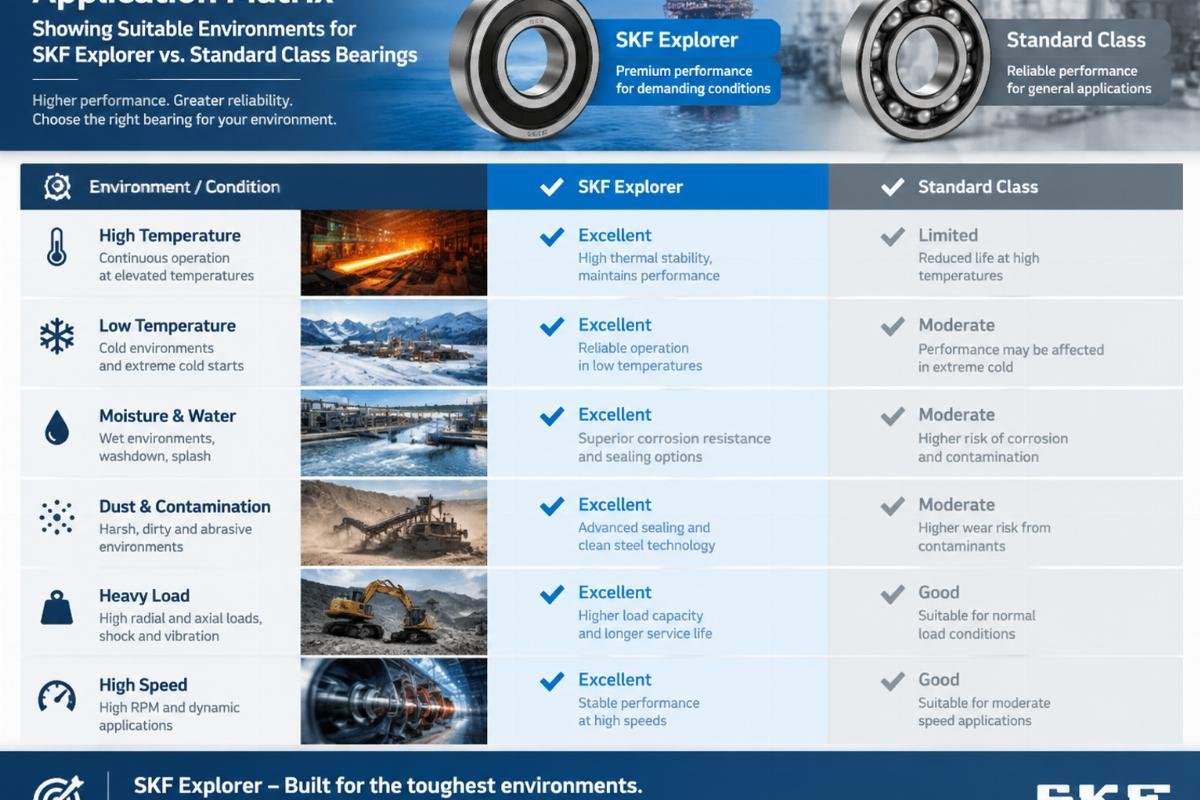
This segmentation requires technical knowledge. You cannot rely solely on part numbers. You must understand the load spectra and environmental conditions of each machine. When consulting with suppliers, ask for guidance on which applications justify the Explorer premium. A competent supplier will help you analyze your usage patterns rather than just pushing the most expensive item. This approach ensures you get the performance you need without over-engineering your entire plant.
How to Find Equivalent Choices Across Brands?
Cross-reference dimensions and load ratings from FAG, NSK, and other premium brands to match Explorer specs.
When SKF availability is tight or budget constraints require alternatives, finding true equivalents is critical. An equivalent choice must match not just the bore and outer diameter, but also the load rating and precision class. Brands like FAG, INA, NSK, NTN, and TIMKEN offer high-performance lines that compete with SKF Explorer. [NEED_CITE: Cross-brand bearing specification comparison methodologies] However, not all their standard products are equal to Explorer. You must look for their premium or “super” classes.
For example, FAG’s X-life series or NSK’s Super Precision bearings often align with Explorer performance metrics. To verify equivalence, compare the dynamic load rating (C) and static load rating (Co). If the alternative brand’s rating is lower, the bearing will have a shorter calculated life under the same load. [NEED_CITE: ISO methodology for bearing life calculation] Also, check the precision class. Explorer bearings often meet higher precision standards than basic industrial bearings. Ensure the alternative matches the P0 or higher precision level required.
A distributor in the Middle East needed to source spherical roller bearings for a mining project. SKF lead times were extended. They considered an alternative brand but found that the standard line had lower load ratings. By switching to the alternative brand’s premium line, they matched the Explorer specifications. The client accepted the substitution because the technical data sheets proved comparable performance. This flexibility is essential in global supply chains where single-source dependency creates risk.

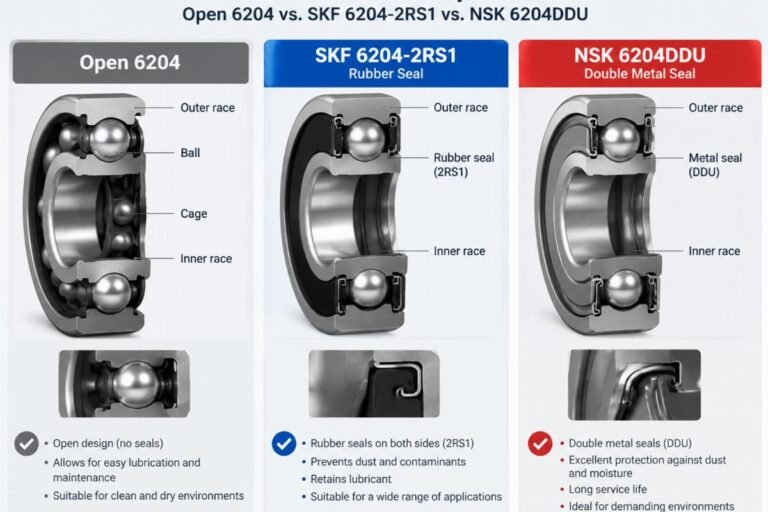
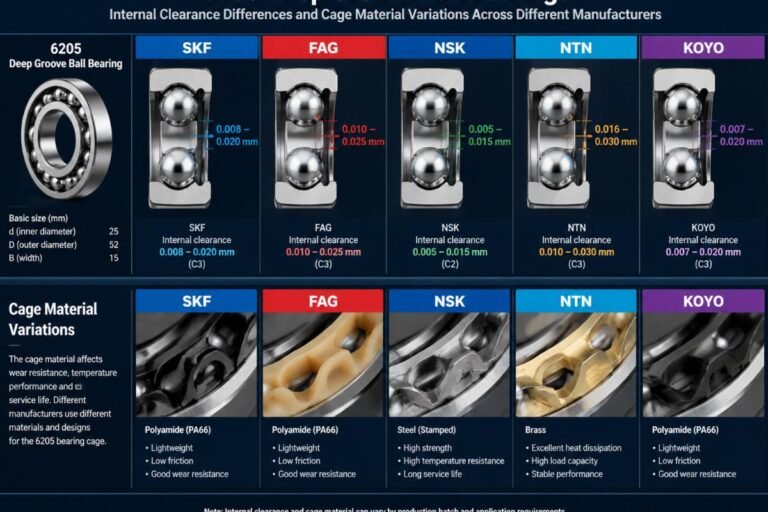
Do not assume dimensional interchangeability equals performance equivalence. A bearing that fits may not last. Always request detailed technical data from the alternative manufacturer. Compare the material specifications, cage designs, and sealing options. If the alternative uses a different cage material or seal type, it may affect high-speed performance or contamination resistance. Verify these details before committing to a large order. This diligence prevents costly mismatches in critical applications.
How to Verify Genuine Traceability?
Demand mill certificates and full batch documentation to prevent Standard being sold as Explorer.
The biggest risk in buying SKF Explorer is counterfeiting or mislabeling. Unscrupulous suppliers may mix Standard bearings into Explorer shipments. The only way to protect against this is through rigorous traceability verification. Every genuine SKF Explorer bearing has unique identification marks. These include laser-etched codes on the inner ring that link to the production batch. [NEED_CITE: SKF anti-counterfeit and product verification protocols] You must demand the corresponding mill certificates and quality assurance documents for each batch.
A customs inspection in South America revealed a container where the outer boxes said Explorer, but the inner bags contained Standard bearings. The buyer had relied on the invoice description alone. Because they lacked the batch-specific certificates, they could not prove the discrepancy until after installation. The resulting failure led to a mid-six-figure loss in equipment damage and production stoppage. This case highlights why physical verification and documentation are non-negotiable.
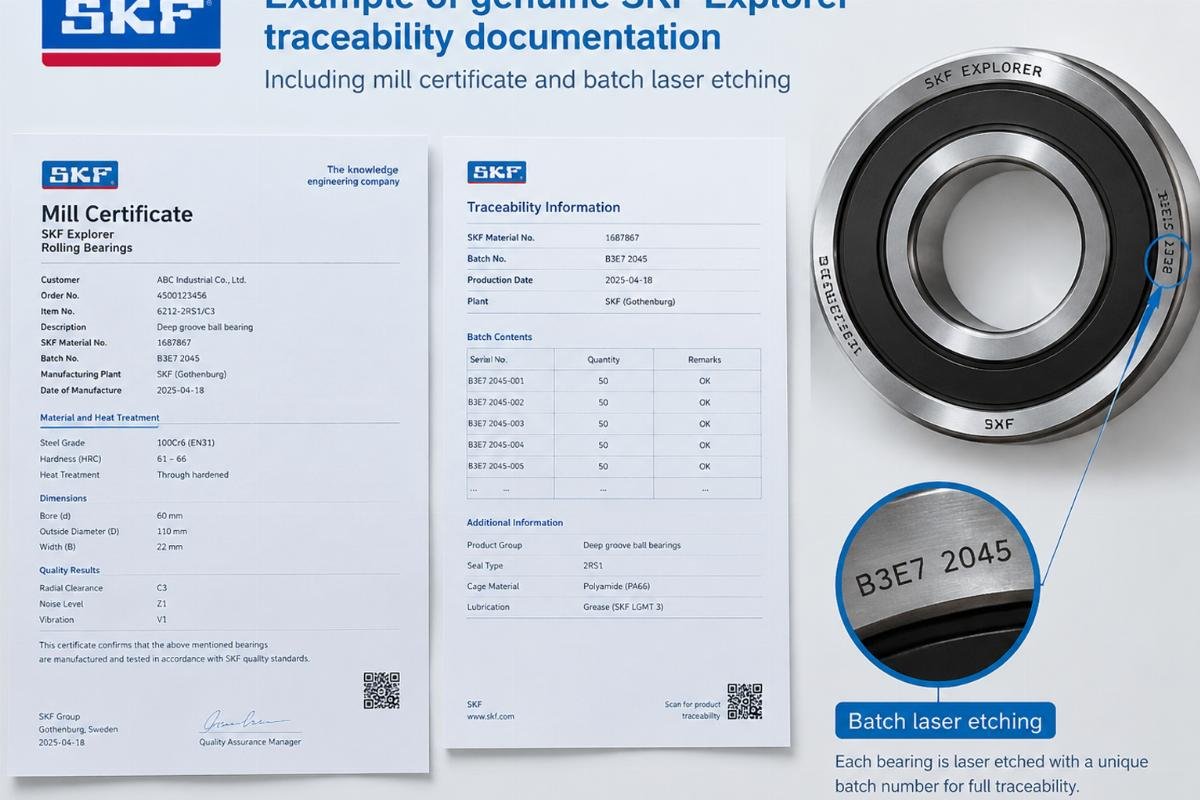
When receiving goods, inspect the packaging and the bearings themselves. Check for the correct labeling and etching. Cross-reference the batch numbers on the bearings with the provided certificates. If the supplier cannot provide full traceability documentation for the specific batch, reject the shipment. Do not accept generic certificates that do not match the serial numbers. Genuine SKF Explorer traceability is transparent and complete. Any gap in the documentation chain is a red flag.
As a supplier who has seen the consequences of mixed shipments, I insist on providing full documentation for every Explorer bearing we ship. We consolidate mixed containers for clients, but we keep the traceability records separate and precise. This ensures that when you install an Explorer bearing, you know it is genuine. This level of diligence protects your reputation and your client’s operations. It turns sourcing from a gamble into a controlled process.
Conclusion
Performance matters, but authenticity matters more.
SKF Explorer offers superior performance in demanding applications through optimized metallurgy and design. However, this value is only realized if the bearings are genuine and correctly applied. Standard Class remains a cost-effective solution for light-duty tasks. The key to successful sourcing is matching the bearing class to the application severity and verifying every step of the supply chain. By demanding full traceability and understanding the technical differences, you ensure reliability and optimize your maintenance budget.

Written by
authorEditor covering global sourcing, supplier verification, and industrial product knowledge. Content is compiled from manufacturer specifications, industry standards, and hands-on experience with international B2B buyers. Every article is fact-checked before publishing to help procurement professionals make informed decisions.
View all posts
Leave a Reply