Woodworking Machine Bearing Equivalents Wholesale Supplier
Blind loyalty to original brand names is often the primary cause of extended production downtime in woodworking facilities.
Sourcing reliable Woodworking Machine Bearing Equivalents requires precise dimensional verification and load analysis rather than simple part-number matching. By prioritizing strict tolerance checks and environmental suitability over brand prestige, maintenance teams can secure cost-efficient alternatives that minimize unplanned halts without compromising operational stability.
I still remember the silence in a furniture factory in Houjie, Dongguan. It was not the quiet of efficiency, but the heavy, expensive silence of a stopped production line. A wide-belt sander had seized up, and the spindle bearing was destroyed. The plant manager insisted on waiting for a specific Japanese brand replacement, claiming nothing else would fit. The part was backordered. For two weeks, the machine sat idle while dust settled on the unfinished panels. I eventually convinced him to let me install a domestic alternative from a reputable Chinese manufacturer. I did not just guess; I measured the inner diameter, outer diameter, and width with micrometer precision. I checked the radial clearance. The machine ran as smoothly as it did before, if not better, because we selected a seal type better suited for the dusty environment. The manager realized then that equivalent models could save significant costs and prevent such lengthy delays. This experience shaped my approach to sourcing. It is not about finding the cheapest option, but about finding the technically correct one. [NEED_CITE: importance of dimensional accuracy in bearing replacement]

The market is flooded with options, but few suppliers understand the nuance of cross-referencing for industrial applications. As a Woodworking Machine Bearing Equivalents wholesale supplier, the focus must remain on technical validity and supply chain reliability.
Why Do Woodworking Machines Need Bearing Equivalents?
The assumption that original equipment manufacturer (OEM) parts are always superior is a common misconception in the industry. In reality, many OEMs simply rebrand standard bearings from major manufacturers. When a machine breaks down, waiting for an OEM-branded box often means paying a premium for logistics and branding, not necessarily for superior engineering.
Woodworking environments are uniquely harsh. They are characterized by high levels of fine particulate matter, continuous vibration, and often elevated temperatures. Standard bearings may fail quickly if they lack appropriate sealing or if the internal clearance is not optimized for thermal expansion. Sourcing equivalents allows maintenance teams to select components specifically designed for these conditions, rather than being locked into a generic stock keeping unit (SKU) that may not be optimal.
For MRO operators and machinery OEMs, the goal is to reduce procurement costs and avoid production halts. By identifying reliable Woodworking Machine Bearing Equivalents, facilities can maintain a more flexible inventory. Instead of stocking expensive, slow-moving OEM parts, they can keep verified alternatives that offer the same performance metrics. This strategy is particularly effective for high-wear components like feed rollers and spindle assemblies. [NEED_CITE: cost-benefit analysis of aftermarket vs OEM bearings in industrial maintenance]
Consider a panel saw operation where feed rollers constantly expose bearings to sawdust. Switching to a heavy-duty equivalent with enhanced sealing capabilities can extend maintenance cycles significantly. The key is not the name on the box, but the specification inside. A well-sourced equivalent can handle higher dust ingress and provide longer service life than the original standard issue part.

How to Verify Dimensional Equivalents Accurately?
Dimensional accuracy is the non-negotiable foundation of any bearing replacement. A mismatch of even a few microns can lead to premature failure, overheating, or shaft damage. Many buyers make the mistake of relying solely on part numbers, which can vary between manufacturers for the same physical dimensions.
To verify Woodworking Machine Bearing Equivalents, one must measure three critical parameters: Inner Diameter (ID), Outer Diameter (OD), and Width. These measurements must be taken with calibrated tools, not estimated. Additionally, the bearing type—whether deep-groove ball, spherical roller, or cylindrical roller—must match the application’s load requirements.
| Parameter | Verification Method | Critical Check |
|---|---|---|
| Inner Diameter (ID) | Micrometer measurement | Must match shaft tolerance class |
| Outer Diameter (OD) | Micrometer measurement | Must match housing bore tolerance |
| Width | Caliper or micrometer | Must allow for proper axial positioning |
| Radial Clearance | Feeler gauge or dial indicator | Must suit operating temperature and load |
| Seal Type | Visual and tactile inspection | Must resist wood dust and moisture |
[NEED_CITE: ISO standards for bearing dimensional tolerances]
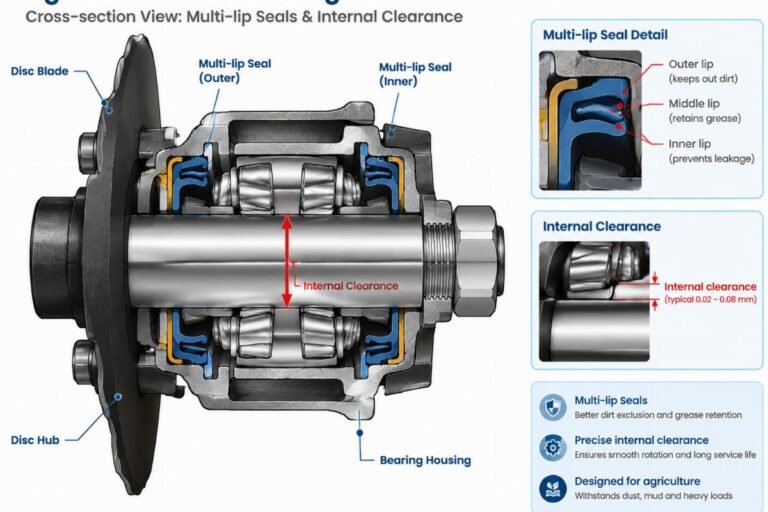
A common error is ignoring the radial internal clearance. In woodworking machines, spindles can heat up during prolonged sanding or cutting operations. If the clearance is too tight, thermal expansion can cause the bearing to seize. If it is too loose, vibration increases, leading to noise and premature wear. Verifying this clearance is essential when selecting equivalents.
In one case, a European furniture manufacturer faced repeated failures in their edge banding press rollers. The original bearings were failing due to inadequate clearance for the operating temperature. By switching to an equivalent model with a C3 clearance, which is slightly larger than standard, the issue was resolved. The replacement was not a different brand, but a different specification within the same dimensional footprint. This highlights the importance of looking beyond the part number to the physical and operational characteristics of the component.

What Load and Environment Factors Matter in Woodworking?
Woodworking machinery operates under distinct stress profiles. Unlike clean-room manufacturing, wood shops are filled with abrasive dust, moisture fluctuations, and variable loads. Bearings in these environments must withstand not only radial and axial loads but also contamination.
High dust ingress is the primary enemy of bearing longevity. Fine wood particles can penetrate standard seals, acting as an abrasive paste that grinds away the raceways and rolling elements. Therefore, when sourcing Woodworking Machine Bearing Equivalents, the seal type is as critical as the steel quality. Rubber contact seals (RS or 2RS) offer better protection against dust than metal shields (ZZ), though they may generate slightly more heat at very high speeds. For most woodworking applications, the trade-off favors protection.
Vibration is another factor. Planers, jointers, and sanders generate significant harmonic vibrations. Bearings must have high dynamic load ratings to endure these stresses without developing fatigue cracks. Using an equivalent with a lower load rating than the original can lead to catastrophic failure. Conversely, upgrading to a higher load rating equivalent can enhance durability.
[NEED_CITE: impact of contamination on bearing life expectancy]
A practical example involves a large-scale flooring manufacturer. Their multi-head sanders were experiencing frequent bearing failures. Upon analysis, it was found that the original bearings had open shields, allowing dust entry. By sourcing equivalents with double rubber seals and a higher grade of steel cleanliness, the maintenance interval was extended substantially. The cost per unit was comparable, but the total cost of ownership dropped due to reduced labor and downtime.
It is also important to consider lubrication. Some equivalents come pre-lubricated with grease suitable for high-temperature or high-load applications. Ensuring the grease compatibility with the operating environment is part of the verification process.

How to Source Reliable Cross-Brand Alternatives?
Finding a trustworthy source for Woodworking Machine Bearing Equivalents is challenging. The market contains both high-quality manufacturers and inferior imitations. The key is to work with suppliers who prioritize traceability and technical support over simple transaction volume.
Reliable sourcing involves verifying the origin of the bearings. Reputable suppliers provide documentation that traces the product back to the manufacturer. This includes material certificates and quality assurance reports. Without this traceability, there is no guarantee that the bearing meets the claimed specifications.
Another advantage of working with specialized wholesalers is the ability to consolidate mixed-brand orders. A single facility may use SKF spindles, NSK motors, and FAG gearboxes. Sourcing equivalents for all these from a single partner simplifies logistics and reduces shipping costs. It also allows for bulk negotiation, lowering the overall procurement expense.
| Sourcing Criterion | High-Quality Supplier | Low-Quality Supplier |
|---|---|---|
| Traceability | Full batch-level documentation | Sample-level or none |
| Inventory Depth | Massive spot inventory | Limited stock, long lead times |
| Technical Support | Cross-brand consultation available | Order taking only |
| Quality Assurance | ISO-compliant verification | Self-reported claims |
[NEED_CITE: best practices for industrial bearing procurement and verification]
For instance, a Middle East distributor needed to stock replacements for various woodworking machines used in local carpentry workshops. Instead of buying small quantities from multiple official brand channels, they partnered with a global supplier offering mixed-brand consolidation. This allowed them to maintain a comprehensive inventory of Woodworking Machine Bearing Equivalents at a wholesale tier price. The supplier provided technical datasheets that helped the distributor educate their end-users on proper selection, adding value to their service.
The ability to provide emergency spare parts is also crucial. Downtime in a production environment is costly. Suppliers with large spot inventories can ship urgent replacements quickly, minimizing the impact of unexpected failures. This reliability is often more valuable than a marginal price difference.

Conclusion
Effective maintenance relies on technical precision, not brand allegiance.
Sourcing Woodworking Machine Bearing Equivalents is a strategic decision that balances cost, availability, and performance. By focusing on dimensional accuracy, environmental suitability, and supply chain traceability, operators can ensure reliable machine operation. The right equivalent is not a compromise; it is an optimized solution for the specific demands of the woodworking industry.

Written by
authorEditor covering global sourcing, supplier verification, and industrial product knowledge. Content is compiled from manufacturer specifications, industry standards, and hands-on experience with international B2B buyers. Every article is fact-checked before publishing to help procurement professionals make informed decisions.
View all posts

Leave a Reply