Fafnir Bearing Replacement: Genuine Cross-Reference Supplier for Sale
Matching basic dimensions is not enough to replace a discontinued Fafnir bearing.
Replacing discontinued Fafnir bearings requires exact suffix matching for internal clearance, seal type, and cage design rather than just verifying bore and outer diameter. Ignoring these suffixes leads to premature thermal seizure or contamination failure, even if the physical size appears identical. A reliable Fafnir bearing cross reference must account for the specific operational environment and original engineering specifications to ensure safe substitution.
I still remember the chill in the air at a trade show in Chicago when I watched a full container of tapered roller bearings get rejected by a client from Detroit. I had just moved from quality control to sales, eager to close deals. I matched the part numbers perfectly, or so I thought. I ignored the subtle C3 clearance suffix and the specific seal variation noted in the fine print. The client installed them in heavy truck axles. Within months, the bearings overheated and seized. The cost of that replacement far exceeded the initial savings. That incident changed how I approach every single inquiry. Now, I know that a Timken Fafnir replacement guide is useless if it does not decode the hidden language of suffixes.
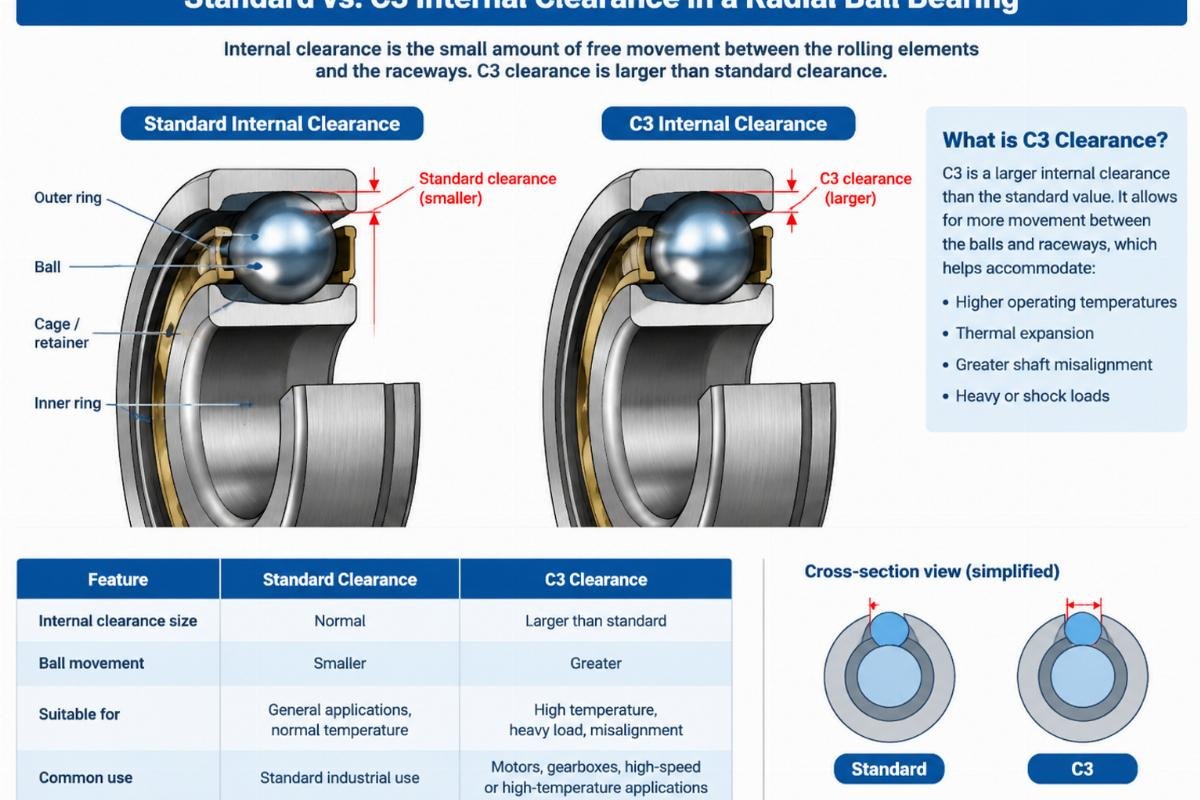
This guide breaks down why dimensions lie, how to read the critical suffixes, and where to find verified alternatives. Whether you are managing MRO stock or sourcing for aftermarket distribution, understanding these details prevents costly downtime. As a discontinued bearing substitution specialist, I have seen too many operations halted by a simple letter mismatch.
Why Do Fafnir Bearings Get Discontinued?
Discontinuation rarely means the technology is obsolete; it usually signals product line consolidation.
Major manufacturers like Timken frequently streamline their portfolios to reduce complexity in global supply chains. They merge similar series or update naming conventions, leaving older part numbers without direct active production status. This creates a gap for maintenance teams who rely on specific legacy equipment. [NEED_CITE: reasons for industrial bearing product line consolidation]
The risk arises when distributors treat these discontinued items as generic commodities. They assume any bearing with the same inner and outer diameter will work. This assumption is dangerous. Fafnir bearings were often engineered with specific tolerances for agricultural and industrial applications that differ from standard commercial grades. When a part is discontinued, the manufacturer may offer a new number that looks different but performs the same function. However, without a proper Fafnir bearing cross reference, buyers might select a substitute that lacks the necessary robustness for heavy loads or harsh environments.

For MRO managers, this means you cannot simply swap a part based on physical measurement. You must understand the lineage of the part. Is it a deep groove ball bearing originally designed for high-speed electric motors, or a spherical roller bearing meant for misalignment in mining conveyors? The discontinuation notice often contains clues about the recommended successor. Ignoring these clues leads to the selection of inferior substitutes that fail under stress. A trusted Timken Fafnir replacement guide will map these historical changes, ensuring you do not downgrade your equipment’s reliability during the transition.
How to Decode Fafnir Suffixes for Safe Replacement?
The suffix holds the key to performance, not the base number.
A base part number identifies the geometry. The suffix defines the behavior. In my experience, most failures occur because buyers ignore the letters and numbers that follow the main code. These characters specify internal clearance, seal material, cage type, and lubrication. [NEED_CITE: ISO standard for bearing suffix codes and meanings]
Consider the clearance suffix. A standard bearing has normal clearance. But many industrial applications require C3 or C4 clearance to accommodate thermal expansion. If you replace a C3 bearing with a standard one, the inner ring expands faster than the outer ring during operation. This eliminates the internal gap, causing the rolling elements to bind. The result is rapid heat generation and eventual seizure. This is exactly what happened in the Detroit case I mentioned earlier.
Seal types are equally critical. A rubber contact seal offers better protection against dust and moisture but generates more friction and heat. A metal shield allows higher speeds but provides less protection. Swapping a sealed bearing for a shielded one in a dirty agricultural environment invites contamination. Conversely, using a contact seal in a high-speed application can cause overheating due to friction.
| Feature | Standard Specification | Critical Variation (Suffix Dependent) | Risk of Mismatch |
|---|---|---|---|
| Internal Clearance | Normal (CN) | C3, C4, C5 | Thermal seizure or excessive vibration |
| Seal Type | Open or Shielded | RS, 2RS, V, DU | Contamination ingress or friction heat |
| Cage Material | Steel | Brass, Polyamide | Cage fracture under high load or speed |
| Lubrication | Standard Grease | High Temp, Food Grade | Lubricant breakdown or contamination |
To navigate this, you need a detailed matrix. Do not rely on memory. Use a verified Fafnir bearing cross reference tool that explicitly lists these suffixes. If the original part had a “W33” suffix indicating a specific heat treatment or material modification, your substitute must match it. Otherwise, you are guessing. And in industrial machinery, guessing is expensive. A comprehensive Timken Fafnir replacement guide will decode these suffixes, translating them into equivalent codes for other brands like SKF, NSK, or FAG. This ensures that when you perform discontinued bearing substitution, you are matching performance, not just size.

What Are the Hidden Risks of Dimension-Only Matching?
Identical dimensions do not guarantee interchangeable performance.
It is tempting to measure the bore, outer diameter, and width, then search for any bearing that fits. This approach ignores the internal architecture. Two bearings can have the same external dimensions but vastly different load ratings, precision classes, and internal geometries. [NEED_CITE: ABMA guidelines on bearing load rating and internal geometry]
I recall a case involving an industrial gearbox in a steel plant. The maintenance team replaced a worn Fafnir cylindrical roller bearing with a generic brand that matched the dimensions perfectly. They ignored the internal rib design and the roller profile. The original bearing was designed to handle heavy axial loads in addition to radial loads. The substitute could only handle radial loads. Within weeks, the gearbox began to vibrate excessively. The maintenance frequency doubled. The cost of the extra downtime and labor far outweighed the price difference of the bearings.
Another common pitfall is precision class. A P0 class bearing is standard. A P6 or P5 class bearing has tighter tolerances for runout and dimensional accuracy. Using a standard precision bearing in a high-speed spindle application causes imbalance and noise. Conversely, using a high-precision bearing in a rough construction equipment application is a waste of money, as the housing tolerances will not support the precision anyway.
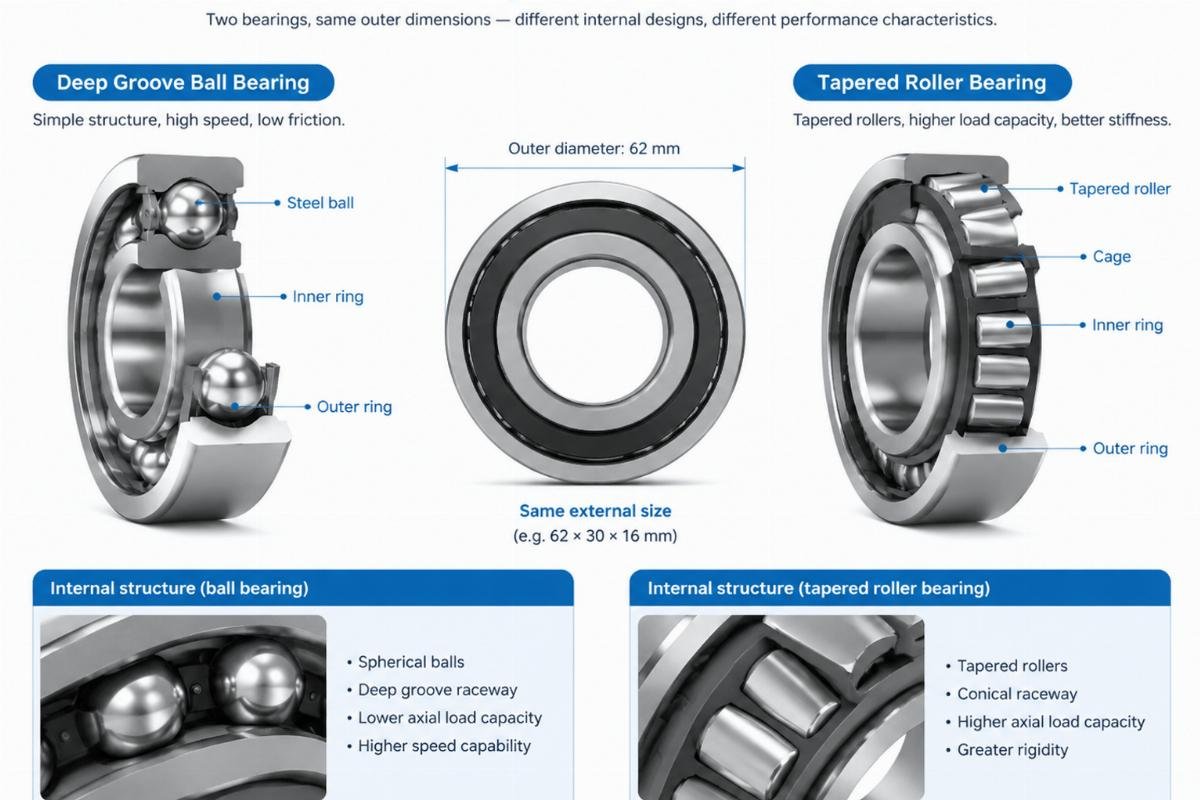
These hidden risks highlight why a simple dimension check is insufficient. You must verify the internal structure. Does the bearing have optimized roller crowning? Is the raceway ground to a specific finish? These details are often embedded in the original manufacturer’s catalog but lost in generic cross-references. A reliable Fafnir bearing cross reference will note these structural nuances. It will warn you if a substitute has a different load zone or fatigue life expectation. Without this insight, you are blindly swapping components. A proper Timken Fafnir replacement guide acts as a technical filter, ensuring that the substitute meets the original engineering intent. This is crucial for effective discontinued bearing substitution in critical applications.
How to Source Reliable Cross-Reference Alternatives?
Traceability and verification are more important than price.
Finding a substitute is easy. Finding a genuine, reliable substitute is hard. The market is flooded with counterfeit or substandard bearings that mimic the packaging of premium brands. For MRO managers and distributors, the risk of receiving fake parts is a constant threat. [NEED_CITE: industry reports on counterfeit bearing prevalence in global supply chains]
To source safely, you need a partner who understands the technical requirements, not just a vendor who ships boxes. Look for suppliers who offer full traceability documentation. This includes mill certificates for steel quality and inspection reports for dimensional accuracy. Do not accept vague assurances. Ask for proof.
When evaluating a Fafnir bearing cross reference, check if the supplier verifies the suffixes. Do they confirm the clearance and seal type? Or do they just match the base number? A professional supplier will ask about your application. They will want to know the speed, load, temperature, and environmental conditions. This dialogue is essential. It ensures that the suggested alternative is truly compatible.

We specialize in providing genuine equivalents for discontinued lines. Our process involves rigorous suffix verification. We do not just look up a number; we analyze the application. If a Fafnir bearing is no longer available, we identify the current Timken equivalent or a high-quality alternative from brands like SKF, FAG, or NSK that matches the specific technical requirements. We maintain a massive spot inventory, allowing for urgent MRO needs. Whether you need a single unit for an emergency repair or a container load for distribution, we ensure consistency and authenticity.
Our approach minimizes the risk of failure. We understand that a wrong bearing can stop a production line. That is why we emphasize technical consultation alongside supply. We help you navigate the complexities of Timken Fafnir replacement guide data, ensuring that every discontinued bearing substitution is safe and effective. This level of support distinguishes a true partner from a mere box mover.
Conclusion
Precision in substitution prevents failure in operation.
Replacing discontinued Fafnir bearings demands more than dimensional matching. It requires a deep understanding of suffixes, internal clearances, and seal types. Ignoring these details leads to premature failure and costly downtime. By using a verified Fafnir bearing cross reference and consulting a detailed Timken Fafnir replacement guide, you can ensure safe and effective discontinued bearing substitution. Always prioritize traceability and technical verification over simple price comparisons to protect your equipment and your bottom line.

Written by
authorEditor covering global sourcing, supplier verification, and industrial product knowledge. Content is compiled from manufacturer specifications, industry standards, and hands-on experience with international B2B buyers. Every article is fact-checked before publishing to help procurement professionals make informed decisions.
View all posts


Leave a Reply