Lawn Mower Spindle Bearing Equivalents: Cross-Reference & Wholesale Supplier
Matching inner and outer diameters alone does not guarantee a functional lawn mower spindle bearing equivalent.
To select reliable Lawn Mower Spindle Bearing Equivalents, you must verify seal configuration, internal clearance class, and dynamic load rating alongside basic dimensions. Ignoring these parameters leads to rapid failure in dusty, high-vibration agricultural environments.
I learned this the hard way during my early days sourcing parts in Linyi. A client in South America needed urgent replacements for a fleet of rotary mowers. I matched the bore and outside diameter perfectly from the catalog. The bearings arrived, were installed, and failed within weeks. The spindles seized, generating enough heat to warp the housing. The issue was not the size; it was the seal type and internal clearance. Standard open bearings cannot handle the fine grass dust and moisture prevalent in those fields. This failure shifted my entire approach to cross-referencing. Now, I treat every request for Lawn Mower Spindle Bearing Equivalents as a technical verification task, not just a dimensional match.

Understanding why basic dimensions fail is the first step toward sourcing durable components. The following sections break down the critical parameters that define true equivalence in harsh mowing conditions.
Why Basic Dimensions Fail in Mower Spindle Equivalents?
Most buyers assume that if the inner diameter (ID), outer diameter (OD), and width match, the bearing is a drop-in replacement. This assumption is dangerous for lawn mower spindles. These components operate under extreme radial loads and constant exposure to abrasive debris. A bearing that fits physically may fail functionally if its internal design does not match the operational stress.
The primary culprit is often the seal. Standard industrial bearings may use metal shields (ZZ) or no seals at all. In contrast, mower spindles require rubber-contacted seals (2RS) to prevent grass clippings and dirt from entering the raceway. Once contaminants breach the seal, they mix with the grease, forming an abrasive paste that grinds down the balls and races. [NEED_CITE: failure modes related to contamination in agricultural machinery bearings]
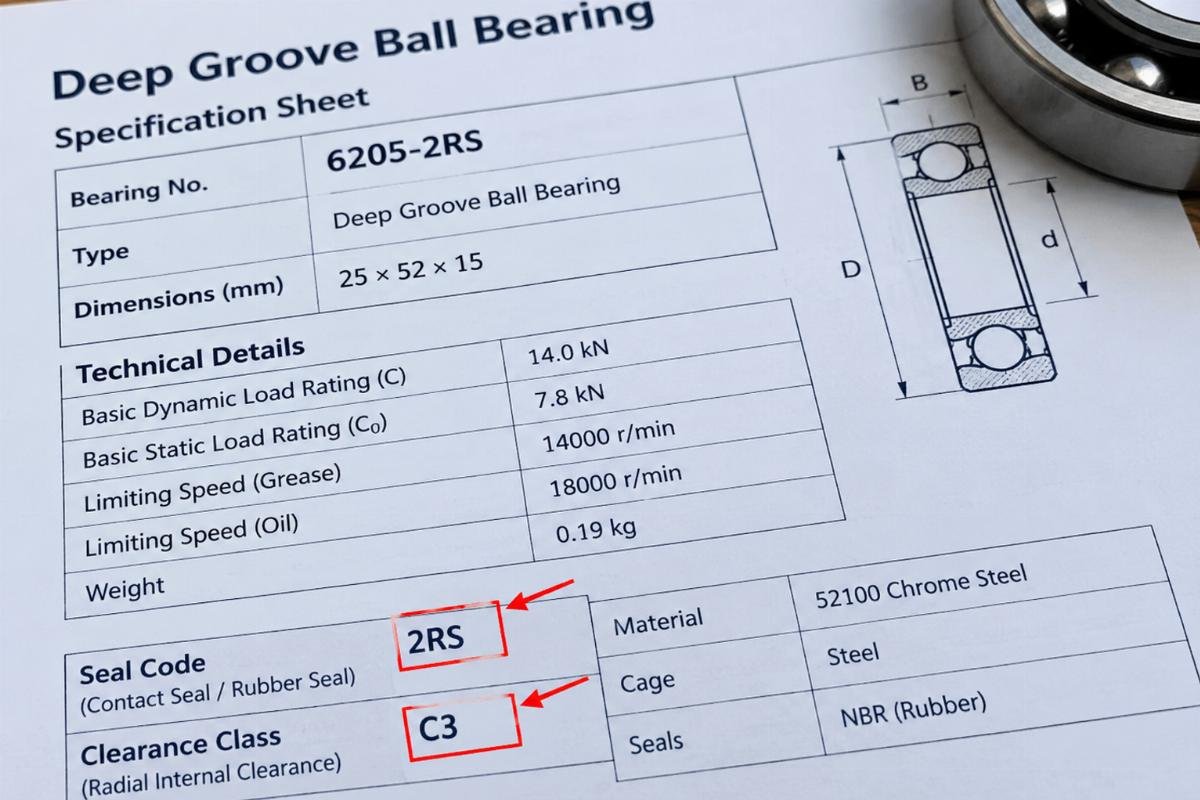
Another critical factor is internal clearance. Bearings are manufactured with specific clearances between the balls and races. Standard clearance (CN) is suitable for normal temperatures. However, mower spindles can reach high temperatures during extended summer use. If the clearance is too tight, thermal expansion causes the balls to bind, leading to premature seizure. Conversely, excessive clearance increases vibration and noise. Selecting the correct clearance class, such as C3 for higher temperature tolerance, is essential for longevity.
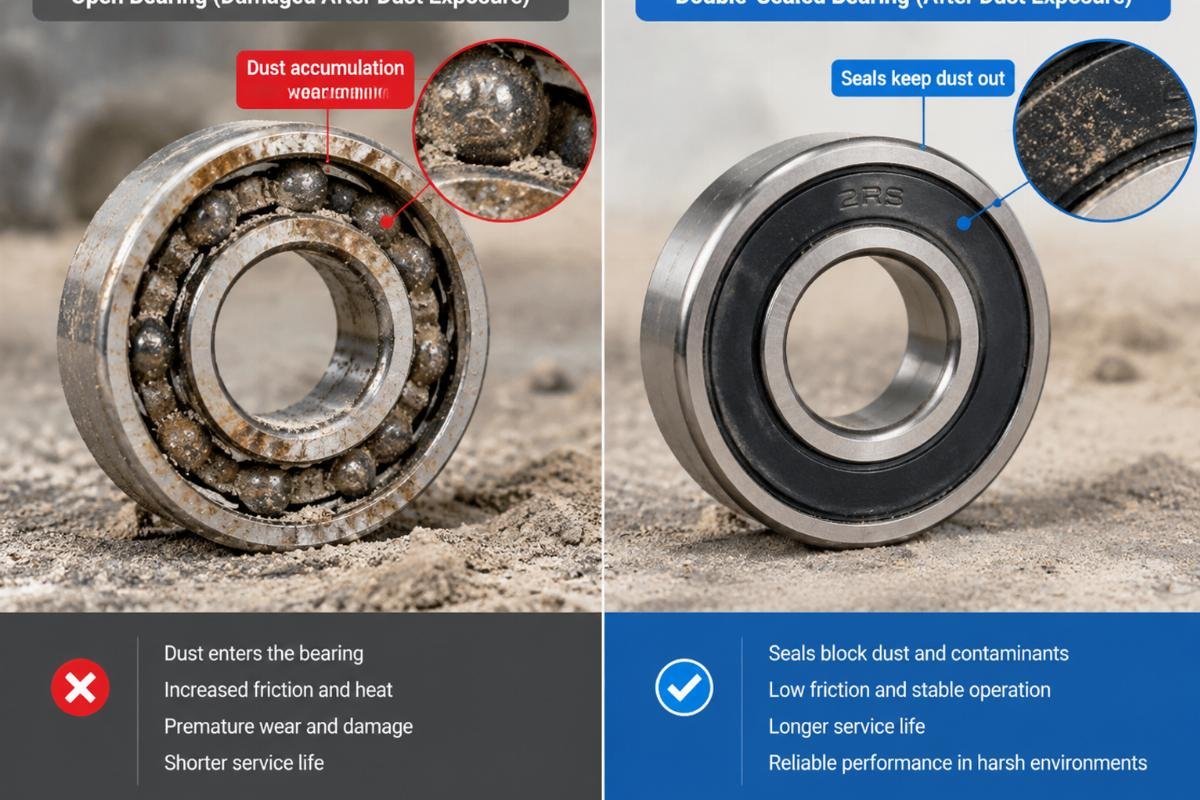
When evaluating Lawn Mower Spindle Bearing Equivalents, always prioritize the seal type and clearance over mere dimensional fit. This focus prevents the costly downtime associated with spindle burnout.
Key Parameters for Cross-Referencing Mower Spindle Bearings
Creating a reliable cross-reference requires a detailed comparison matrix. Below is a framework for evaluating potential equivalents against original equipment manufacturer (OEM) specifications. This table highlights the qualitative differences that determine performance in the field.
| Parameter | Standard Industrial Equivalent | Recommended Mower Spindle Equivalent | Impact on Performance |
|---|---|---|---|
| Seal Type | Metal Shield (ZZ) or Open | Rubber Contact Seal (2RS) | ZZ allows dust ingress; 2RS provides robust protection against grass and soil. |
| Internal Clearance | Standard (CN) | Increased (C3) | CN risks seizure under thermal expansion; C3 accommodates heat buildup. |
| Grease Type | General Purpose | High-Temperature/Lithium Complex | General grease breaks down faster; specialized grease maintains viscosity under load. |
| Cage Material | Stamped Steel | Reinforced Polymer or Steel | Polymer cages reduce weight and friction; steel offers higher impact resistance. |
| Load Rating | Standard Dynamic Load | High Dynamic Load (Cr) | Higher Cr ratings extend life under the heavy radial loads of cutting decks. |
This matrix serves as a checklist when reviewing datasheets from suppliers. Note that some generic equivalents may claim compatibility based on dimensions but omit the C3 clearance or 2RS seals. Always request full specification sheets to verify these details. [NEED_CITE: ISO standards for bearing internal clearance and seal definitions]
A distributor in Southeast Asia once switched to a cheaper alternative that lacked the C3 clearance. During the peak mowing season, their customers reported a spike in warranty claims due to overheating. Switching back to equivalents with verified C3 clearance and 2RS seals resolved the issue. This case underscores the importance of verifying every parameter in the matrix.
When sourcing Lawn Mower Spindle Bearing Equivalents, use this matrix to filter out inferior options. It ensures that the replacements you stock or install will withstand the rigors of agricultural use.
Common Pitfalls When Sourcing Aftermarket Equivalents
Sourcing aftermarket bearings involves navigating several traps that can compromise quality. One major pitfall is ignoring the material grade. High-quality bearings use chrome steel with controlled carbon content and low impurity levels. Lower-grade alternatives may use inferior steel that lacks the necessary hardness and fatigue resistance. Under the impact loads typical of mowing over uneven terrain, these softer materials deform quickly, leading to spalling and failure. [NEED_CITE: material requirements for high-load rolling bearings]
Another common error is overlooking the manufacturing precision. While many equivalents meet basic dimensional tolerances, they may lack the geometric precision required for smooth operation. Poor roundness or surface finish increases friction and heat generation. This is particularly critical in high-speed mower spindles where imbalance can cause significant vibration.
Buyers often focus solely on price, assuming that all bearings with the same part number are identical. However, the manufacturing process, including heat treatment and grinding, varies significantly between producers. A lower-priced equivalent may skip critical quality control steps, resulting in inconsistent performance across batches.

To avoid these pitfalls, request material certificates and traceability documentation from your supplier. Verify that the bearings comply with relevant international standards. Do not rely solely on the supplier’s word; ask for sample testing or third-party inspection reports for large orders. This diligence protects your reputation and reduces the risk of field failures.
When evaluating Lawn Mower Spindle Bearing Equivalents, look beyond the price tag. Investigate the material source and manufacturing controls to ensure consistent quality.
How to Verify Quality in Bulk Bearing Orders
Verifying quality in bulk orders requires a systematic approach. Start by requesting detailed product documentation, including material certificates and heat treatment records. These documents provide evidence of the manufacturing process and material integrity. [NEED_CITE: standard documentation requirements for industrial bearing supply chains]
Next, implement a sampling inspection protocol. Randomly select units from different batches for dimensional and visual inspection. Check for smooth rotation, proper seal fit, and absence of surface defects. Use precision measuring tools to verify ID, OD, and width against the specified tolerances.
For critical applications, consider conducting performance tests. Mount sample bearings in a test rig that simulates the load and speed conditions of a mower spindle. Monitor temperature rise and vibration levels over an extended period. This data provides concrete evidence of the bearing’s suitability for the intended application.

Establishing a long-term relationship with a reliable supplier simplifies this process. A trustworthy partner provides consistent quality, transparent documentation, and technical support. They understand the specific requirements of mower spindle applications and can guide you toward the most suitable equivalents.
Our approach involves maintaining strict quality control protocols and offering full traceability for all products. We support mixed-batch orders and provide technical consultation to help you select the right Lawn Mower Spindle Bearing Equivalents for your market. This ensures that your customers receive durable, high-performance components that minimize downtime.
Conclusion
Accurate cross-referencing demands attention to seals, clearance, and material quality, not just dimensions.
Selecting the right Lawn Mower Spindle Bearing Equivalents prevents premature failure and reduces maintenance costs. By verifying key parameters and sourcing from reputable suppliers, you ensure reliable performance in demanding agricultural environments. Prioritize technical accuracy over initial savings to build long-term trust with your customers.

Written by
authorEditor covering global sourcing, supplier verification, and industrial product knowledge. Content is compiled from manufacturer specifications, industry standards, and hands-on experience with international B2B buyers. Every article is fact-checked before publishing to help procurement professionals make informed decisions.
View all posts

Leave a Reply