WEG Motor Bearing Sizes by Frame: Wholesale Supplier for Bulk Orders
Same frame size does not guarantee identical bearing dimensions.
Accurate matching of WEG motor frame sizes to specific bearing dimensions and internal clearances is the single most critical factor in preventing installation failures. For frames 63 through 355, relying on generic cross-reference charts without verifying the specific motor series (W21 vs. W22) and operating temperature requirements often leads to premature grease failure or mechanical seizure. Always verify the nameplate suffix and required clearance class (C3/C4) before consolidation.
I still remember the silence on the other end of the line when a customs broker in Santos called me years ago. A container of maintenance repair and operations (MRO) spares destined for a textile plant had been held at the port. The issue was not documentation, but physics. The packing list declared 6308 bearings for a WEG 160 frame motor, but the warehouse had shipped 6309s. They looked similar, fit loosely in the box, but would never seat correctly in the housing. The demurrage costs ate into the profit margin of that entire quarter. That incident changed how I view WEG motor bearing sizes by frame. It is not just about part numbers; it is about the precise interplay between the cast iron frame, the shaft tolerance, and the thermal expansion of the steel. [NEED_CITE: IEC standard frame dimensions and bearing seat tolerances]

Understanding these nuances separates a successful bulk shipment from a logistical nightmare. Below, we break down the technical realities of sourcing these components for global distribution.
What Are the Standard Bearing Sizes for Common WEG Motor Frames?
Frame size is a mounting dimension, not a direct bearing specification.
While the International Electrotechnical Commission (IEC) standards define the physical footprint of motor frames, the internal bearing selection depends on load capacity, speed, and design era. A common mistake among new distributors is assuming a one-to-one mapping across all manufacturers or even all WEG generations. For example, a standard TEFC (Totally Enclosed Fan Cooled) motor in frame 160 typically utilizes a 6309 deep groove ball bearing on the drive end, but this can vary if the motor is designed for high axial loads. [NEED_CITE: WEG official technical catalog bearing selection tables]
The following matrix illustrates typical pairings for common IEC frames found in industrial applications. Note that these are general references for standard efficiency motors and must be verified against the specific motor nameplate.
| IEC Frame Size | Typical Drive End Bearing | Typical Non-Drive End Bearing | Common Application Context |
|---|---|---|---|
| 63 – 80 | 6203 / 6204 | 6203 / 6204 | Small pumps, fans, conveyors |
| 90 – 112 | 6205 / 6206 | 6205 / 6206 | General manufacturing machinery |
| 132 – 160 | 6308 / 6309 | 6308 / 6309 | Heavy-duty crushers, mixers |
| 180 – 225 | 6311 / 6312 | 6311 / 6312 | Large compressors, industrial fans |
| 250 – 355 | 6313 / 6314 / NU213 | 6313 / 6314 / NU213 | Mining equipment, heavy mills |
A buyer in Southeast Asia once ordered a full container of replacements for a cement plant upgrade. They requested “standard bearings for frame 200.” Without clarifying the specific model, they received standard 6311s. However, the motors were older W21 series models that utilized a slightly different housing fitment compared to the newer W22 line. The result was a noticeable vibration issue upon startup. This highlights why WEG motor bearing sizes by frame cannot be treated as a universal constant. The internal geometry of the motor housing dictates the external diameter and width constraints of the bearing. [NEED_CITE: ISO bearing dimensional standards for boundary dimensions]

When consolidating orders, always request the original equipment manufacturer (OEM) part number or the specific bearing designation printed on the existing unit. Relying solely on the frame size invites risk, especially when mixing batches from different production years.
How Do W21 and W22 Series Differ in Bearing Requirements?
Series evolution often brings subtle but critical changes in internal clearance and sealing.
WEG’s transition from the W21 to the W22 series involved improvements in efficiency and cooling, which indirectly affected bearing life expectations and selection criteria. The W22 series, designed to meet higher efficiency standards (IE2/IE3), often operates at different thermal profiles. This means the bearing selection is not just about fitting the shaft; it is about managing the heat generated by higher electrical efficiency and reduced losses. [NEED_CITE: Comparative analysis of WEG W21 vs W22 technical specifications]
In many cases, the physical dimensions of the bearings remain consistent between series for the same frame size, but the recommended internal clearance may differ. A distributor in the Middle East reported higher return rates for bearings supplied for W22 motors used in ambient temperatures exceeding 40°C. The issue was not the bearing size, but the default clearance class. The W22’s optimized airflow can sometimes lead to different heat dissipation patterns compared to the W21, requiring a more precise match of clearance to operating temperature.
Furthermore, the sealing technology evolved. Older W21 models might have specified open bearings or simple shields, while newer W22 applications often demand robust rubber seals (2RS) to protect against finer dust particles in harsh environments. Swapping a shielded bearing (ZZ) for a sealed one (2RS) without checking the friction torque limits can cause overheating in high-speed applications. Conversely, using an open bearing in a dusty environment leads to rapid contamination.

For buyers sourcing WEG motor bearing sizes by frame, it is essential to ask: “Which series is this for?” and “What is the environmental condition?” A mismatch here does not show up during installation but manifests as premature failure within months. Our approach involves verifying the motor serial number range when possible, as this indicates the production era and likely design specifications. This level of diligence prevents the “it fits but fails” scenario that plagues many MRO supply chains.
Why Does Bearing Clearance (C3/C4) Matter for WEG Motors?
Internal clearance is not a luxury; it is a thermal necessity.
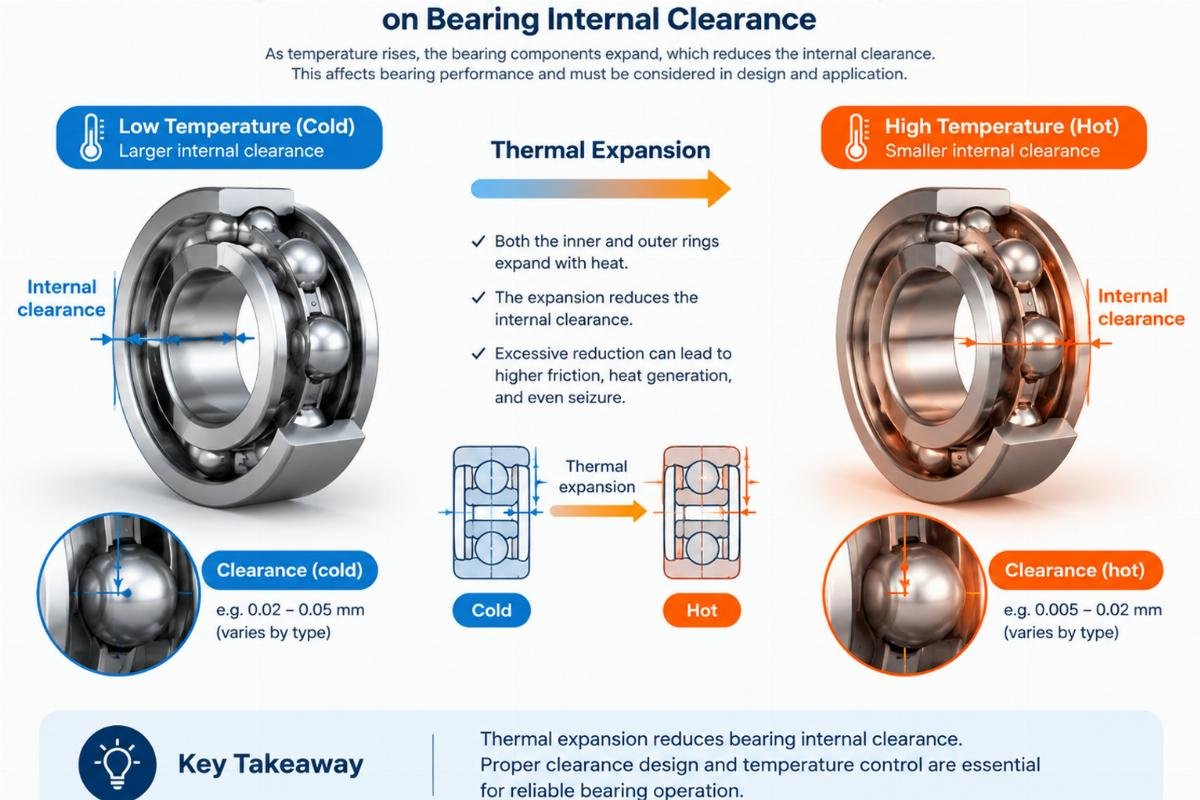
Standard radial internal clearance (CN) is suitable for normal operating conditions with moderate temperatures and stable loads. However, industrial motors often face extreme conditions. When a motor operates, both the shaft and the housing expand due to heat. If the bearing has insufficient internal clearance, this thermal expansion eliminates the play inside the bearing, leading to preload. Preload increases friction, which generates more heat, creating a vicious cycle that ends in seizure. [NEED_CITE: Thermal expansion coefficients of bearing steel vs motor shaft materials]
For WEG motors used in kilns, crushers, or tropical climates, C3 or C4 clearance bearings are often required. C3 offers greater internal radial clearance than standard, accommodating moderate thermal expansion. C4 provides even more space, suitable for very high-temperature applications or where significant shaft deflection occurs.
| Clearance Class | Description | Typical Application Scenario |
|---|---|---|
| CN (Normal) | Standard internal clearance | General purpose, controlled temperature environments |
| C3 | Greater than normal clearance | High ambient temperature, moderate thermal expansion |
| C4 | Greater than C3 clearance | Very high temperature, significant shaft deflection |
A wind farm operator in Latin America experienced repeated failures in the yaw drive motors. The bearings were the correct size for the frame, but they were specified as CN. The outdoor environment caused significant temperature swings, and the structural flexing of the tower added load variations. Switching to C3 clearance bearings resolved the issue by allowing the bearing elements to move freely despite the thermal and mechanical shifts. This case underscores that WEG motor bearing sizes by frame must include the clearance suffix in the procurement specification. [NEED_CITE: SKF or FAG technical guide on bearing clearance selection]
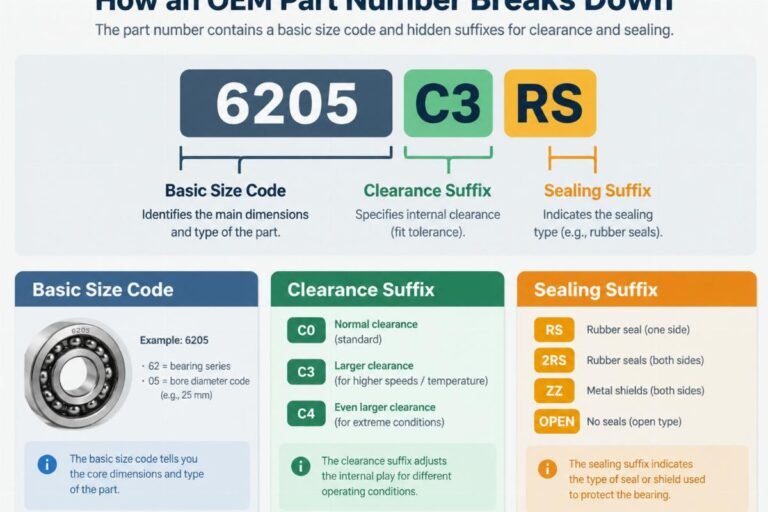
Ignoring the suffix is a common error in bulk buying. A purchase order for “6312” is incomplete. It must read “6312 C3” or “6312 ZZ C3” to ensure the product matches the engineering intent. Suppliers who do not ask for clarification are risking their clients’ operational continuity.
How to Avoid Costly Mismatches in Global Bearing Procurement?
Verification is cheaper than replacement.
The cost of a wrong bearing is not just the price of the unit. It includes shipping, customs duties, port storage, and most importantly, downtime. To mitigate these risks, a structured verification process is essential before any container is loaded.
- Nameplate Verification: Never rely on verbal descriptions. Request a photo of the motor nameplate. Look for the frame size, IP rating, and any specific bearing codes listed.
- Suffix Decoding: Identify the required suffixes. ZZ indicates metal shields, 2RS indicates rubber seals, and C3/C4 indicates internal clearance. These are non-negotiable parameters.
- Cross-Reference Check: If replacing an existing bearing, measure the old unit’s inner diameter, outer diameter, and width. Compare these with the standard dimensions for the claimed part number. Discrepancies indicate a non-standard or worn component that needs careful evaluation.
- Batch Consistency: When sourcing mixed brands for a single project, ensure that the equivalent models from different manufacturers (e.g., SKF, FAG, NSK) share the same dimensional and performance characteristics. While standards exist, minor variations in seal design or cage material can affect performance in critical applications. [NEED_CITE: ISO interchangeability standards for rolling bearings]
A European procurement manager once consolidated an order for a mining project involving over fifty motors. By implementing a strict nameplate check and requiring datasheets for each bearing type, they identified three discrepancies where the specified bearings did not match the actual motor requirements due to previous undocumented modifications on site. Correcting this before shipment saved them from a major logistical headache.
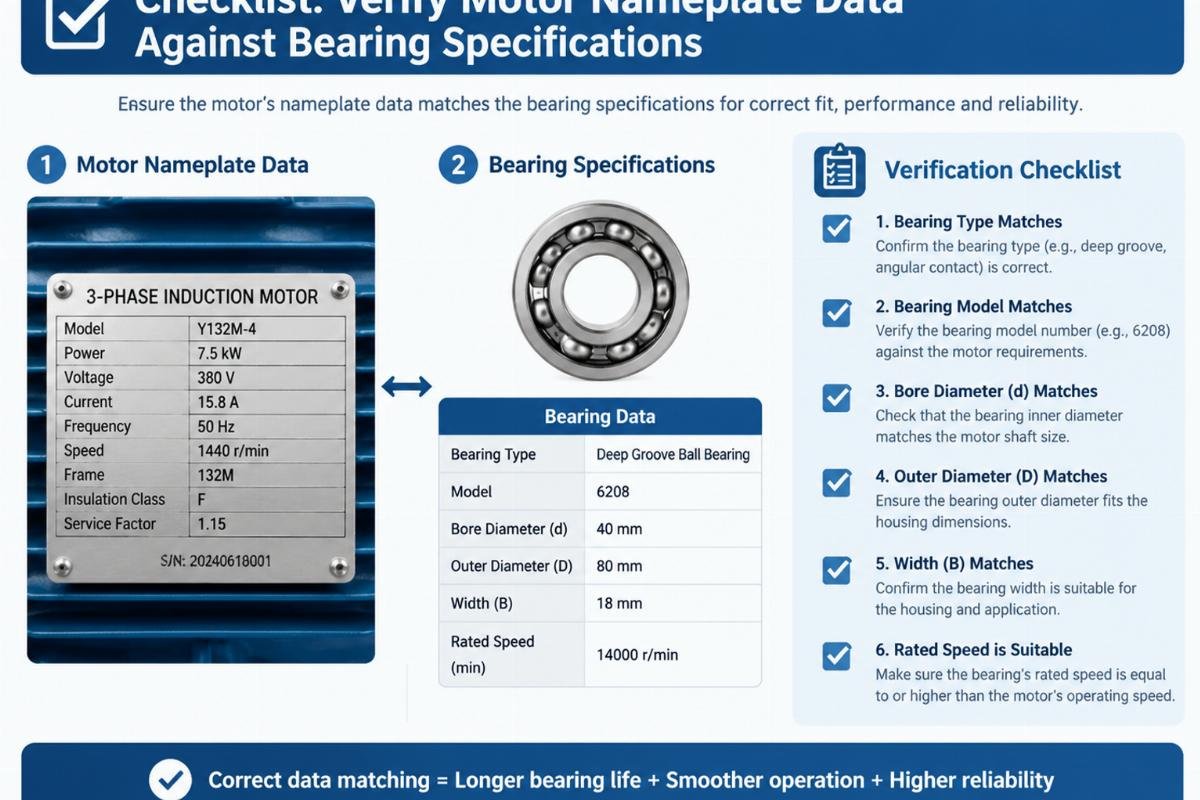
This rigorous approach is what defines a reliable partner in the WEG motor bearing sizes by frame market. It is not enough to have stock; one must have the technical insight to validate that the stock matches the application. Our team performs these checks routinely, ensuring that every unit shipped aligns with the technical demands of the end-user. This reduces the risk of customs holds and ensures that the bearings perform as intended from day one.
Conclusion
Precision in specification prevents failure in operation.
Matching WEG motor bearing sizes by frame requires more than a simple chart lookup. It demands an understanding of series differences, thermal clearance requirements, and strict verification of nameplate data. By focusing on these technical details, buyers can avoid costly mismatches and ensure reliable performance for their industrial assets. Accurate sourcing is the foundation of efficient maintenance and operational continuity.

Written by
authorEditor covering global sourcing, supplier verification, and industrial product knowledge. Content is compiled from manufacturer specifications, industry standards, and hands-on experience with international B2B buyers. Every article is fact-checked before publishing to help procurement professionals make informed decisions.
View all posts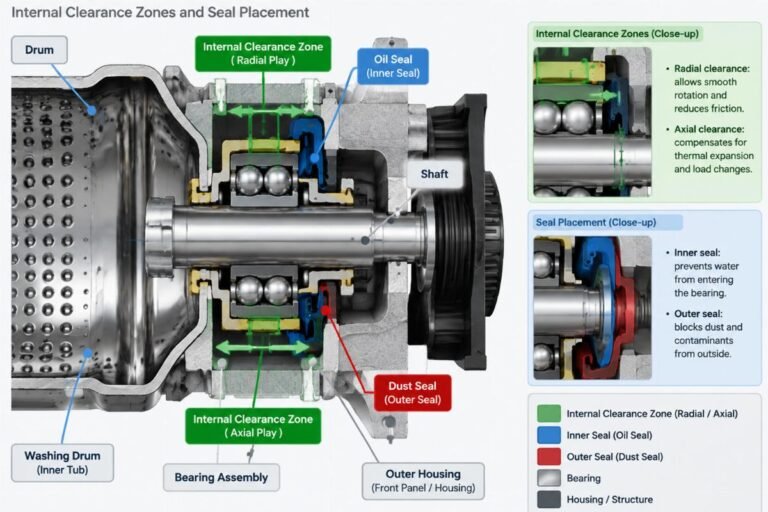
Leave a Reply