6309 Bearing Dimensions, Equivalents & Wholesale Supplier
Identical outer dimensions do not guarantee identical performance.
A 6309 bearing is defined by an inner diameter of 45 mm, an outer diameter of 100 mm, and a width of 25 mm. However, selecting the correct unit requires matching internal clearance codes such as C3 or C4 to the operating temperature, and verifying cross-brand equivalents through strict tolerance checks rather than relying solely on part numbers. Failure to align these specifications leads to premature seizure or spalling, regardless of the brand name on the box.
I still remember the humidity in that São Paulo pump factory. The maintenance manager handed me a drawing marked 6309-2Z. I shipped a full container of standard clearance units, assuming the specification was routine. Three months later, the phones started ringing. Every high-temperature pump had seized. The bearings had expanded against the housing because the thermal growth exceeded the standard internal play. I flew back, not to argue, but to measure. We spent days in the workshop, checking microns and comparing suffixes. That loss taught me that a part number is just a starting point. The real engineering happens in the gap between the balls and the raceways.

Understanding these nuances is critical for anyone sourcing replacements. Let us break down exactly what defines a reliable 6309 bearing and how to avoid costly mismatches.
What Are the Exact Dimensions of a 6309 Bearing?
The physical envelope is standardized, but the load capacity varies by manufacturer design.
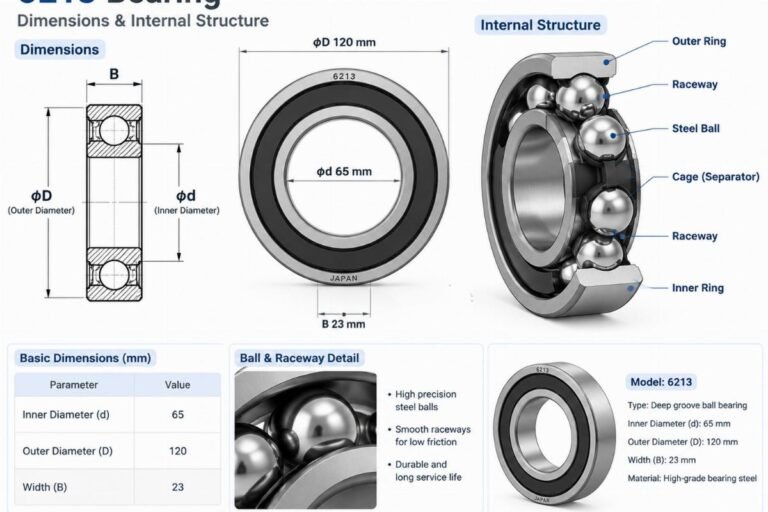
At its core, the 6309 is a medium-series deep groove ball bearing. The dimensional standards are governed by ISO 492, which ensures that a 6309 from one reputable maker will fit the same shaft and housing as a 6309 from another. [NEED_CITE: ISO 492 dimensional tolerance classes for rolling bearings]
| Parameter | Value | Note |
|---|---|---|
| Inner Diameter (ID) | 45 mm | Fits standard 45 mm shaft |
| Outer Diameter (OD) | 100 mm | Fits standard 100 mm housing bore |
| Width (B) | 25 mm | Standard series width |
| Basic Dynamic Load Rating | Varies | Check specific brand catalog |
| Basic Static Load Rating | Varies | Check specific brand catalog |
While the ID, OD, and width are fixed, the internal geometry is not. Some manufacturers optimize the raceway curvature for higher speed, while others prioritize load capacity. This is why simply swapping brands without checking the load ratings can be risky in heavy-duty applications like mining crushers or large industrial fans.
I once consulted for a European wind farm operator who switched suppliers to cut costs. The new bearings fit perfectly into the gearbox housing. However, the dynamic load rating was marginally lower than the original spec. Under variable wind loads, the fatigue life dropped noticeably. The dimensions were correct, but the performance was not. Always verify the load ratings in the technical datasheet, not just the physical size.

When you source a 6309 bearing, ensure the supplier provides the full technical datasheet. This document confirms that the unit meets the required load capabilities for your specific application, preventing early failure due to overstress.
Why Does Internal Clearance (C3/C4) Matter for 6309?
Standard clearance is often insufficient for high-temperature or high-speed operations.
Internal clearance refers to the total amount of space between the rolling elements and the raceways when the bearing is unmounted. For a 6309, the standard clearance is designated as CN. However, in many industrial settings, CN is a recipe for disaster. When a bearing operates, it heats up. The inner ring expands more than the outer ring because it is typically mounted on a rotating shaft that generates heat through friction and external sources. If there is not enough initial clearance, this thermal expansion eliminates the play, causing the bearing to preload itself. This leads to rapid temperature rise, lubricant breakdown, and eventual seizure.
[NEED_CITE: Effect of thermal expansion on bearing internal clearance per ISO 15243]
| Clearance Code | Application Context | Risk if Mismatched |
|---|---|---|
| CN (Standard) | Normal temperature, low speed | Seizure in hot environments |
| C3 | Moderate heat, standard motors | Insufficient for extreme heat |
| C4 | High temperature, high speed | Excessive noise/vibration if cold |
In the São Paulo incident, the pumps operated at temperatures that required at least a C3 clearance, preferably C4. By supplying CN units, I effectively installed bearings that had no room to breathe. Upgrading to C3 or C4 allows the bearing to accommodate thermal growth without generating excessive internal stress.
Selecting the right clearance is not guesswork. It requires understanding the operating temperature delta and the fit tolerances of the shaft and housing. A loose fit on the outer ring can also reduce effective clearance, so the system must be evaluated as a whole. Many MRO managers overlook this, focusing only on the part number. This oversight is a primary cause of unplanned downtime in continuous process industries like steel mills or cement plants.
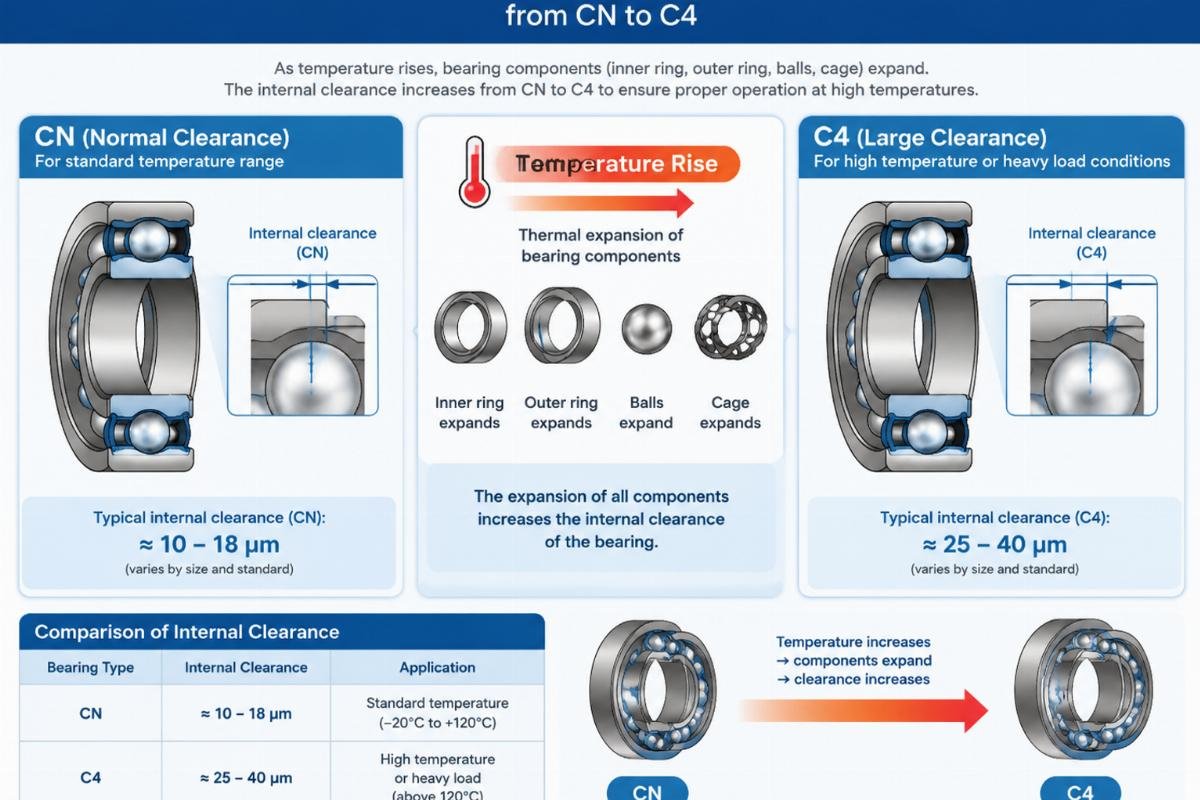
Always specify the clearance code when ordering. Do not assume standard clearance is suitable. If the application involves significant heat or high speeds, insist on C3 or C4 variants to ensure longevity.
How to Map 6309 Cross-Brand Equivalents?
Suffixes dictate functionality, not just the base number.
A 6309 from SKF is not automatically identical to a 6309 from FAG or NSK. The base number indicates the size, but the suffixes define the seals, shields, cage material, and clearance. Misinterpreting these suffixes is a common error in cross-brand sourcing.
For example, a 6309-2Z has metal shields on both sides. A 6309-2RS has rubber seals on both sides. While both protect against contamination, the friction characteristics differ. Rubber seals generate more heat and are better for keeping grease in, while metal shields allow higher speeds but offer less protection against fine dust. Swapping a 2Z for a 2RS in a high-speed motor can cause overheating.
[NEED_CITE: Standard suffix meanings for deep groove ball bearings per ISO 15243]
| Brand | Standard Suffix for Metal Shield | Standard Suffix for Rubber Seal | Clearance Suffix |
|---|---|---|---|
| SKF | 2Z | 2RS1 | C3, C4 |
| FAG | 2ZR | 2RSR | C3, C4 |
| NSK | Z Z | DDU | C3, C4 |
| NTN | ZZ | LLU | C3, C4 |
When mapping equivalents, you must translate the suffixes accurately. A buyer once requested a replacement for an NSK 6309DDUC3. He accepted a generic 6309-2RS C3 from a different brand. The generic unit used a lower-grade rubber compound that degraded quickly in the presence of certain cleaning agents used in the facility. The dimension was correct, the clearance was correct, but the material compatibility was not.
Verify the cage type as well. Steel cages are standard, but polyamide or brass cages are used for higher speeds or specific chemical environments. Ensure the equivalent bearing matches the original cage specification if the application demands it.

Use a detailed cross-reference guide that accounts for these suffix variations. Do not rely on simple part number matching. Confirm the seal type, cage material, and clearance code to ensure true interchangeability.
How to Verify Quality When Sourcing Equivalents?
Traceability is the only defense against counterfeit or substandard stock.
The market is flooded with bearings that look authentic but fail under load. These units may have correct dimensions but use inferior steel with high inclusion counts. Inclusions act as stress concentrators, leading to early spalling. Visual inspection cannot detect this. You need documentation.
[NEED_CITE: Importance of steel purity and inclusion rating in bearing fatigue life]
| Verification Step | Action | Purpose |
|---|---|---|
| Check Packaging | Inspect for holograms, correct fonts, and batch numbers | Detect obvious counterfeits |
| Request Certs | Ask for material certificates and origin proof | Verify steel quality and source |
| Inspect Raceways | Look for smooth finish, no tool marks | Assess manufacturing quality |
| Verify Batch Consistency | Check multiple units from the same lot | Ensure production stability |
I advise clients to request traceability documents for every batch. Genuine manufacturers provide certificates that link the bearing to its production lot and material source. If a supplier cannot provide this, walk away. The risk of introducing a weak link into your machinery is too high.
Also, consider the supplier’s inventory practices. Mixed-batch sourcing can lead to inconsistencies. A reputable supplier maintains strict quality control and offers consistent stock from verified channels. They understand that a single failed bearing can stop a production line, costing far more than the price difference between a genuine and a questionable unit.
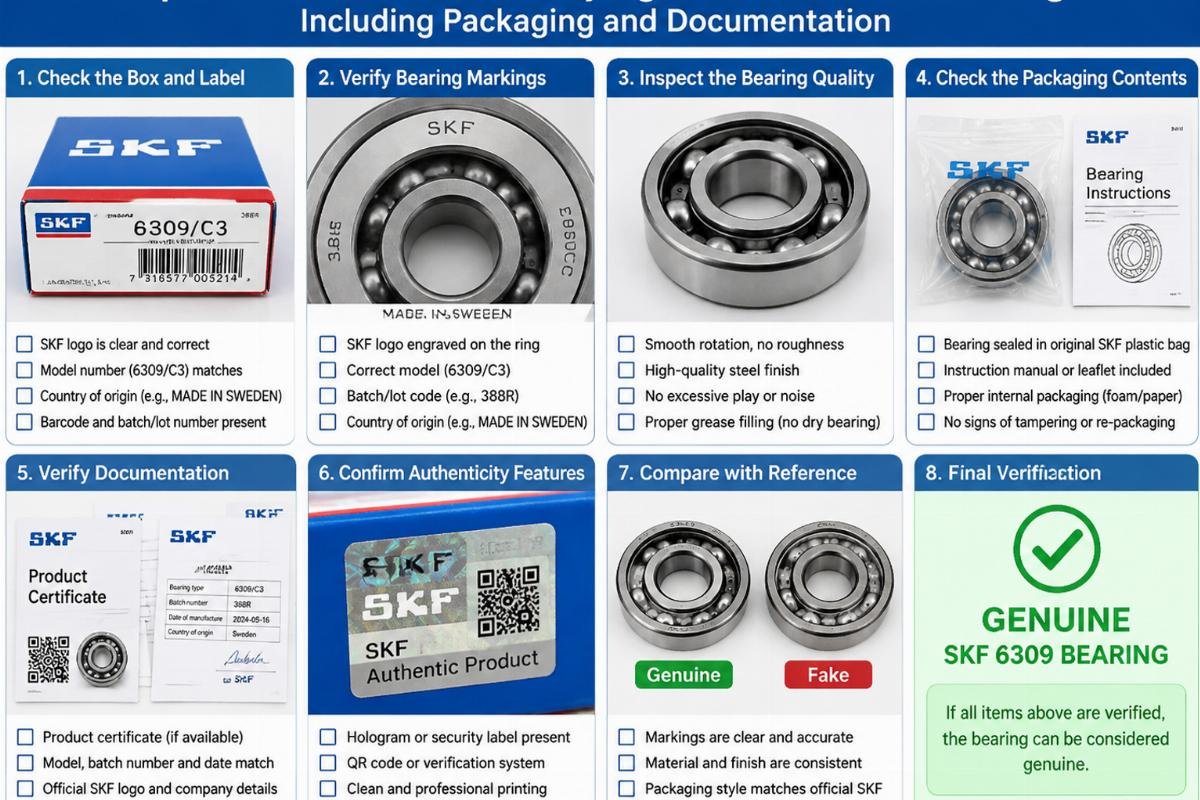
Prioritize suppliers who offer full traceability. Ask for material certificates. Inspect the packaging carefully. These steps are simple but effective in filtering out substandard products.
Conclusion
Precision in specification prevents failure in operation.
Selecting a 6309 bearing requires more than matching the 45 mm inner diameter and 100 mm outer diameter. It demands attention to internal clearance, suffix interpretation, and material traceability. By understanding these technical details, you ensure that your replacements perform reliably in demanding environments. Avoid the cost of downtime by verifying every parameter before purchase.

Written by
authorEditor covering global sourcing, supplier verification, and industrial product knowledge. Content is compiled from manufacturer specifications, industry standards, and hands-on experience with international B2B buyers. Every article is fact-checked before publishing to help procurement professionals make informed decisions.
View all posts
Leave a Reply