6311 Bearing Specs & Motor Uses: Wholesale Supplier
Choosing a larger internal clearance does not guarantee safety in high-temperature motors.
The correct selection of a 6311 bearing for motor applications depends on matching the internal clearance and seal type to the specific operating temperature and load conditions, rather than relying solely on basic dimensional compatibility. A mismatch in thermal expansion rates or seal friction can lead to premature failure even if the bearing fits the shaft perfectly.
I learned this the hard way at the Hanover Fair. A German motor manufacturer buyer held up a drawing for a 6311 unit and asked about high-temperature clearance options. I recited the standard catalog parameters, assuming C4 was the default safe choice for heat. I failed to explain how C3 and C4 behave differently during the actual warm-up phase of a motor. The buyer walked away, and I nearly lost the account. It was only after spending time on the assembly floor, watching motors run through their thermal cycles, that I understood the real behavior of deep groove ball bearings in industrial settings. Specifications are not just numbers on a page; they are dynamic responses to physical forces. Ignoring the operational context when discussing wholesale supply is a mistake that costs downtime.

Understanding these nuances is critical for anyone sourcing components for industrial machinery. Let us break down the technical realities behind the specs.
What Are the Core Specs of a 6311 Motor Bearing?
Basic dimensions and load ratings establish the baseline for motor compatibility, but they do not define performance.
The 6311 is a single-row deep groove ball bearing. Its primary dimensions are standardized globally, which allows for interchangeability across brands. However, the static and dynamic load ratings determine whether the bearing can withstand the forces generated by the motor’s rotor and external drives.
When evaluating a 6311 bearing for motor use, buyers must look beyond the bore and outer diameter. The raceway geometry and ball complement affect how load is distributed. In high-speed motor applications, the centrifugal force on the balls changes the contact angle slightly, influencing the effective load capacity. [NEED_CITE: ISO standards for deep groove ball bearing load ratings]
| Parameter | Specification Note | Relevance to Motor Use |
|---|---|---|
| Bore Diameter | Standardized metric size | Determines shaft fit tolerance |
| Outer Diameter | Standardized metric size | Determines housing fit tolerance |
| Width | Standardized metric size | Affects axial space in motor end cap |
| Dynamic Load Rating | Varies by brand and material | Defines service life under radial load |
| Static Load Rating | Varies by brand and material | Critical for stationary or slow-start phases |
A common error in wholesale procurement is assuming that all 6311 units with the same dimensions perform identically under load. They do not. Variations in steel purity and heat treatment among manufacturers affect the fatigue limit. For a mining crusher motor or a high-power pump, the difference in material quality can mean the difference between a scheduled replacement and an catastrophic seizure. [NEED_CITE: ABMA guidelines on bearing material fatigue limits]
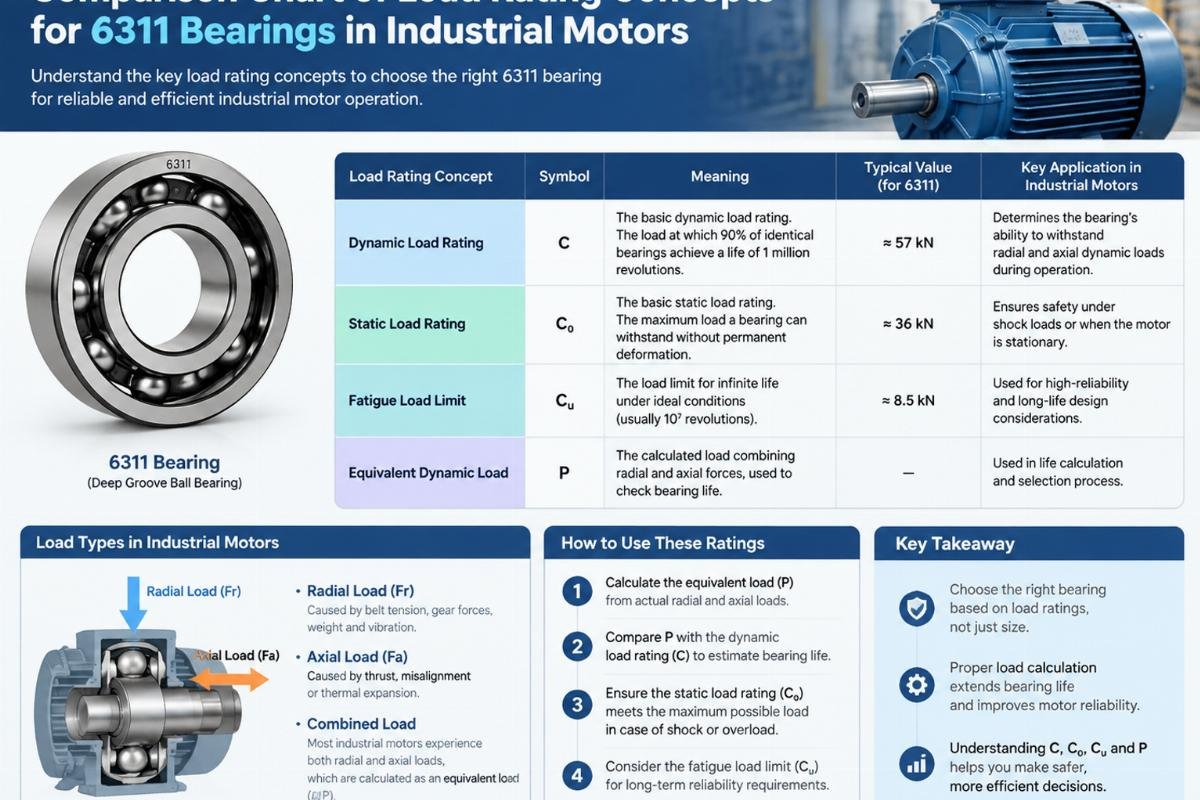
Sourcing a 6311 bearing requires verifying that the load ratings align with the motor’s design specifications. A supplier who only checks dimensions is not providing technical value.
How Do You Match 6311 Clearances to Motor Temperatures?
Selecting C3 or C4 clearance requires calculating actual thermal expansion, not guessing based on general heat levels.
Internal clearance is the space between the balls and the raceways when the bearing is unmounted. As a motor runs, the shaft and housing expand at different rates due to heat. If the initial clearance is too small, thermal expansion eliminates the gap, creating preload. This preload generates excessive heat, which further expands the metal, leading to a thermal runaway and eventual failure.
Many buyers believe that a larger clearance, such as C4, is always safer for hot motors. This is a dangerous misconception. A C4 clearance may be appropriate for steady-state high temperatures, but it can cause excessive vibration during startup when the motor is still cool. The loose fit allows the balls to skid rather than roll, damaging the raceways before the operating temperature is reached.
Conversely, a C3 clearance is often the standard for electric motors. It provides enough room for typical thermal expansion without sacrificing stability at startup. The decision between C3 and C4 should be based on the specific temperature differential between the inner and outer rings. [NEED_CITE: Thermal expansion calculation methods for shaft vs housing]
| Clearance Class | Typical Application Context | Risk if Mismatched |
|---|---|---|
| CN (Normal) | Low temperature, precise fits | Seizure due to thermal expansion |
| C3 | Standard electric motors | Premature wear if temp exceeds design |
| C4 | High temperature, large shafts | Vibration and skidding at startup |
In a recent case involving a cement plant in the Middle East, motors were failing repeatedly. The maintenance team had switched to C4 clearances to combat heat. However, the motors operated in cycles, cooling down significantly at night. The C4 bearings caused noticeable vibration during the cold starts, leading to early fatigue. Switching back to C3, with a careful check on housing fits, resolved the issue.
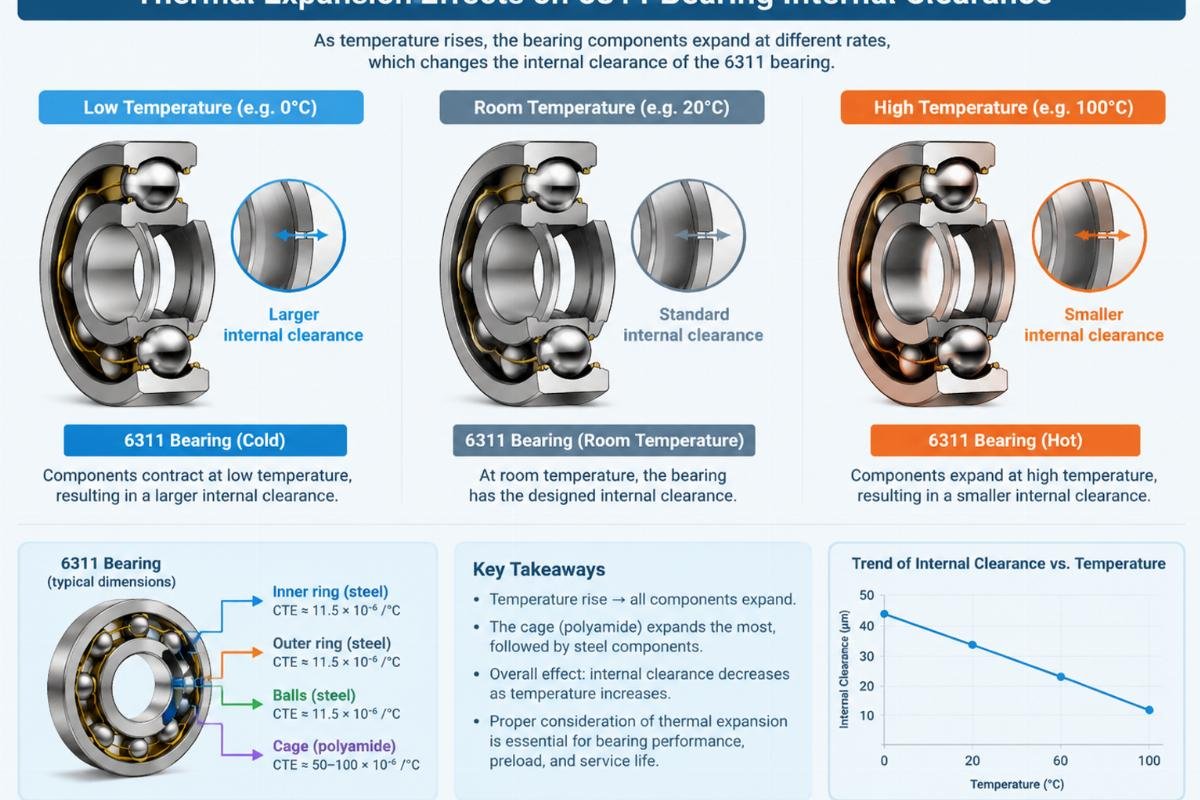
When sourcing a 6311 bearing, wholesalers must ask about the motor’s operating profile. Is it continuous duty? Does it cycle? The answer dictates the clearance class.
Which Seal Type Prevents Premature Motor Failures?
Choosing between open, ZZ, or 2RS seals depends on speed and environmental contaminants, not just a desire for protection.
Seals protect the bearing from dust and moisture, but they also generate friction. In high-speed motor applications, this friction creates heat. If the heat cannot dissipate, it degrades the lubricant inside the bearing. This is a hidden failure mode that often goes unnoticed until the motor locks up.
Most people assume that sealed bearings, particularly those with rubber contacts like 2RS, last longer because they keep contaminants out. In high-speed motors, however, the grease inside a sealed unit can degrade due to the heat generated by the seal itself. Once the grease breaks down, the bearing fails from the inside, regardless of how clean the external environment is. [NEED_CITE: Friction torque and heat generation formulas for different seal types]
For dusty environments, a metal shield (ZZ) offers a good balance. It blocks large particles without generating significant friction heat. For wet or highly contaminated areas, a 2RS seal is necessary, but the motor’s speed must be within the seal’s limit. Open bearings are suitable only for motors with external lubrication systems or extremely clean, controlled environments.
| Seal Type | Protection Level | Friction Heat Generation | Best Use Case |
|---|---|---|---|
| Open | None | Minimal | Clean environments with external lube |
| ZZ (Metal Shield) | Moderate | Low | Dusty environments, high speed |
| 2RS (Rubber Seal) | High | Higher | Wet environments, moderate speed |
A European wind farm operator once reported premature failures in generator bearings. They were using 2RS sealed 6311 units. The analysis showed that the grease had carbonized due to heat buildup from the seals. Switching to ZZ shields, combined with a more frequent external regreasing schedule, extended the service life meaningfully.
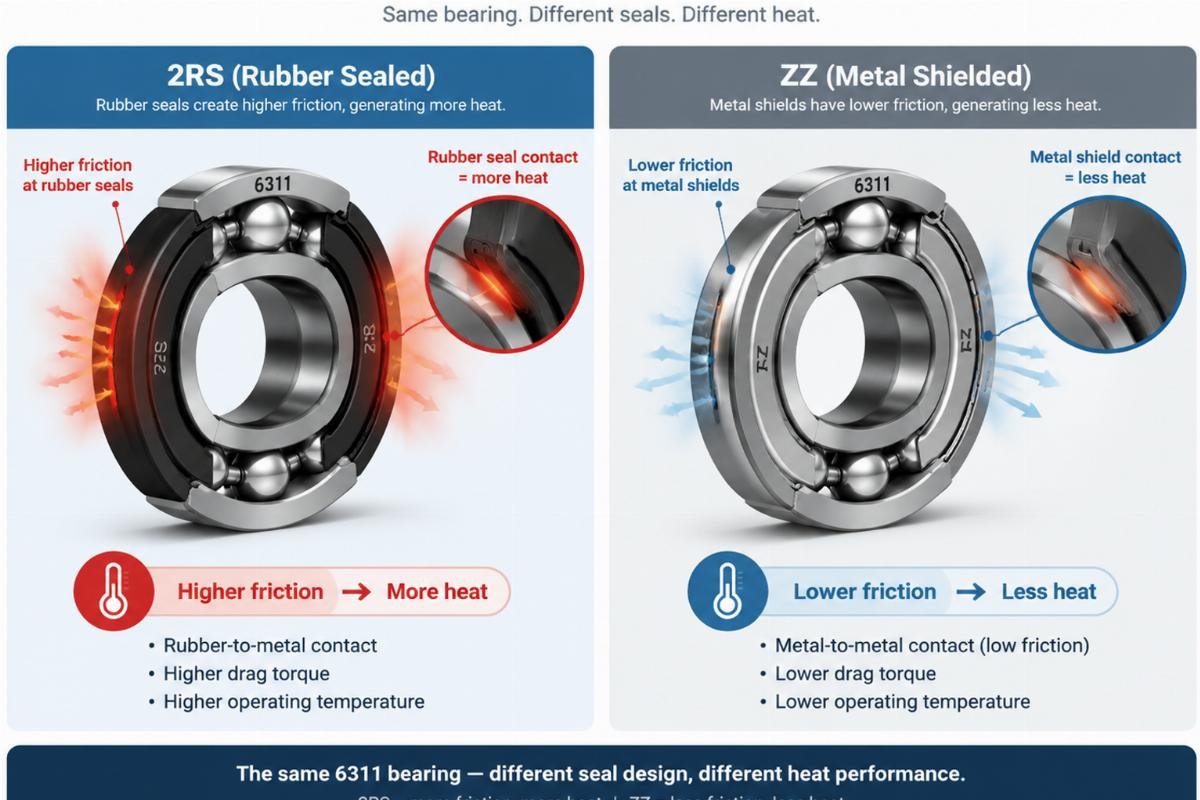
Selecting the right seal for a 6311 bearing is a trade-off between protection and thermal management. Wholesale buyers should verify the speed limits of the seals they are purchasing.
What Are the Hidden Risks of Wrong 6311 Selection?
Ignoring fit tolerances and lubrication leads to rapid electrical and mechanical damage.
The most common cause of bearing failure in motors is not load or speed, but improper installation and lubrication. When a 6311 bearing is pressed onto a shaft with incorrect tolerance, the inner ring can distort. This distortion reduces the internal clearance, effectively turning a C3 bearing into a CN or even a preloaded unit.
Electrical damage is another hidden risk. In variable frequency drive (VFD) applications, stray currents can pass through the bearing. If the lubricant film is broken or the bearing is not properly insulated, arcing occurs. This creates fluting patterns on the raceways, leading to noise and vibration. [NEED_CITE: Motor manufacturer application manuals for VFD bearing protection]
Load distribution also changes with clearance. Switching from standard to C3 clearance in a heavy radial load scenario can reduce the number of balls carrying the load. This increases the stress on the remaining balls, accelerating fatigue. Buyers must ensure that the clearance class matches the load profile, not just the temperature.
| Risk Factor | Cause | Consequence |
|---|---|---|
| Inner Ring Distortion | Incorrect shaft fit tolerance | Reduced clearance, overheating |
| Electrical Fluting | Stray currents from VFDs | Raceway damage, noise |
| Lubricant Breakdown | Seal friction or high temp | Loss of film, metal-to-metal contact |
A steel mill in Asia experienced repeated motor failures. The investigation revealed that the bearings were being installed with a hammer, causing microscopic damage to the raceways. The damage was not visible initially but led to rapid failure under load. Implementing proper installation tools and training reduced the failure rate noticeably.

Proper selection of a 6311 bearing includes considering the installation method and the electrical environment. Wholesale suppliers should provide technical guidance on these aspects.
Conclusion
Correct 6311 bearing selection balances clearance, seal type, and load capacity against actual operating conditions.
Success in motor maintenance and manufacturing relies on understanding the interplay between thermal expansion, friction, and load. Relying on basic dimensions alone is insufficient for preventing failures. By matching the internal clearance to the thermal profile and choosing the appropriate seal for the speed and environment, operators can significantly extend motor life. Technical expertise in these areas is as valuable as the physical component itself.

Written by
authorEditor covering global sourcing, supplier verification, and industrial product knowledge. Content is compiled from manufacturer specifications, industry standards, and hands-on experience with international B2B buyers. Every article is fact-checked before publishing to help procurement professionals make informed decisions.
View all posts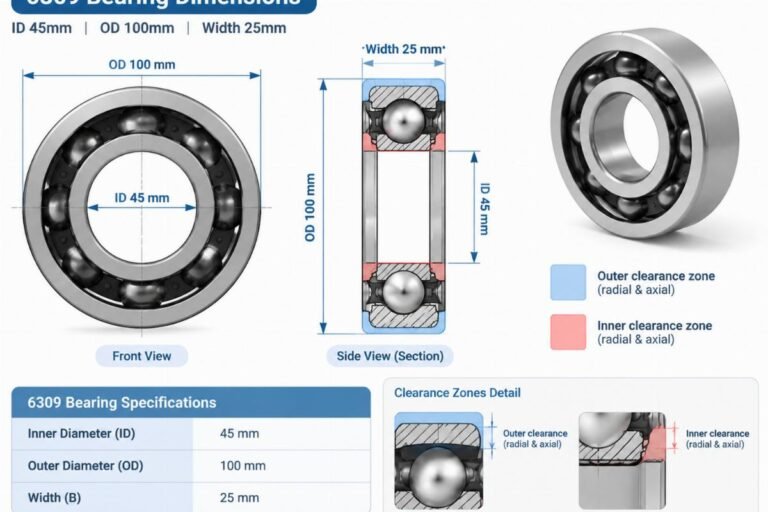
Leave a Reply