6313 Bearing Dimensions & Equivalents: Wholesale Supplier
Matching the 65x140x33mm envelope is only half the job; ignoring internal clearance is how you buy a seizure.
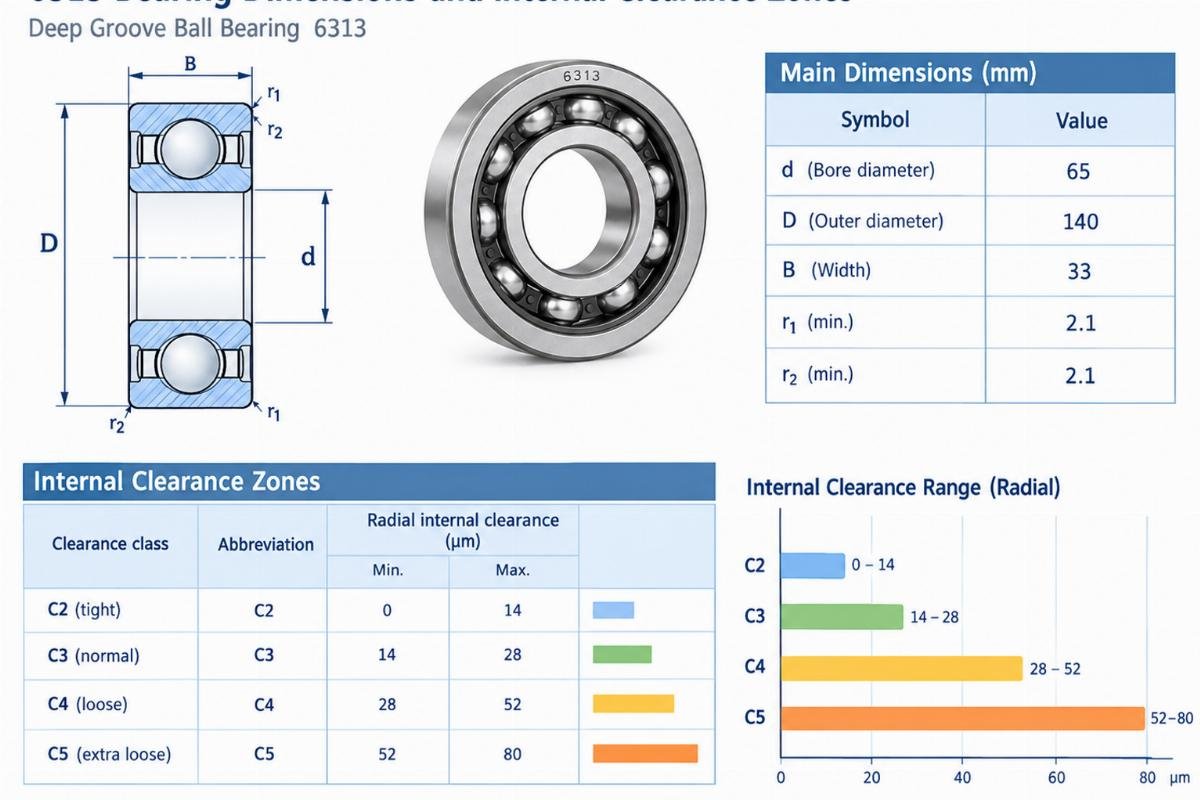
The standard 6313 bearing dimensions are strictly defined as 65 mm bore, 140 mm outer diameter, and 33 mm width. However, true interchangeability for a 6313 deep groove ball bearing size application requires verifying radial internal clearance (typically C3 for high-temperature or high-speed contexts) and tolerance class (P0/P6) against the specific operating environment, not just the physical envelope.
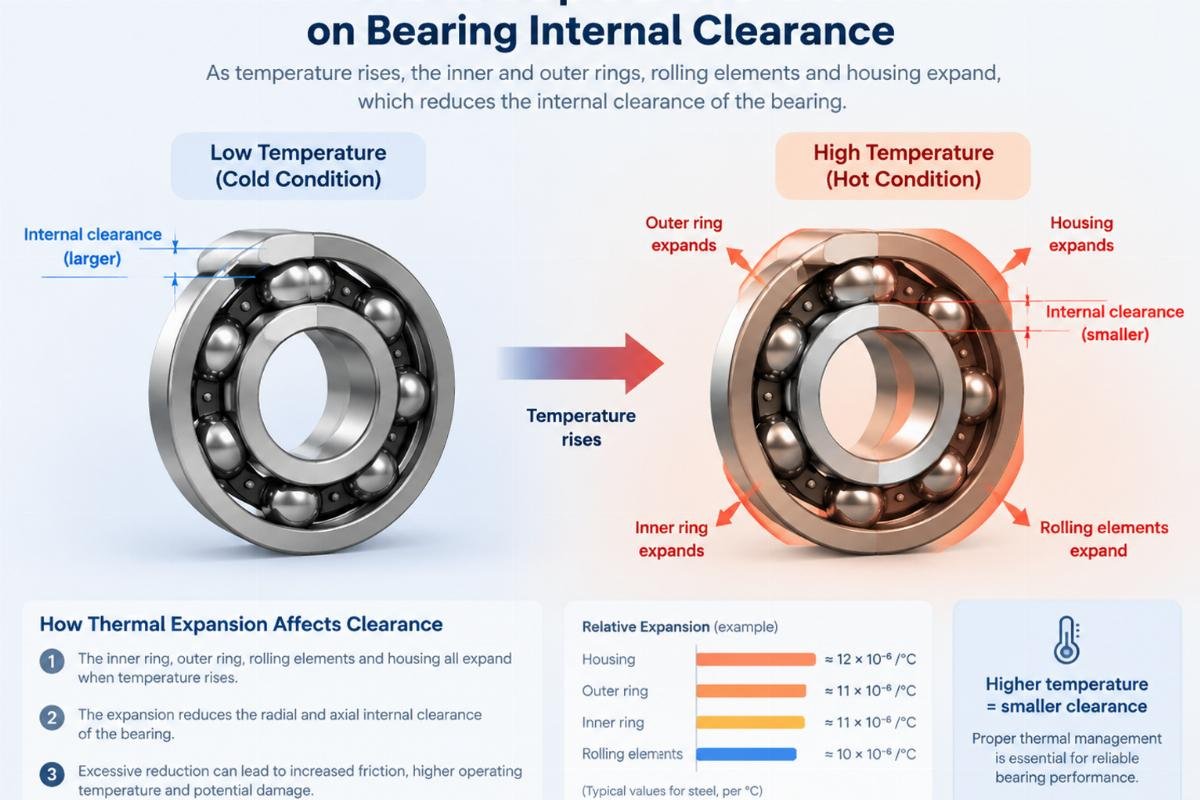
I still remember the smell of burnt insulation from a batch of water pump motors returned by a client in Surabaya. The procurement team had swapped out specified premium units for a cheaper alternative, matching the 6313 bearing dimensions perfectly on paper. They assumed that because the steel rings fit the housing, the job was done. They missed the thermal expansion factor. The original spec called for C3 clearance to handle heat buildup during continuous duty cycles. The substitute came with standard CN clearance. Within weeks, the rolling elements expanded into the raceways, friction spiked, and the motors locked up. That failure wasn’t about the brand logo; it was about the microns of space inside the bearing that you cannot see with a caliper. [NEED_CITE: relationship between thermal expansion and radial internal clearance selection]
Selecting the right equivalent isn’t just about finding a part that fits; it’s about ensuring the internal geometry matches the stress profile of your machinery. Let’s break down how to navigate the market for these components without falling into the trap of superficial dimension matching.
What Are the Exact Dimensions of a 6313 Bearing?
The basic envelope is universal, but the structural integrity depends on adherence to ISO standards.
When you request a quote for a 6313 bearing cross reference, suppliers will immediately confirm the three critical numbers: 65 mm inner diameter, 140 mm outer diameter, and 33 mm width. These figures are governed by ISO 15:2017, which ensures that a bearing manufactured in Germany will physically fit into a housing designed in Japan or China. [NEED_CITE: ISO 15:2017 dimensional standards for rolling bearings]
However, focusing solely on these external measurements is a common rookie mistake. The 6313 deep groove ball bearing size also includes chamfer dimensions, shoulder diameters, and fillet radii. If a replacement bearing has a larger shoulder height than the original, it might interfere with the sealing mechanism or the adjacent component. Conversely, if the fillet radius is too sharp, it can create a stress concentration point in the shaft, leading to premature fatigue cracking.
| Dimension Parameter | Value (mm) | Tolerance Class Impact |
|---|---|---|
| Bore Diameter (d) | 65 | Critical for shaft fit (k5/m5) |
| Outer Diameter (D) | 140 | Critical for housing fit (H7/J7) |
| Width (B) | 33 | Affects axial positioning |
| Chamfer Min | 2.1 | Ensures assembly ease |
For industrial distributors, understanding these nuances helps in filtering out low-quality substitutes that may meet the major dimensions but fail on the geometric tolerances. When evaluating SKF 6313 equivalent brands, always request the full dimensional report, not just the catalog summary. This is where many domestic alternatives fail to meet the rigorous demands of heavy equipment OEMs.

How Do 6313 Equivalents Compare Across Top Brands?
Premium branding does not automatically guarantee superior performance in every application; consistency does.
The market is flooded with options, from global giants like SKF, FAG, NSK, and NTN to reliable Chinese manufacturers such as ZWZ, HRB, and LYC. A common misconception is that you must always pay the premium for Western or Japanese brands. In reality, for many moderate-load applications, high-quality domestic brands offer a compelling balance of cost and reliability, provided their quality control systems are robust. [NEED_CITE: comparative fatigue life testing of premium vs. mid-tier bearing brands]
When building a 6313 bearing cross reference list for your inventory, consider the following qualitative differences:
| Brand Tier | Typical Strengths | Best Use Case | Traceability Level |
|---|---|---|---|
| Premium Global (SKF, FAG, NSK) | High consistency, advanced materials, global support | High-speed spindles, critical wind turbine gearboxes | Full batch-level |
| Reliable Domestic (ZWZ, HRB, LYC) | Cost-effective, good for standard loads | Agricultural machinery, general conveyor systems, pumps | Verifiable batch codes |
| Low-Cost Generic | Basic functionality | Non-critical, low-speed, easy-replace applications | Self-reported/None |
A European wind farm operator once faced a supply chain bottleneck for main shaft bearings. While they kept premium brands for the critical nacelle components, they successfully substituted 6313 bearing dimensions equivalents from certified Chinese manufacturers for auxiliary cooling fans and yaw drives. The result was a significant reduction in maintenance costs without compromising uptime, because the load and speed profiles of those auxiliary units did not require the extreme precision of the top-tier brands.
The key is verification. We maintain strict traceability documentation for all brands we stock, ensuring that when you order an SKF 6313 equivalent brands product, you receive genuine material with verifiable origin, not a counterfeit stamped with a famous logo.

Why Clearance and Tolerance Matter More Than Size
A perfect fit on the outside means nothing if the inside is too tight for the heat.
This is the lesson from the Surabaya incident. The 6313 bearing clearance C3 designation indicates a radial internal clearance greater than the standard CN group. This extra space allows the bearing components to expand thermally without generating excessive preload. In applications involving electric motors, pumps, or gearboxes that run hot, selecting C3 is often non-negotiable. [NEED_CITE: ABMA/ISO guidelines on radial internal clearance selection for varying temperatures]
If you install a standard clearance bearing in a high-temperature environment, the inner ring expands faster than the outer ring (if the housing dissipates heat well), or both expand but the lubricant viscosity drops. Without the extra clearance, the rolling elements bind. Friction generates more heat, which causes more expansion, leading to a thermal runaway event known as seizure.
Tolerance classes also play a pivotal role. Standard commercial bearings are typically P0 (ABEC 1). For higher precision requirements, such as in machine tools, P6 (ABEC 3) or P5 (ABEC 5) might be specified. Using a P0 bearing in a P6 application can lead to vibration and noise, while using a P5 bearing in a P0 application is an unnecessary expense that offers no tangible benefit.
When sourcing 6313 deep groove ball bearing size replacements, always ask: “What is the operating temperature range?” and “What was the original clearance specification?” If the original data is lost, analyzing the application type can guide you. For instance, a 6313 bearing clearance C3 is almost always recommended for electric motors above 75 kW due to the significant heat generation in the rotor shaft.
How to Source and Verify 6313 Equivalents Globally
Trust is built on documentation, not just promises.
Sourcing bearings from overseas involves navigating a minefield of counterfeits and substandard products. For MRO buyers and industrial distributors, the risk of receiving fake goods is a constant threat. A counterfeit 6313 bearing cross reference item might look identical to the genuine article but use inferior steel with high inclusion levels, leading to early spalling and catastrophic failure.
To mitigate this risk, a rigorous verification process is essential. First, demand original packaging and batch certificates. Genuine manufacturers embed unique tracking codes that can be verified through their official channels. Second, inspect the physical attributes. Look for crisp, laser-etched markings rather than poorly stamped logos. Check the surface finish of the raceways; premium bearings have a mirror-like polish, while lower-quality ones may show grinding marks.
We support our clients by providing mixed-batch consolidation services. This allows a mining company in Africa or a manufacturing plant in Latin America to order a container load containing various sizes and brands, including SKF 6313 equivalent brands and other necessary spare parts, all under one shipment with complete customs documentation. This approach optimizes inventory costs and reduces lead times for urgent repairs.
Furthermore, technical consultation is vital. Before placing a large order for 6313 bearing dimensions equivalents, share your application details. Our team can help verify if a domestic alternative is suitable for your specific load and speed conditions, ensuring you do not over-specify or under-specify the component. This collaborative approach transforms the sourcing process from a simple transaction into a strategic partnership focused on operational reliability.

Conclusion
Dimensional match is the baseline; operational compatibility is the goal.
Selecting the right 6313 bearing dimensions equivalent requires looking beyond the 65x140x33mm specs. By prioritizing internal clearance, tolerance grades, and verified traceability, you ensure that your machinery runs smoothly and efficiently. Whether you choose a premium global brand or a reliable domestic alternative, the key is aligning the bearing’s technical capabilities with your specific application demands. Avoid the costly mistake of assuming all bearings are created equal; verify, validate, and choose wisely.

Written by
authorEditor covering global sourcing, supplier verification, and industrial product knowledge. Content is compiled from manufacturer specifications, industry standards, and hands-on experience with international B2B buyers. Every article is fact-checked before publishing to help procurement professionals make informed decisions.
View all posts

Leave a Reply