Atlas Copco Compressor Bearing Equivalents Wholesale Supplier
Matching outer and inner diameters is not enough to save your compressor.
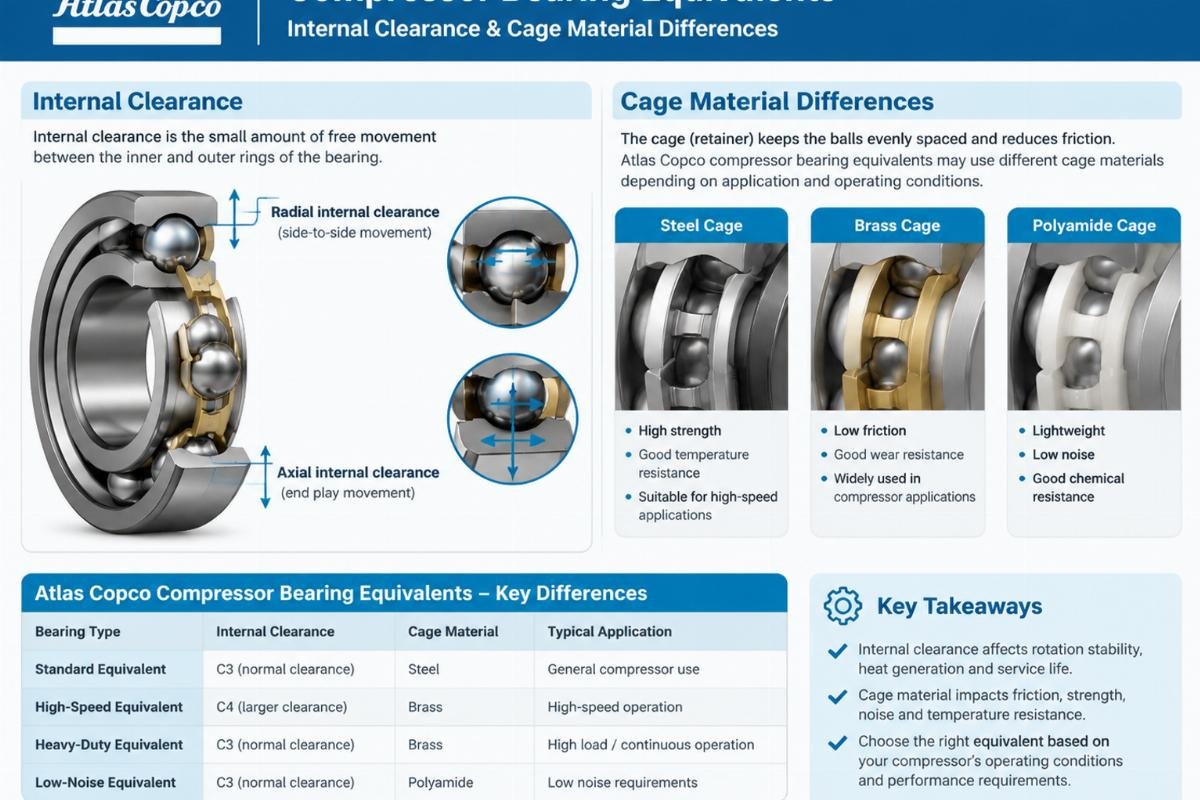
Sourcing reliable Atlas Copco compressor bearing equivalents requires matching internal clearance, cage materials, and lubrication specifications, not just basic dimensions. Premature failure in air ends usually stems from thermal expansion mismatches or cage degradation under high-speed operation, which generic dimension-only replacements cannot address.
I still remember the humidity in that cement plant in São Paulo. The maintenance manager was desperate. His Atlas Copco screw compressor had seized up, and the official lead time for a replacement air end bearing was stretching into weeks. He found a local supplier who promised a “perfect fit” based on the outer diameter and bore size. It looked identical. It slid into the housing with the same gentle pressure. But within days, the vibration levels spiked, and the unit locked up again. The cost was not just the bearing; it was the lost production hours and the reputational damage. That incident shifted my focus entirely. I stopped looking at bearings as simple metal rings and started treating them as precision systems where every micron of clearance and every gram of lubricant matters. [NEED_CITE: common causes of rolling bearing failure per ISO 15243]
This guide breaks down how to identify genuine premium alternatives like SKF and FAG that meet the rigorous demands of industrial compression. We will move beyond simple part numbers to the technical parameters that actually determine lifespan.
Why Basic Dimensions Fail in Atlas Copco Compressors?
Thermal expansion and rotational speed create dynamic conditions that static measurements cannot predict.
When you measure a worn bearing from an Atlas Copco air end, you get a snapshot of a failed component. Replacing it with a new bearing that matches those static dimensions ignores the operating environment. Compressor shafts rotate at high speeds, generating significant heat. This heat causes the shaft to expand. If the bearing’s internal clearance is too tight, this expansion leads to excessive preload, increased friction, and rapid temperature rise—a vicious cycle ending in seizure. [NEED_CITE: effect of internal clearance on bearing operating temperature]
Conversely, if the clearance is too loose, the rolling elements skid rather than roll, causing smearing and premature fatigue. The original equipment manufacturer specifies clearances like C3 or C4 for a reason. These are not arbitrary choices but calculated allowances for thermal growth. Many generic suppliers stock only standard C0 (normal) clearance bearings because they are cheaper and more common. Installing a C0 bearing in a position designed for C3 is a guaranteed recipe for downtime.
Another critical factor is the cage material. In high-speed compressor applications, centrifugal forces are immense. Standard steel cages may deform or fracture under these loads. Original designs often use machined brass or reinforced polyamide cages for their strength-to-weight ratio and compatibility with specific lubricants. A generic substitute might use a stamped steel cage to cut costs. While it fits the space, it lacks the dynamic stability required for continuous operation. I have seen brass cages survive where steel ones failed simply because the material dampened vibration better and resisted the chemical attack of certain synthetic compressor oils.

How to Cross-Reference Atlas Copco Bearings to SKF & FAG?
Accurate cross-referencing requires mapping the application context, not just the part number.
Finding Atlas Copco compressor bearing equivalents involves more than typing a number into a search engine. OEM part numbers are often proprietary or rebadged versions of standard industry items. To find a true equivalent, you must identify the underlying standard designation. For example, an Atlas Copco part number might correspond to a standard SKF deep groove ball bearing or a cylindrical roller bearing with specific modifications.
The most reliable method is to decode the physical markings on the existing bearing if it is still legible. Look for the basic designation (e.g., 6312, NU2210). Then, check for suffixes. These suffixes tell the story of the bearing’s engineering. A suffix indicating a brass cage, a specific radial internal clearance, or a special heat treatment is crucial. Without these suffixes, you are buying a generic component, not an engineered solution.
| Parameter | Generic Substitute | Premium Equivalent (SKF/FAG) | Impact on Reliability |
|---|---|---|---|
| Internal Clearance | Often Standard (C0) | Matched to OEM Spec (C3/C4) | Prevents thermal seizure |
| Cage Material | Stamped Steel | Machined Brass or Polyamide | Resists high-speed deformation |
| Lubrication | Standard Grease | High-Temp Synthetic Compatible | Reduces friction and wear |
| Traceability | Limited or None | Full Batch Documentation | Ensures authenticity and quality |
[NEED_CITE: importance of bearing suffixes in identification]
A regional distributor in the Middle East once consolidated his inventory by switching to verified SKF and FAG equivalents for his clients’ Atlas Copco fleets. Instead of stocking dozens of obscure OEM-specific boxes, he stocked the standard premium brands with the correct suffixes. This reduced his dead stock and allowed him to fulfill emergency orders faster. The key was verifying that the premium brand’s specification sheet matched the OEM’s operational requirements exactly.

What Technical Parameters Must Be Verified Before Ordering?
Verification of clearance, cage type, and lubrication compatibility prevents catastrophic failure.
Before placing an order for Atlas Copco compressor bearing equivalents, you must verify three non-negotiable parameters. Skipping any of these steps introduces unnecessary risk.
First, confirm the internal clearance. As mentioned, C3 or C4 is common for compressor air ends due to heat generation. Ask your supplier for the certification or test report confirming the clearance class. Do not accept “standard” as an answer. If the supplier cannot provide this data, they are likely selling off-the-shelf stock that has not been vetted for high-performance applications.
Second, inspect the cage type. For high-speed shafts, machined brass cages are preferred for their durability and ability to handle high accelerations. For lighter loads or specific chemical environments, reinforced polyamide might be specified. Ensure the replacement matches the original material. A mismatch here can lead to cage fragmentation, which then destroys the rolling elements and races.
Third, check lubrication compatibility. Compressors often use synthetic oils that can react with certain bearing greases or cage materials. If the bearing is pre-lubricated, ensure the grease is compatible with the compressor’s oil system. If it is an open bearing for oil bath lubrication, ensure the surface finish and material are suitable for the specific oil viscosity and operating temperature. [NEED_CITE: compatibility of bearing materials with synthetic lubricants]
I recall a case where a mining operator in Africa replaced a motor bearing with a technically correct model but ignored the lubrication spec. The new bearing’s grease hardened in the high-ambient heat, leading to dry running and failure within months. Switching to a high-temperature stable equivalent solved the issue permanently.

How to Source Genuine Equivalents for Emergency MRO?
Reliable sourcing depends on traceability, flexible MOQs, and spot inventory availability.
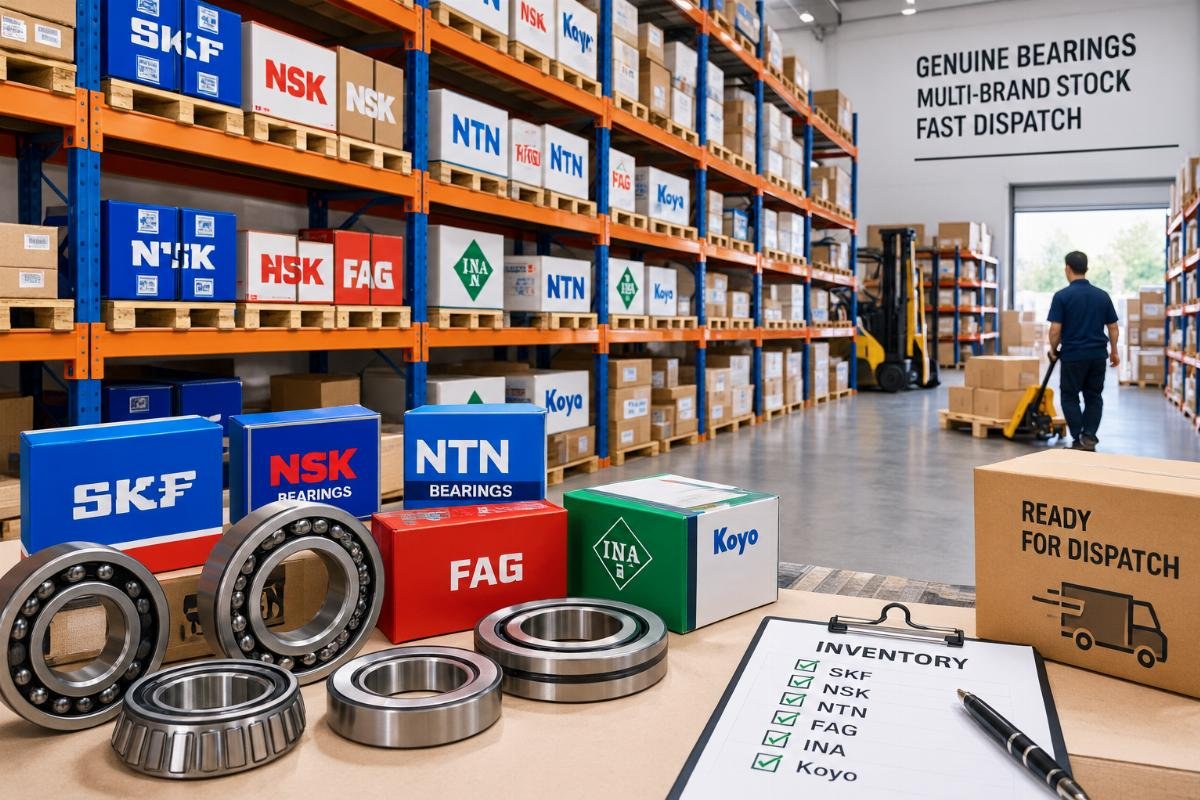
When downtime strikes, lead time is the enemy. Official channels may take weeks to ship a single unit. This is where a specialized Atlas Copco compressor bearing equivalents wholesale supplier becomes vital. The goal is to access genuine premium brands like SKF, FAG, NSK, or TIMKEN without the bureaucratic delays of direct OEM procurement.
Traceability is the first line of defense against counterfeits. Request full documentation, including certificates of origin and material test reports. Genuine bearings from reputable manufacturers come with batch numbers that can be traced back to the production facility. If a supplier hesitates to provide this, walk away. Counterfeit bearings are prevalent in the market, and they often look perfect until they fail under load.
Flexible minimum order quantities (MOQs) are another critical factor. MRO needs are often urgent and small-volume. You do not want to buy a pallet when you need one bearing. A competent supplier understands this and offers single-unit sales from spot inventory. This flexibility allows maintenance teams to keep minimal stock on hand while relying on the supplier’s larger warehouse for immediate dispatch.
Consolidation is also key for distributors. Instead of ordering from multiple brand-specific distributors, sourcing from a multi-brand supplier allows you to combine SKF, FAG, and other premium brands in one shipment. This reduces logistics costs and simplifies customs clearance. [NEED_CITE: benefits of supply chain consolidation for MRO parts]
A European wind farm operator reduced his spare parts lead time significantly by partnering with a global supplier who held stock of major bearing brands. When a gearbox bearing failed, he received a genuine FAG equivalent in days, not weeks. The supplier’s ability to verify the exact technical specs and ship from local regional hubs made the difference between minor maintenance and major revenue loss.
Conclusion
Precision matters more than price when keeping compressors running.
Selecting the right Atlas Copco compressor bearing equivalents is a technical decision, not just a purchasing one. By focusing on internal clearance, cage material, and lubrication compatibility, you ensure that the replacement performs as well as, or better than, the original. Relying on verified premium brands with full traceability eliminates the guesswork and risk associated with generic substitutes.

Written by
authorEditor covering global sourcing, supplier verification, and industrial product knowledge. Content is compiled from manufacturer specifications, industry standards, and hands-on experience with international B2B buyers. Every article is fact-checked before publishing to help procurement professionals make informed decisions.
View all posts

Leave a Reply