Caterpillar Bearing Part Numbers: Find Equivalents & Buy Wholesale
Matching dimensions is not enough.
To find reliable equivalents for Caterpillar bearing part numbers, you must match internal clearance codes (such as C3 or C4), dynamic load ratings, and cage material specifications, not just the inner and outer diameters. Relying solely on basic size parity leads to premature spalling and seal failure in heavy equipment.
I still remember the humid air in the maintenance workshop at Beilun Port, where the smell of grease and iron dust was constant. A client from Indonesia had a Caterpillar excavator with a seized swing circle. The local supplier had provided a replacement that fit perfectly into the housing. The dimensions were identical. Yet, within weeks, the bearing failed again, causing catastrophic downtime. I examined the failed unit and realized the mistake immediately. The original equipment manufacturer specified a specific internal clearance to handle thermal expansion and heavy shock loads. The replacement had standard clearance. It was tight, overheated, and collapsed under stress. That incident shifted my entire approach to sourcing. I stopped looking for parts that merely fit and started looking for parts that functioned under the same extreme conditions. This experience drives how I now verify every cross-reference for Caterpillar bearing part numbers.
Finding the right alternative requires digging deeper than the catalog surface. It demands a technical understanding of why the original part was designed with specific tolerances.
Why Simple Size Matching Fails for Cat Bearings?
Dimensional parity ignores critical internal clearances and load capacities. Many distributors assume that if a bearing has the same bore, outside diameter, and width, it is interchangeable. This is a dangerous oversimplification in heavy machinery applications.
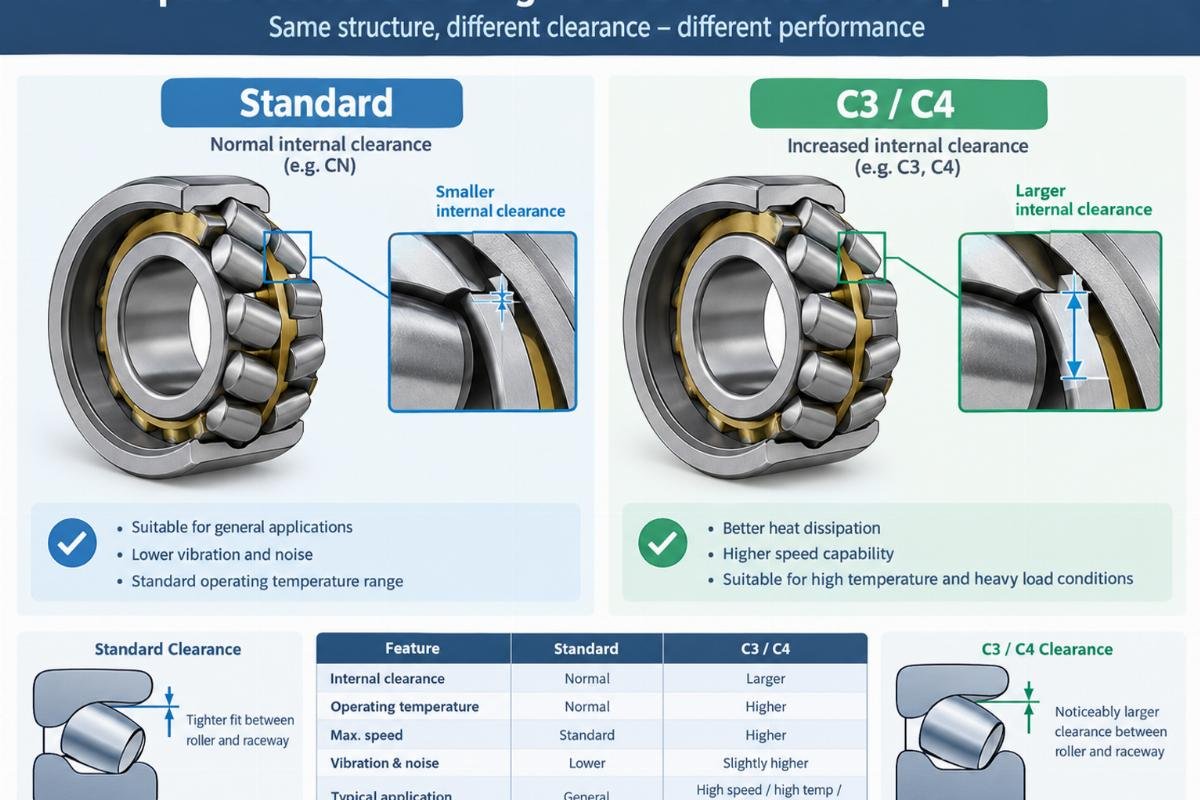
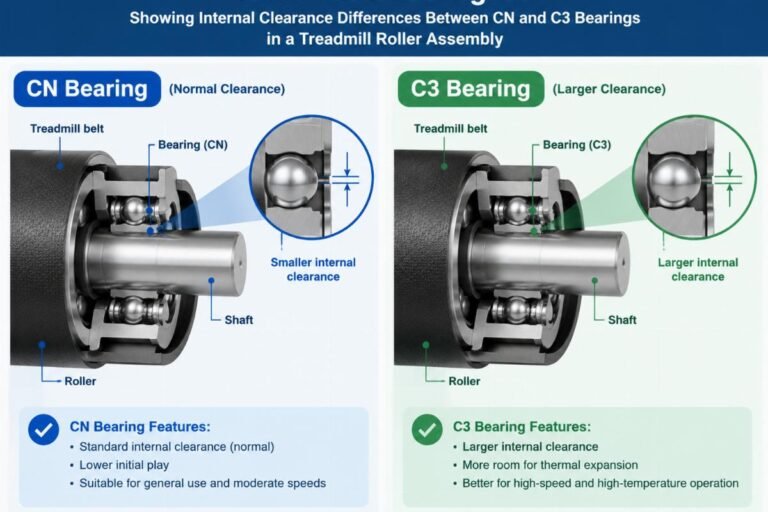
The core issue lies in internal clearance. Caterpillar equipment often operates in environments with significant temperature fluctuations and heavy impact loads. To accommodate this, OEMs frequently specify bearings with C3 or C4 internal clearances. A standard P0 clearance bearing might fit physically, but once the machine heats up during operation, the inner ring expands. Without the extra room provided by a higher clearance code, the rolling elements bind against the races. This generates excessive heat,*.
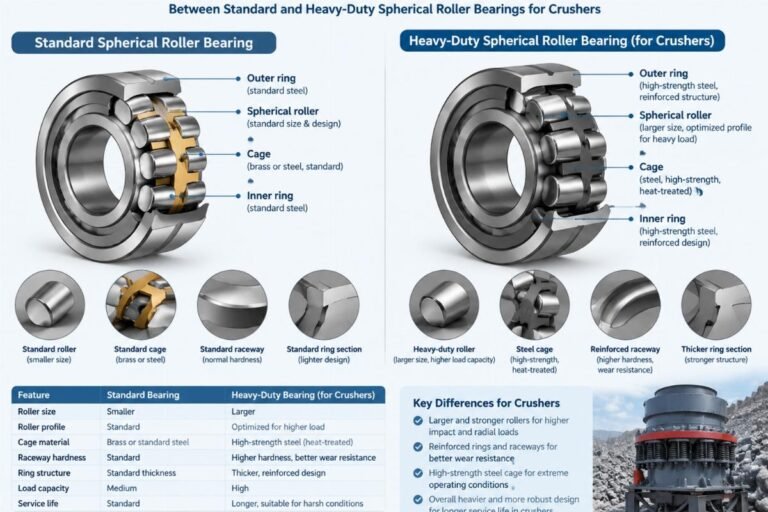
Another critical factor is the cage design. In high-vibration applications like crushers or compactors, the cage must withstand significant inertial forces. Standard cages may fracture under these conditions, while heavy-duty variants use reinforced materials or specific geometries to maintain integrity. Ignoring these details results in failures that look like quality issues but are actually specification mismatches.
| Specification Factor | Generic Equivalent Risk | OEM-Specified Requirement | Impact of Mismatch |
|---|---|---|---|
| Internal Clearance | Standard (Normal) | C3 / C4 (Increased) | Thermal binding, early spalling |
| Cage Material | Standard Steel | Reinforced Brass/Steel | Cage fracture under vibration |
| Seal Type | Open / Shielded | Contact Seals | Contamination ingress, lubricant loss |
| Precision Grade | P0 (Standard) | P6 (Higher Precision) | Increased noise, uneven load distribution |
[NEED_CITE: ISO 15243 failure mode classification for clearance-related damage]
When I consult with buyers, I always ask for the operating environment details before suggesting an alternative. A loader working in a dusty quarry needs different sealing solutions than a generator set in a clean room. Understanding these nuances ensures that the equivalent Caterpillar bearing part numbers we source will survive the actual workload, not just the installation process.

How to Cross-Reference Caterpillar Part Numbers Accurately?
Use SIS systems to extract exact specs before seeking alternatives. The Service Information System (SIS) from Caterpillar provides more than just a part number. It contains the engineering specifications that define the component’s performance envelope.
Start by locating the original part number on the equipment nameplate or in the service manual. Do not rely on visual inspection alone, as previous repairs may have installed incorrect parts. Once you have the number, access the technical data sheet. Look for the following key parameters:
- Dynamic and Static Load Ratings: These values indicate how much weight the bearing can handle while rotating and when stationary. An equivalent must meet or exceed these ratings.
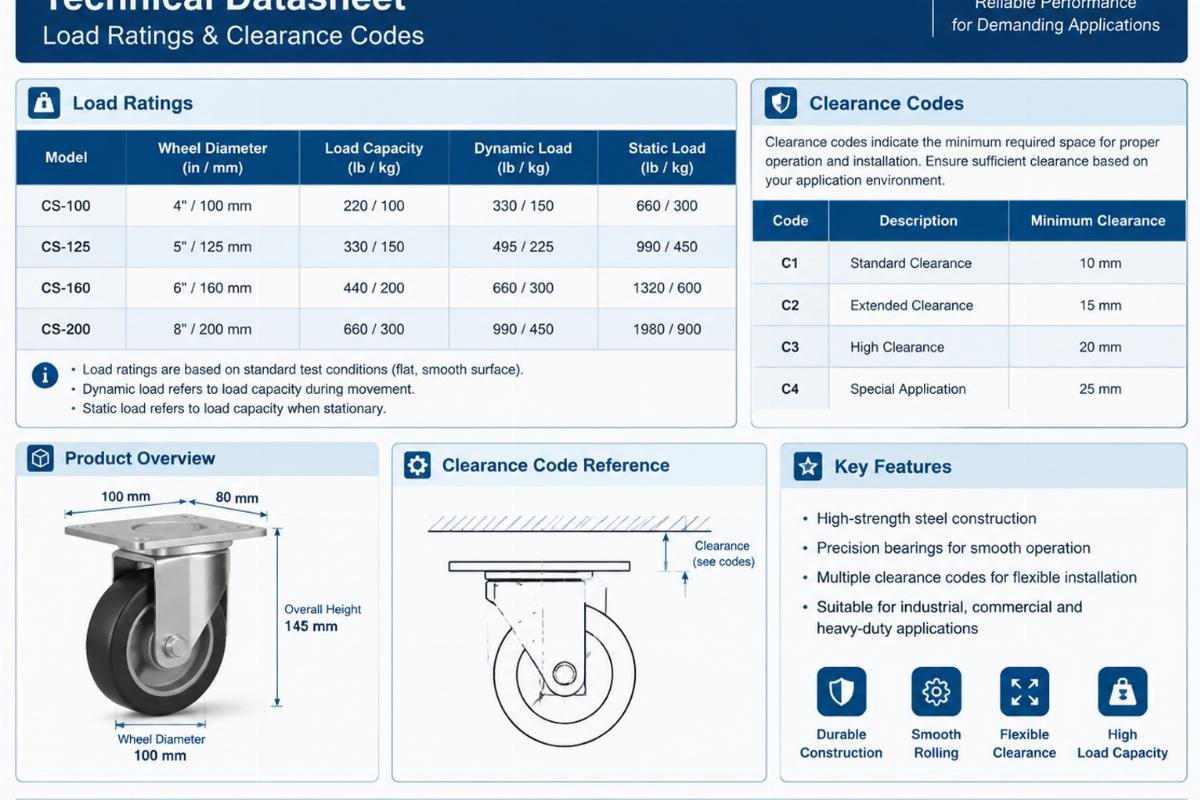
- Clearance Code: Identify if the part requires C2, C3, C4, or C5 clearance. This is non-negotiable for high-load applications.
- Precision Class: Check if the application demands P0, P6, or even P5 precision. Higher precision reduces vibration and extends life in sensitive assemblies.
- Material and Heat Treatment: Some bearings undergo special heat treatments for enhanced durability in abrasive environments.
A US buyer once contacted me regarding a fleet of wheel loaders experiencing frequent axle failures. They were using a generic tapered roller bearing that matched the dimensions. After reviewing the SIS data, I found that the original spec called for a sealed unit with a specific grease compatibility rating. The generic open bearing allowed contaminants to enter, washing out the lubricant. We switched to a sealed equivalent from a premium global brand that matched the exact grease specification. The failure rate dropped noticeably.
[NEED_CITE: ABMA standards for load rating calculations]
This process transforms sourcing from a guessing game into a technical selection task. By aligning the alternative with the OEM’s engineering intent, you ensure reliability. When verifying Caterpillar bearing part numbers, always prioritize the technical data over the physical fit.
Which Bearing Types Need the Strictest Equivalent Matching?
Spherical and tapered rollers in swing drives and axles demand exact spec parity. Not all bearings are created equal. Some applications are forgiving, while others are unforgiving of even minor deviations.
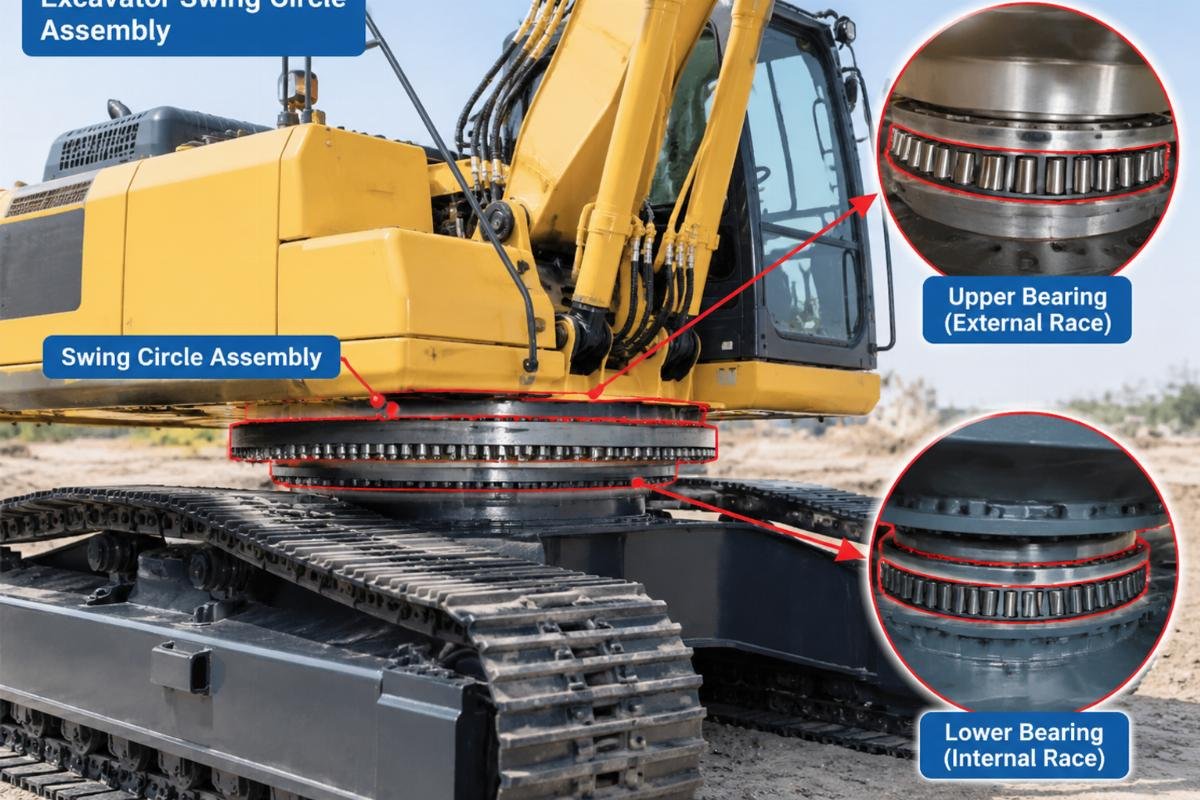
Swing circles in excavators are among the most critical applications. They support the entire upper structure and endure constant slewing motions with heavy loads. Here, spherical roller bearings are common. They must handle misalignment and heavy radial loads. Using a standard spherical roller instead of one designed for heavy-duty vibration specs can lead to cage fractures. I have seen cases where substituting a standard cage with a weaker alternative resulted in complete bearing disintegration within months.
Tapered roller bearings in axles and final drives are equally sensitive. These bearings manage combined radial and axial loads. The preload setting is crucial. If the equivalent bearing has different dimensional tolerances or surface finishes, it can affect the preload, leading to overheating or premature wear. In one case, a mining client used a generic tapered roller that had slightly rougher raceway surfaces. This increased friction and heat, causing the seal to leak and allowing dirt to enter the gearbox. The resulting damage required a full axle rebuild, costing far more than the initial savings on the bearing.
Thrust bearings in hydraulic pumps also require careful matching. They operate under high pressure and speed. Any deviation in flatness or surface finish can cause leakage and efficiency loss. For these components, sticking to premium brands with verified traceability is essential.
[NEED_CITE: OEM engineering manuals for swing drive bearing specifications]
When sourcing equivalents for these critical types, do not compromise on brand reputation or documentation. Verify that the supplier can provide material certificates and traceability docs. This ensures that the Caterpillar bearing part numbers you replace are backed by consistent manufacturing quality.
How to Verify the Quality of Equivalent Bearings?
Check material certs, traceability, and cage material against OEM baselines. Finding a part number match is only half the battle. Ensuring the quality of the equivalent is the other half. Without proper verification, you risk introducing substandard components into your supply chain.
Start by requesting material certificates. These documents confirm the steel grade and heat treatment process used in manufacturing. High-quality bearings typically use vacuum-degassed steel to reduce impurities. Impurities act as stress concentrators and initiate cracks. A reputable supplier will provide these certs without hesitation.
Traceability is another key indicator. Each bearing should have a batch number that links back to the production records. This allows for root cause analysis if a failure occurs. If a supplier cannot provide traceability, they likely lack control over their supply chain.
Inspect the cage material and design. As mentioned earlier, the cage must suit the application. For high-speed or high-vibration uses, brass or reinforced steel cages are preferred. Check the surface finish of the rolling elements and races. They should be smooth and free from defects. Rough surfaces increase friction and heat generation.
Packaging also offers clues. Genuine or high-quality equivalents come in robust packaging that protects against moisture and contamination during transit. Poor packaging can lead to corrosion before the bearing is even installed.
[NEED_CITE: ISO quality assurance standards for bearing manufacturing]
I always advise clients to start with a small trial order when switching to a new equivalent source. Test the bearings in less critical applications first. Monitor their performance and compare it to the OEM parts. This practical validation builds confidence in the supply chain. By focusing on these verification steps, you ensure that the Caterpillar bearing part numbers you procure deliver the expected service life.

Conclusion
Precision matters more than price.
Finding the right equivalent for Caterpillar bearing part numbers requires a deep understanding of technical specifications, not just dimensional matching. By focusing on internal clearance, load ratings, and material quality, you can avoid costly downtime and ensure reliable equipment performance. Always verify the specs through official channels and choose suppliers who provide full traceability and technical support. This approach turns maintenance from a reactive cost into a strategic advantage.

Written by
authorEditor covering global sourcing, supplier verification, and industrial product knowledge. Content is compiled from manufacturer specifications, industry standards, and hands-on experience with international B2B buyers. Every article is fact-checked before publishing to help procurement professionals make informed decisions.
View all posts
Leave a Reply