Baler Bearing Equivalents by Model: Cross-Reference & Wholesale Supplier
Identical outer dimensions do not guarantee interchangeability in high-vibration agricultural machinery.
Finding exact Baler Bearing Equivalents requires matching dynamic load ratings, internal clearance codes, and cage materials to the specific operational stresses of the baler model, rather than relying solely on physical size similarity. This precise parameter matching prevents premature failure during critical harvest windows when downtime is financially catastrophic.
The rain was hammering the tin roof of the workshop in West Java when the call came. A large-scale rice straw operation had a square baler down with a seized main shaft bearing. The local dealer quoted a two-month lead time for the original equipment manufacturer part. In the middle of the rainy season, waiting two months meant losing the entire harvest window. I pulled the damaged cylindrical roller bearing from the housing. It wasn’t just worn; the cage had disintegrated due to vibration fatigue that the standard OEM spec hadn’t accounted for. Instead of ordering the same part number, I cross-referenced the load capacity and switched to a heavy-duty equivalent with a reinforced brass cage and C3 clearance. The machine was back in the field within forty-eight hours. That incident shifted my focus from simple parts trading to technical cross-referencing. Now, I spend my days in repair stations across Southeast Asia, helping operators find verified Baler Bearing Equivalents that keep machines running when official supply chains stall.
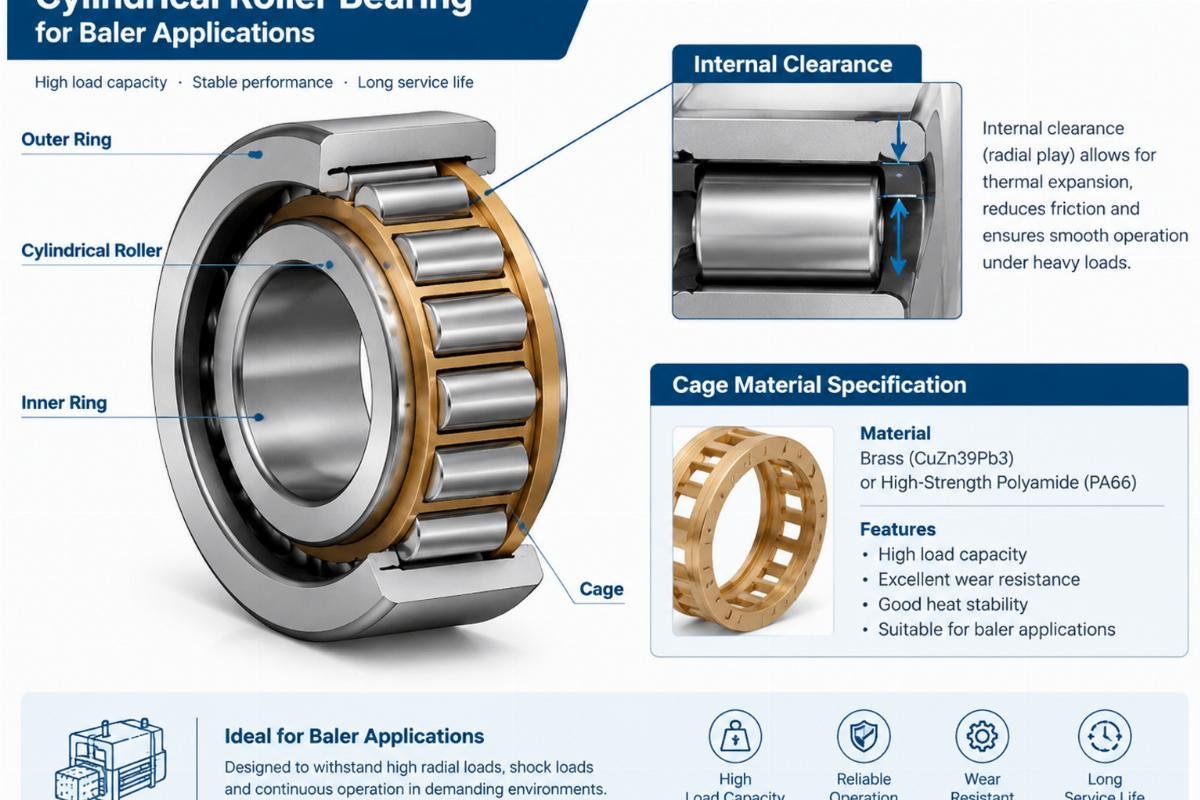
Understanding why generic replacements fail requires looking beyond the catalog dimensions. Most breakdowns occur because the replacement bearing matches the bore and outer diameter but fails to handle the specific shock loads or contamination levels present in baler operations.
Why Cross-Referencing Baler Bearings is Critical for Harvest Survival?
Direct OEM ordering often causes fatal delays during peak harvest seasons, making verified equivalents essential for operational continuity.
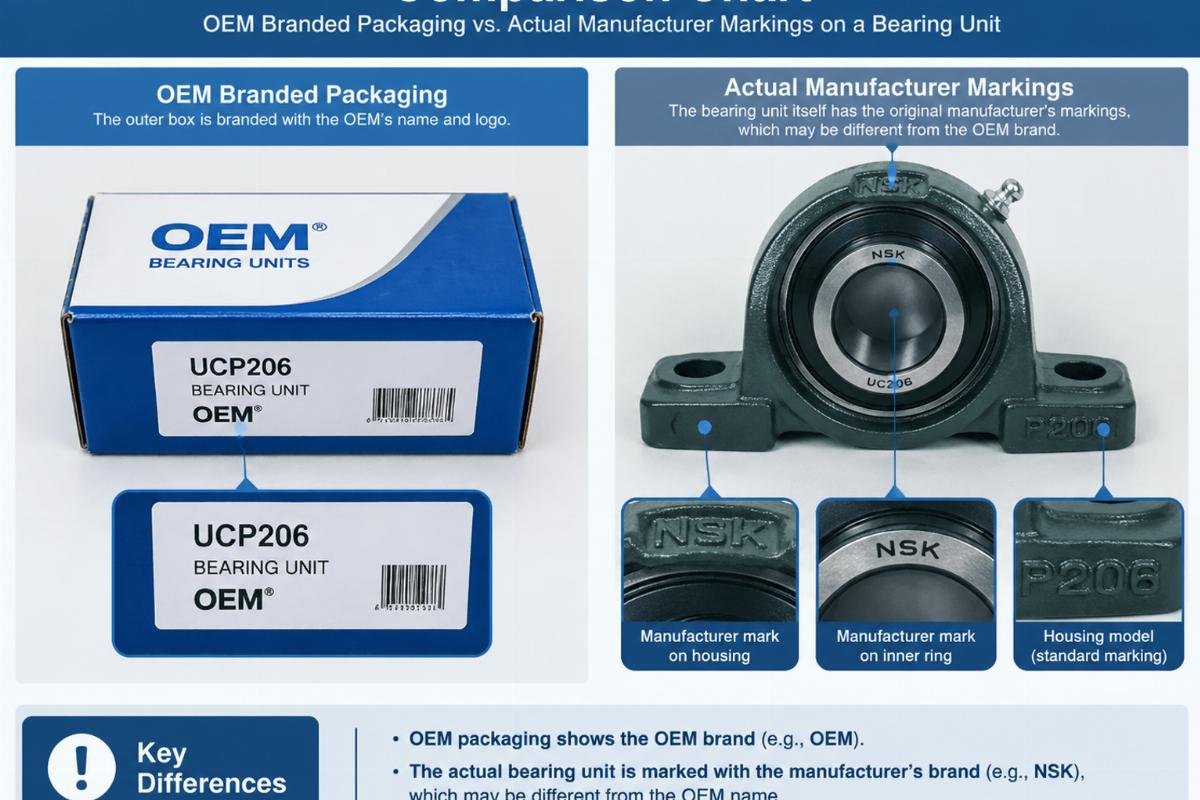
When a baler fails in the field, the pressure to resume operation is immense. Distributors and farm managers often default to ordering the exact OEM part number, assuming it is the only safe option. However, many OEMs simply rebrand standard bearings from major manufacturers like SKF, FAG, or NSK. By identifying the underlying manufacturer part number, operators can access Baler Bearing Equivalents that offer identical or superior performance without the long lead times associated with branded agricultural channels. [NEED_CITE: common OEM rebranding practices in agricultural machinery supply chains]
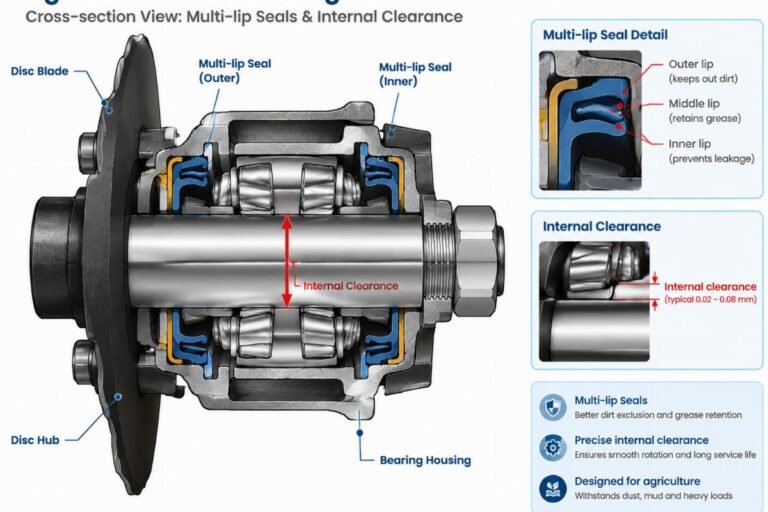
The risk of using unverified substitutes lies in the subtle differences in manufacturing tolerances. A bearing that fits physically may have different internal clearances. In a baler, which operates under constant shock loading from compacting dense crop material, incorrect clearance leads to rapid heat generation and seizure. I have seen numerous cases where a “compatible” bearing failed within weeks because its internal clearance was too tight for the thermal expansion experienced during heavy use.
To avoid these pitfalls, one must look at the dynamic load rating. This value indicates how much load a bearing can withstand for a million revolutions. If the equivalent bearing has a lower dynamic load rating than the original, its service life will be significantly shorter, even if it fits perfectly. Verifying this rating against the baler’s operational demands is the first step in selecting reliable Baler Bearing Equivalents.
Main Shaft & Plunger Bearings: Matching Load and Shock Resistance
Cylindrical and spherical roller bearings must match dynamic load ratings and shock tolerance, not just outer diameters, to survive plunger forces.
The main shaft and plunger mechanisms endure the highest stresses in a baler. These components compress crop material into dense bales, generating intense radial and axial loads. Standard deep-groove ball bearings are often insufficient here. Instead, cylindrical roller bearings are commonly used for their high radial load capacity. However, not all cylindrical rollers are created equal.
In a recent case involving a large round baler in Central Luzon, the plunger block bearings kept failing every few hundred bales. The operator was using standard industrial equivalents. Upon inspection, we found that the original design specified a spherical roller bearing with a specific cage design to accommodate misalignment and shock loads. The standard replacement lacked this flexibility. We sourced an equivalent spherical roller bearing with a higher dynamic load rating and a machined brass cage, which better handled the impact forces. The failure rate dropped noticeably, extending the service life meaningfully.
| Bearing Type | Primary Load Handling | Vibration Resistance | Suitability for Baler Zones |
|---|---|---|---|
| Deep Groove Ball | Moderate Radial/Axial | Low | Feeder rolls, low-stress idlers |
| Cylindrical Roller | High Radial | Moderate | Main shafts, high-load rollers |
| Spherical Roller | High Radial/Moderate Axial | High | Plunger blocks, oscillating links |
| Tapered Roller | High Combined | Moderate | Wheel hubs, gearboxes |
Selecting the right type involves checking the seal configuration as well. Agricultural environments are dusty and wet. Bearings with 2RS (double rubber seal) protection are preferred over open or shielded types to prevent contaminant ingress. [NEED_CITE: ISO standards for sealing effectiveness in agricultural machinery] When sourcing Baler Bearing Equivalents, ensuring the seal material is compatible with agricultural chemicals and resistant to abrasion is crucial. A mismatch here can lead to grease contamination and early failure, regardless of the bearing’s load capacity.

Knotter & Feeder Mechanisms: High-Speed and Needle Bearing Equivalents
Precision needle bearings in tying systems require strict clearance matching to prevent high-speed tying failures.
The knotter mechanism is the heart of a square baler, operating at high speeds with precise timing. It relies heavily on needle bearings and small-diameter cylindrical rollers. These components are subject to high rotational speeds and moderate loads. The margin for error is slim. A bearing with excessive internal play can cause timing issues, leading to missed ties or broken twine.
I once assisted a repair workshop in Vietnam that struggled with recurring knotter jams. They were replacing the needle bearings with generic equivalents that had looser tolerances. While the dimensions matched, the increased clearance caused slight wobble in the needle arms at high RPM. We switched to premium brand equivalents from IKO or NTN, known for their precision in needle bearing manufacturing. The improvement in tying consistency was immediate. [NEED_CITE: technical specifications for needle bearing precision classes]
When looking for Baler Bearing Equivalents for these high-speed zones, focus on the limiting speed rating. This parameter defines the maximum rotational speed a bearing can sustain without overheating. Using a bearing with a lower limiting speed than required will result in rapid degradation. Additionally, the cage material matters. Polymer cages are lighter and allow for higher speeds, while steel cages offer greater robustness. The choice depends on the specific baler model’s design requirements.

How to Verify Bearing Equivalents and Avoid Counterfeits
Check traceability documentation and cross-brand parameter tables before installation to ensure authenticity and performance.
The market is flooded with counterfeit bearings that mimic the packaging of premium brands. These fakes often use inferior steel and poor heat treatment, leading to catastrophic failures under load. For MRO operators and distributors, verifying the authenticity of Baler Bearing Equivalents is as important as selecting the right specification.
One effective method is to request traceability documentation. Reputable suppliers provide batch numbers that can be traced back to the manufacturing facility. This ensures that the bearings meet the quality standards of brands like SKF, FAG, or TIMKEN. I always advise clients to inspect the bearing markings closely. Genuine bearings have crisp, deeply etched markings, while counterfeits often have shallow or poorly aligned text.
Another verification step is to compare the weight and finish. Premium bearings undergo rigorous grinding and polishing processes, resulting in a smooth, uniform surface. Counterfeits may feel rougher or have inconsistent finishes. Additionally, checking the packaging for security features, such as holograms or QR codes, can help identify genuine products. [NEED_CITE: industry guidelines for identifying counterfeit industrial bearings]

When sourcing from global suppliers, ensure they offer mixed-batch consolidation. This allows operators to order various Baler Bearing Equivalents in a single shipment, reducing logistics costs and lead times. A supplier with massive spot inventory can provide urgent replacements for multiple baler models, minimizing downtime across a fleet.
Conclusion
Precise parameter matching, not just dimensional fit, defines a true bearing equivalent for agricultural machinery.
Successful baler maintenance hinges on understanding the specific load, speed, and environmental demands of each component. By focusing on dynamic load ratings, internal clearance, and seal integrity, operators can select Baler Bearing Equivalents that enhance reliability and reduce downtime. Trusting verified cross-references and authentic supply chains ensures that machines remain productive during the most critical periods of the harvest season.

Written by
authorEditor covering global sourcing, supplier verification, and industrial product knowledge. Content is compiled from manufacturer specifications, industry standards, and hands-on experience with international B2B buyers. Every article is fact-checked before publishing to help procurement professionals make informed decisions.
View all posts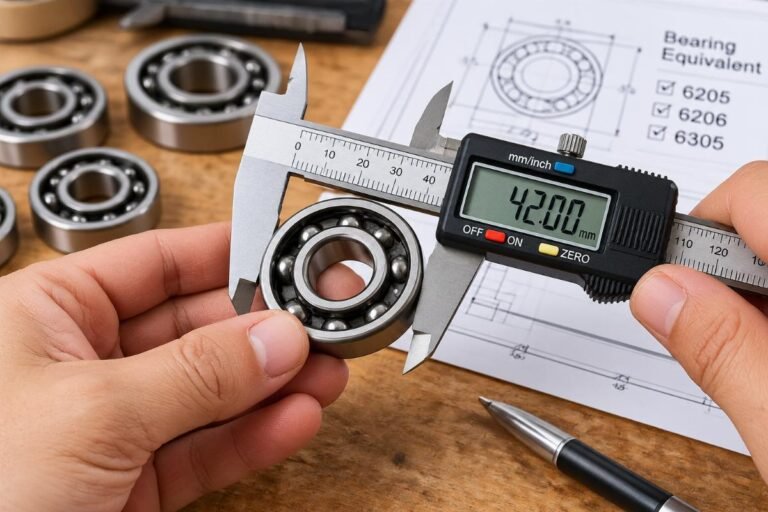

Leave a Reply