Can a Supplier Quote Bearing Equivalents Without Original Brand?
Matching outer and inner dimensions is not enough to guarantee interchangeability.
A supplier can quote bearing equivalents without the original brand, but only if they verify internal clearance, cage material, and grease compatibility beyond basic dimensional matches. Relying solely on size leads to catastrophic failures in high-load or high-temperature applications.
When I was handling procurement in Jakarta, I learned this lesson the hard way. A paper mill urgently needed NSK spherical roller bearings. The original stock was unavailable, and a local trader assured me that a cheaper alternative had identical dimensions. I approved the substitution based on the catalog measurements alone. Within days, the new bearings seized due to incorrect internal clearance, causing a temperature spike that halted the entire production line. The cost of that downtime far exceeded the savings from the cheaper parts. This experience reshaped how I approach cross-brand substitutions. Now, when clients ask for a bearing equivalent substitution, I insist on verifying technical parameters that are invisible to the naked eye but critical for performance.
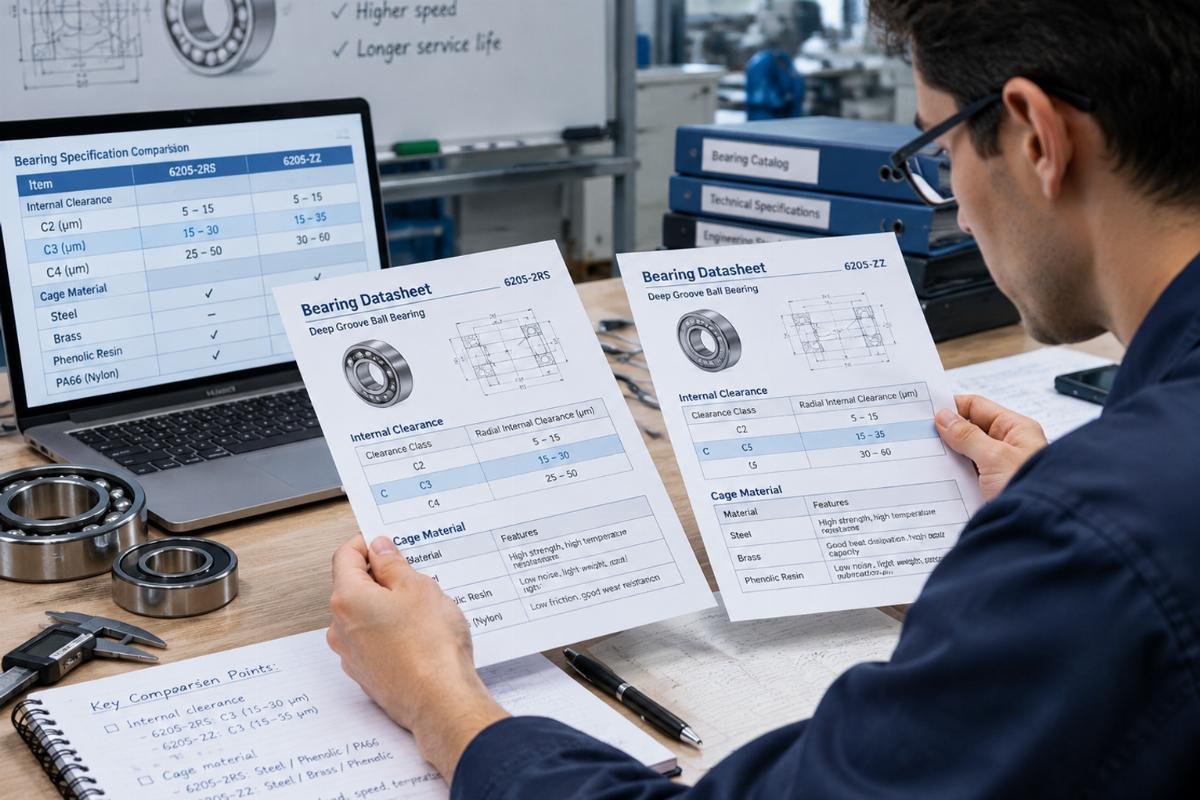
Quoting an equivalent is not just about finding a part that fits the shaft. It requires a deep understanding of how different manufacturers design their internal geometry. Many buyers assume that if the bore and outside diameter match, the bearing will work. This is a dangerous misconception. To avoid similar failures, you must treat every bearing equivalent substitution as a technical engineering decision, not just a purchasing transaction.
What Defines a True Bearing Equivalent?
Dimensions alone are insufficient because internal geometry varies significantly between brands. Two bearings may share the same ISO boundary dimensions, yet differ in raceway curvature, rolling element size, and contact angles. These differences affect load distribution and service life. A true bearing equivalent substitution must replicate the load-carrying capacity and operational characteristics of the original, not just its physical footprint.
Internal clearance is the most common point of failure in naive substitutions. Bearings are manufactured with specific clearance classes, such as C2, C3, or C4, to accommodate thermal expansion and fit tolerances [NEED_CITE: ISO 5753-1 standard for radial internal clearance]. If a replacement bearing has a standard clearance while the original required a C3 clearance for high-temperature operation, the internal space will vanish as the machine heats up. This leads to pre-loading, excessive friction, and rapid failure.
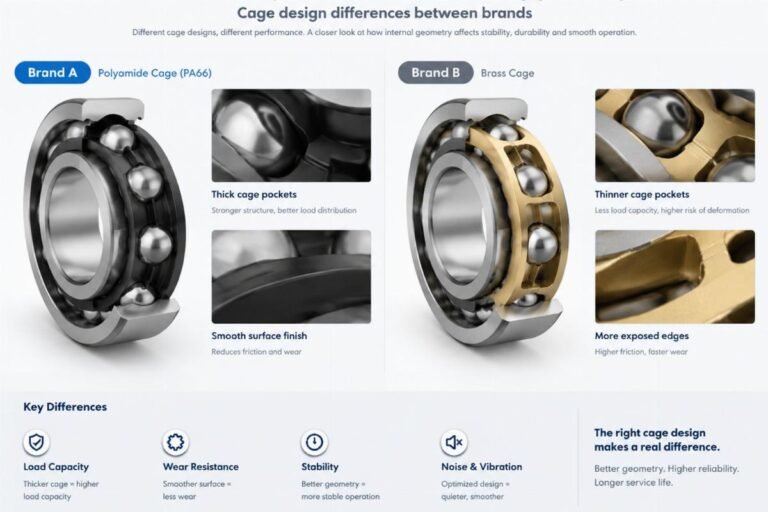
Cage design is another critical factor. Manufacturers use different materials for cages, including stamped steel, machined brass, or polyamide. Each material has distinct strength, temperature resistance, and lubrication requirements. Swapping a machined brass cage for a stamped steel one in a high-vibration application can lead to premature cage fracture. Therefore, a responsible bearing equivalent substitution process involves matching these internal components, not just the external rings.
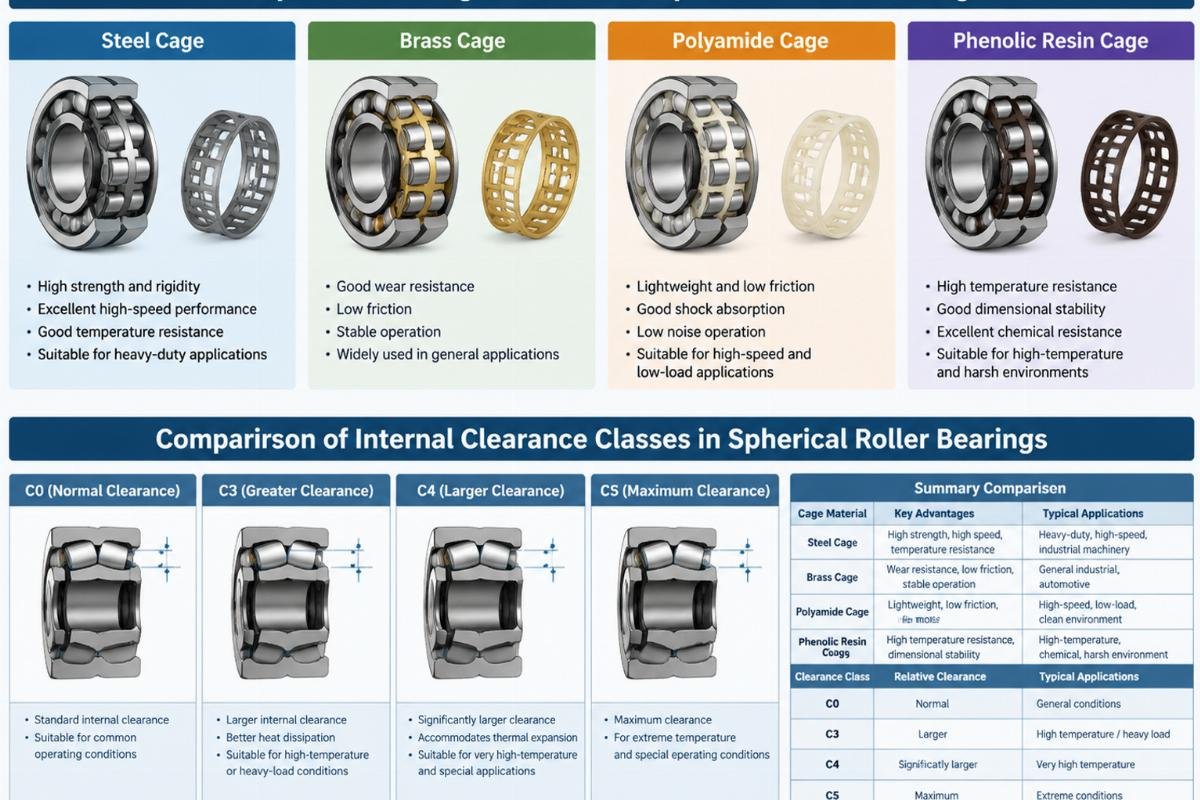
To ensure accuracy, always request the detailed datasheet of the proposed alternative. Compare the dynamic and static load ratings, limiting speed, and weight. If these values deviate significantly from the original, the part is not a true equivalent, regardless of its size. A professional bearing cross reference supplier will provide this data transparently, allowing you to make an informed decision rather than guessing based on part numbers.
Why Do “Dimensional Matches” Fail in the Field?
Clearance and cage mismatches cause thermal and mechanical failures that are often misdiagnosed as quality issues. When a bearing fails shortly after installation, the immediate assumption is often that the part was defective. However, in many cases, the part was perfectly manufactured but incorrectly selected for the application. This is why a bearing equivalent substitution must account for operating conditions, not just static dimensions.
Consider the case of a heavy-duty conveyor system using cylindrical roller bearings. The original specification called for a bearing with a reinforced steel cage designed to withstand high vibration. A substitute was sourced based on dimensional match alone, featuring a standard polymer cage. Under continuous vibration, the polymer cage degraded and fractured, leading to rolling element disarray and total bearing collapse. The lifespan of the equipment dropped noticeably, and the maintenance team faced unexpected breakdowns.
Another common issue is grease compatibility. Different bearing manufacturers pre-lubricate their products with specific greases tailored to their seal materials and operating temperatures. If a substitute bearing uses a grease that is incompatible with the existing system or the seal material, it can cause swelling, hardening, or leakage. In an automotive hub application, a mismatched grease led to premature wear and shortened maintenance cycles, forcing more frequent replacements than originally planned.
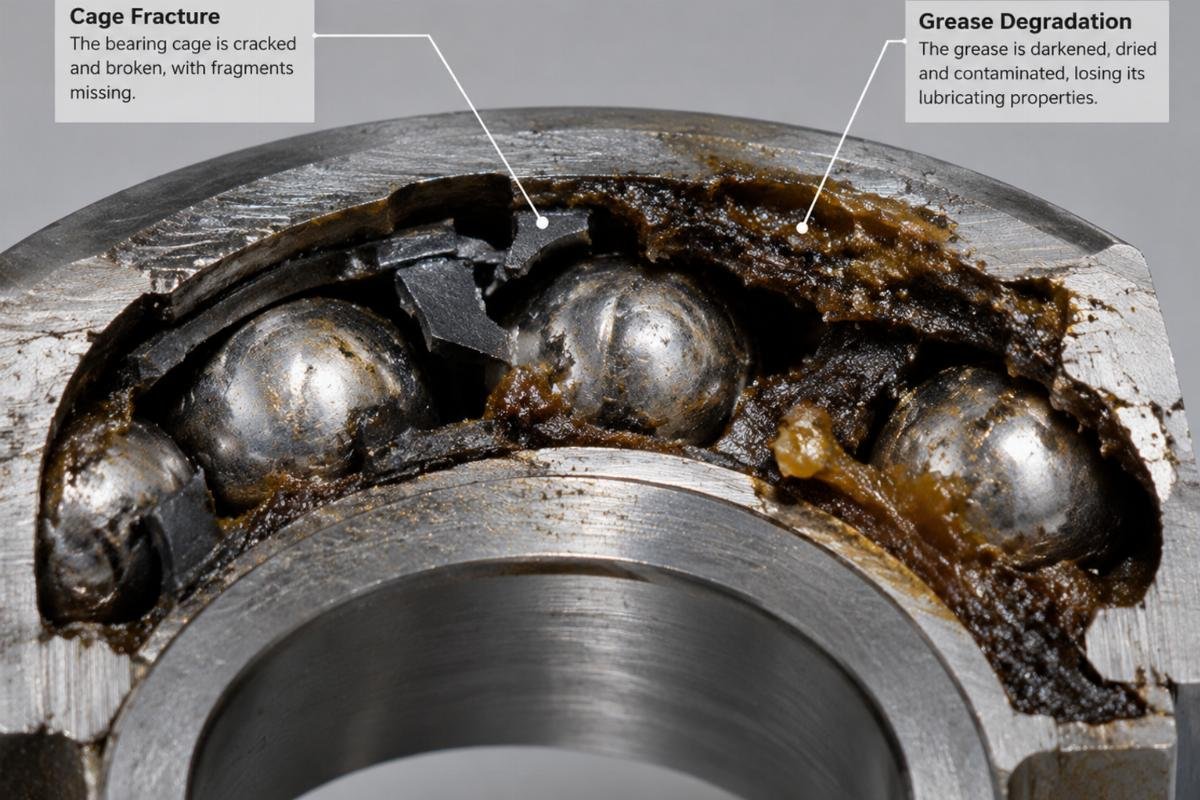
These failures highlight why a bearing cross reference supplier must ask detailed questions about your application. Temperature, speed, load type, and environmental conditions all influence the suitability of an equivalent. Without this context, even a high-quality bearing can fail prematurely. The goal is not just to replace the part, but to maintain the reliability of the entire machine.
How to Verify Equivalents Before Ordering?
Require datasheets, clearance specs, and grease compatibility proofs to mitigate risk. Verifying a bearing equivalent substitution involves a systematic check of technical documents. Do not rely on verbal assurances or simplified catalog tables. Instead, demand the full technical specification sheet from the manufacturer of the proposed alternative.
Start by checking the internal clearance class. Ensure it matches the original requirement, especially if the application involves temperature variations. If the original bearing was a C3 clearance, the substitute must also be C3. Next, examine the cage material. If the original used brass, verify that the alternative offers a brass option, particularly for high-speed or high-vibration environments.
Grease compatibility is equally important. Request information on the type of grease used in the substitute bearing. Compare it with the grease currently used in your system. If they are incompatible, you may need to flush and relubricate the housing, which adds labor and cost. In some cases, it is better to order the bearing without grease and apply your preferred lubricant during installation.
| Verification Parameter | Original Specification | Proposed Equivalent | Status |
|---|---|---|---|
| Boundary Dimensions | Match | Match | Pass |
| Internal Clearance | C3 | C3 | Pass |
| Cage Material | Machined Brass | Stamped Steel | Fail |
| Grease Type | Lithium Complex | Polyurea | Check Compatibility |
| Load Rating (Dynamic) | High | Medium | Fail |
This table illustrates how a simple dimensional match can hide critical discrepancies. A professional bearing cross reference supplier will help you navigate these details, ensuring that every parameter aligns with your operational needs. They can also provide cross-reference charts that map original part numbers to verified alternatives, saving time and reducing error.
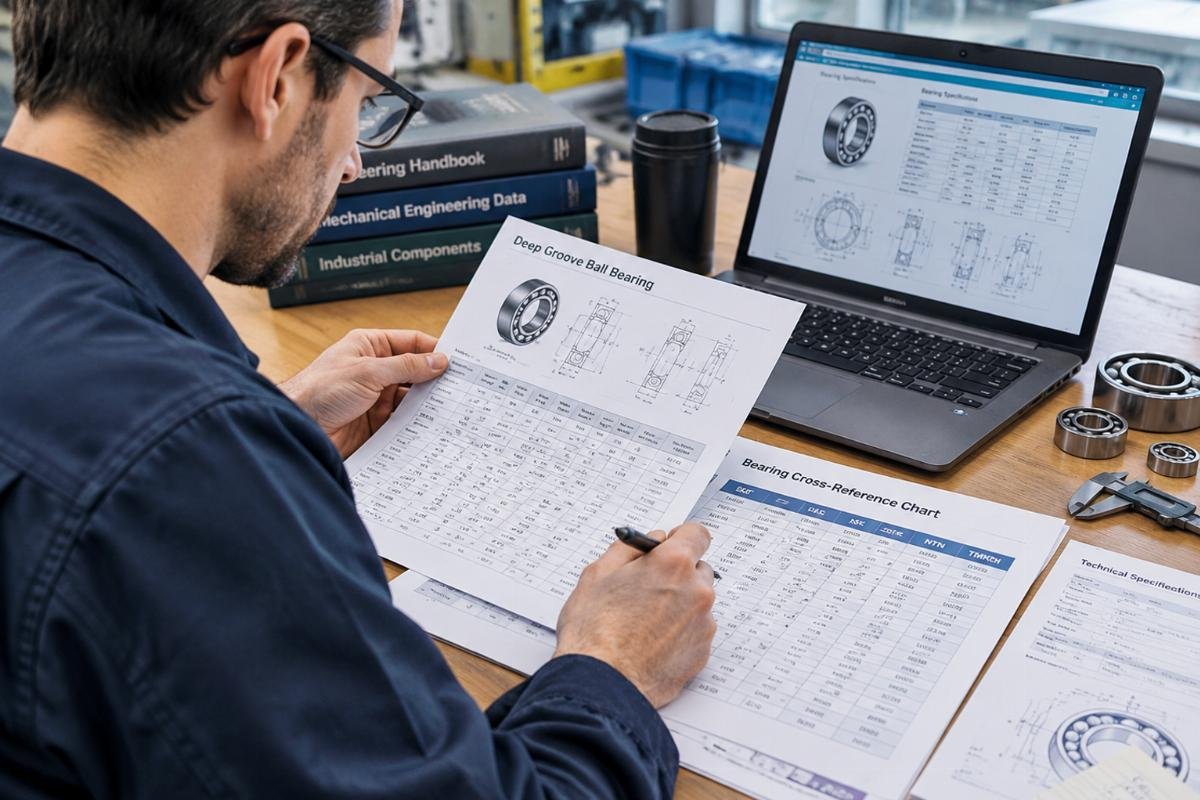
Additionally, consider the reputation of the alternative brand. While cost savings are attractive, choosing a brand with a proven track record in your industry reduces risk. Look for certifications and quality assurance processes that mirror those of the original manufacturer. This due diligence is essential for a successful bearing equivalent substitution.
When Should You Avoid Substitutes Entirely?
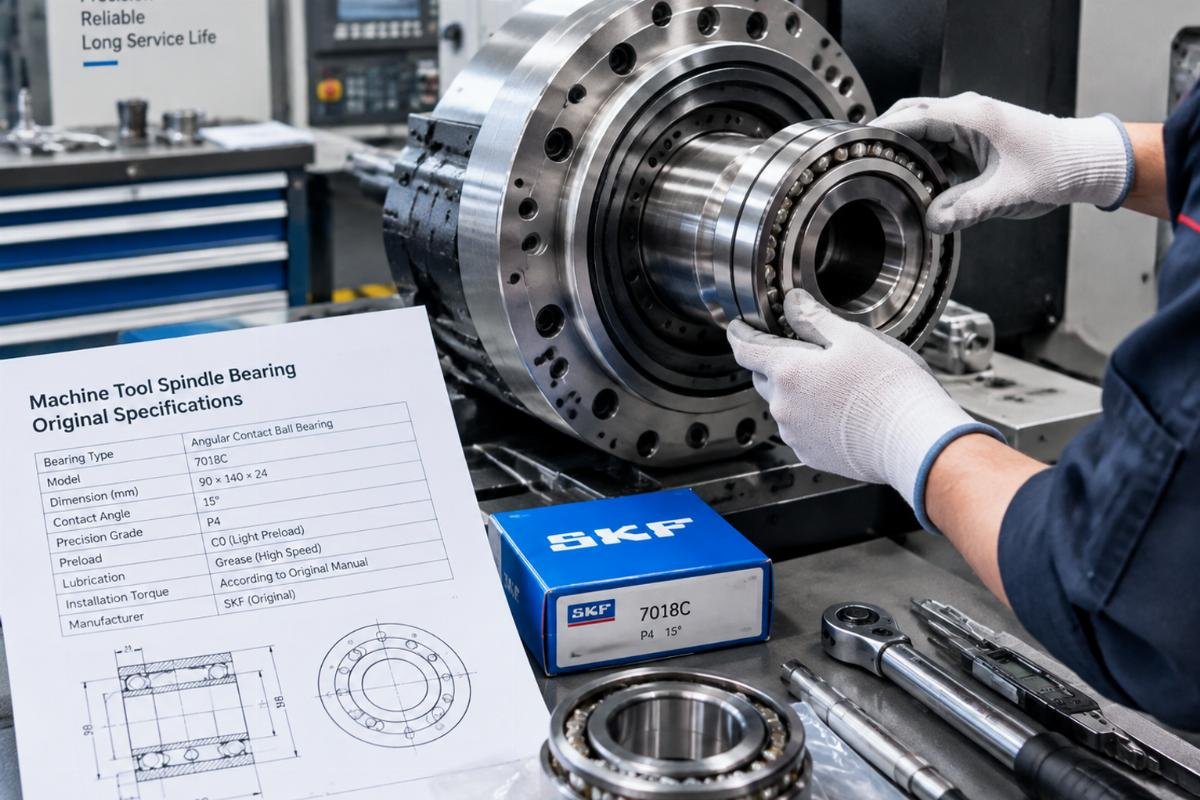
High-precision or extreme-load applications demand original specs. Not every bearing can be safely substituted. In applications where precision is paramount, such as machine tool spindles or high-speed aerospace components, the tolerances are so tight that even minor variations in internal geometry can cause significant performance issues. In these cases, sticking to the original brand and specification is the safest choice.
Extreme load conditions also warrant caution. If a bearing operates near its maximum load capacity, the margin for error is minimal. A substitute with slightly lower load ratings may fail under peak stress, leading to catastrophic damage. Similarly, in harsh environments with high contamination or extreme temperatures, the specific material treatments and seal designs of the original bearing may be difficult to replicate exactly.
For critical infrastructure, such as wind turbine main shafts or mining crusher eccentric shafts, the cost of failure is immense. Unplanned downtime can result in losses that dwarf any savings from using a cheaper alternative. In these scenarios, the risk associated with a bearing equivalent substitution is often too high to justify. Instead, focus on securing genuine original stock through reliable channels that offer traceability and authenticity guarantees.
If you must consider an alternative for such applications, engage in a thorough technical consultation. Provide detailed operating data and allow experts to analyze the feasibility. Sometimes, a modified solution or a higher-grade alternative from a reputable brand may be viable, but this requires rigorous validation. Never compromise on safety and reliability for the sake of short-term cost reduction.
Conclusion
Substituting bearings requires more than matching sizes; it demands technical verification.
A successful bearing equivalent substitution depends on verifying internal clearance, cage material, and lubrication compatibility. While cost-effective alternatives exist, they must be vetted through detailed datasheets and professional consultation. Avoid substitutes in high-precision or extreme-load applications where the risk of failure is unacceptable. By prioritizing technical accuracy over simple dimensional matches, you can ensure reliable performance and minimize unplanned downtime. Trust a knowledgeable bearing cross reference supplier to guide you through this complex process, ensuring that every replacement meets the rigorous demands of your industrial operations.

Written by
authorEditor covering global sourcing, supplier verification, and industrial product knowledge. Content is compiled from manufacturer specifications, industry standards, and hands-on experience with international B2B buyers. Every article is fact-checked before publishing to help procurement professionals make informed decisions.
View all posts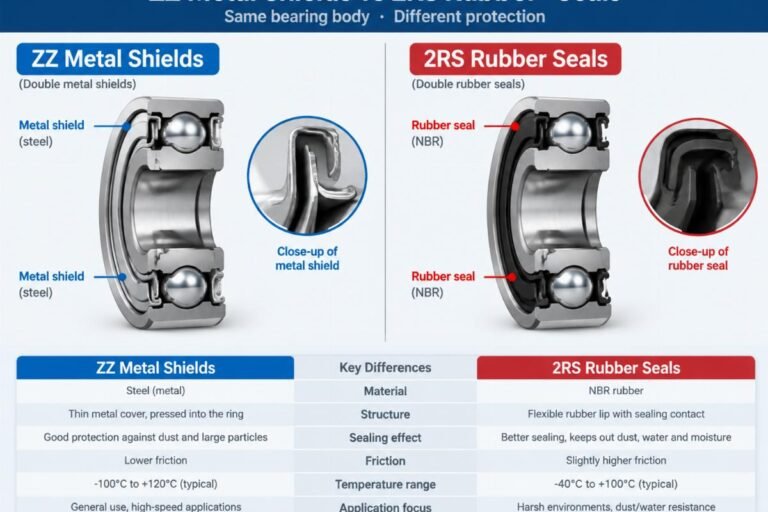
Leave a Reply