Timken Suffix & Class Codes: Wholesale Supplier Guide
Standard clearance does not fit all. Assuming a generic replacement works in high-temperature mining environments is the fastest route to catastrophic cage seizure.
Timken suffix codes dictate internal clearance, cage design, and special treatments, while class codes define precision tolerances; selecting the correct combination prevents premature failures in harsh operating conditions by matching bearing geometry to specific thermal and load requirements.
I still recall the humidity and dust of a nickel mine in Sulawesi. A client pointed at a smoking cone crusher, frustrated by repeated breakdowns. We had supplied what seemed like perfect replacements, but we missed a critical detail in the part number: the difference between a standard internal clearance and a modified one designated by a specific suffix. The local ambient heat, combined with heavy crushing loads, caused the rollers to expand beyond the standard gap. The result was a locked cage and seized bearings within weeks. That incident shifted my approach entirely. I no longer look at just the basic dimension series. I scrutinize every letter at the end of the code. Understanding these identifiers is not just about reading a catalog; it is about preventing downtime in environments where failure costs far more than the component itself. [NEED_CITE: impact of thermal expansion on bearing internal clearance in heavy industry]

This guide breaks down the logic behind these codes. For distributors and procurement managers handling mixed-brand inventories, decoding these markers is essential for accurate verification and avoiding costly mismatches.
What Do Timken Suffix Codes Actually Mean?
Suffixes are not random letters; they are engineering instructions that modify the base bearing design. While the numeric portion of a Timken part number defines the bore, outside diameter, and width, the suffixes tell you how the bearing behaves under stress. Ignoring them means you might be installing a bearing designed for a quiet electric motor into a vibrating rock crusher.
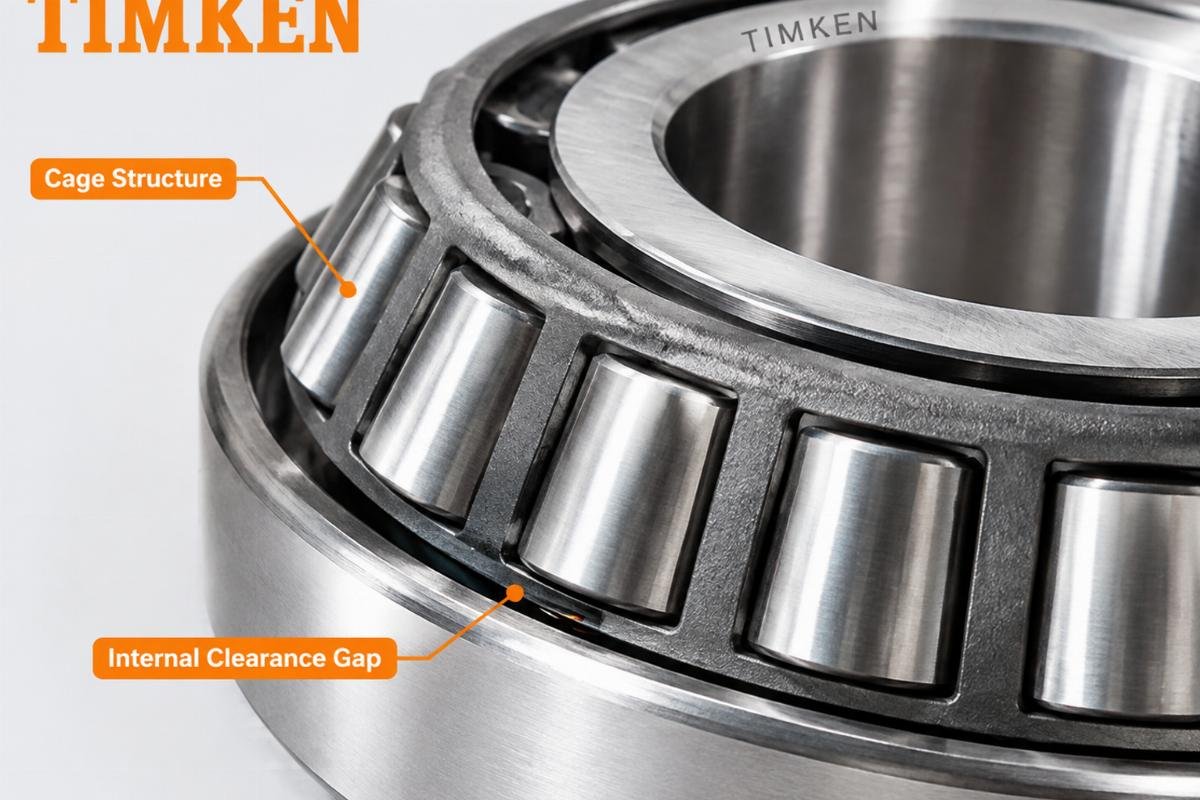
The most common confusion arises with internal clearance codes. In many standard applications, a default clearance is sufficient. However, in industries like steel manufacturing or mining, thermal expansion is a constant threat. Suffixes such as C3, C4, or CJ indicate progressively larger internal clearances. These gaps allow the rolling elements to expand without creating excessive preload, which generates heat and leads to early fatigue. [NEED_CITE: ABMA standards for bearing internal clearance classifications]
Another critical aspect is the cage design. Standard stamped steel cages work well for general purposes, but high-speed or high-vibration applications often require machined brass or polymer cages, indicated by specific suffix letters. A mismatch here can lead to cage fracture under shock loads. Furthermore, special treatments like surface coatings for corrosion resistance or specific lubrication fills are also denoted in this section of the code.
| Feature | Standard Code (No Suffix) | Modified Suffix (e.g., C3, CJ) | Special Treatment Suffix |
|---|---|---|---|
| Internal Clearance | Basic/Normal | Expanded for thermal growth | Customized for specific fits |
| Cage Type | Stamped Steel | Often Machined Brass/Polymer | Special material for corrosion |
| Application Fit | General Industrial | High Temp/Heavy Load | Harsh/Corrosive Environments |
| Risk if Mismatched | Moderate in stable temps | Seizure if used in cold | Premature wear if unnecessary |
For a wholesaler stocking thousands of SKUs, treating these suffixes as optional is a dangerous oversight. A bearing with a C3 clearance will feel loose compared to a standard unit if checked by hand, leading some inexperienced technicians to reject it as defective. In reality, it is precisely engineered for its intended hot environment. Verifying these details against the original equipment manufacturer’s specifications ensures that the replacement part performs as intended. [NEED_CITE: Timken engineering catalog guidelines on suffix interpretation]
How Do Class Codes Affect Bearing Performance?
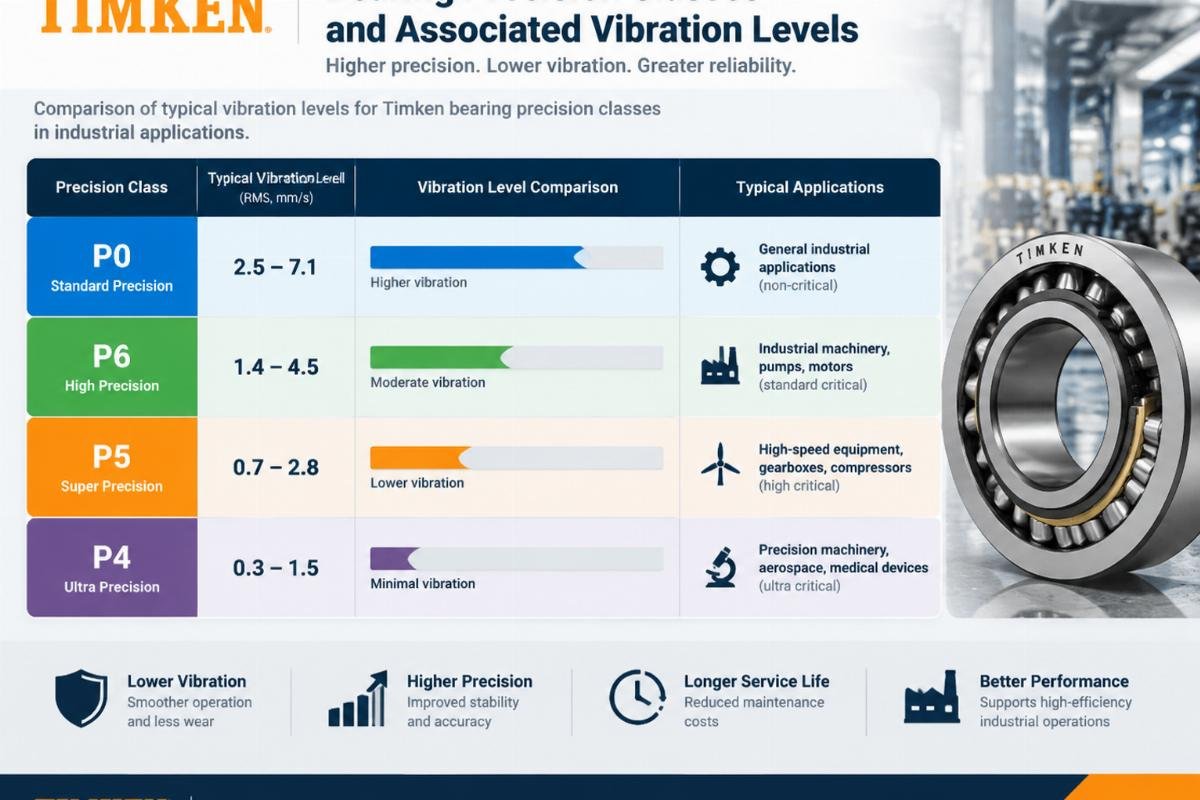
Higher precision is not always better; it must match the application’s dynamic requirements. Class codes define the dimensional and geometric tolerances of the bearing. While it is tempting to assume that a higher precision class equals superior performance, using a high-precision bearing in a heavy-shock load environment can sometimes lead to premature spalling due to edge loading if the housing fit is not equally precise.
Timken class codes often align with ISO or ABMA standards, such as Class 0, Class 1, or Class 2, which correspond to increasing levels of precision. In standard industrial gearboxes, a normal class may suffice. However, in high-speed machine tools or precision spindles, tighter classes are mandatory to minimize vibration and heat generation. The key is understanding that precision affects not just the bearing itself, but its interaction with the shaft and housing.
A European wind farm operator once reported inconsistent vibration levels in their gearbox assemblies. Upon investigation, we found that while the bearings were genuine, the mix of class codes in the assembly created uneven load distribution. Some bearings were held to tighter tolerances than others, causing micro-misalignments under load. Switching to a consistent class code across the entire assembly resolved the vibration issues and extended the maintenance interval significantly. [NEED_CITE: ISO tolerance classes for rolling bearings]
| Precision Class | Typical Tolerance Level | Primary Application | Vibration Impact |
|---|---|---|---|
| Standard Class | Normal | General Motors, Agricultural | Acceptable for low speed |
| Precision Class | Tight | Gearboxes, Pumps | Reduced noise and heat |
| High Precision | Very Tight | Machine Tools, Spindles | Minimal vibration |
Selecting the wrong class can be as detrimental as selecting the wrong size. A high-precision bearing installed in a worn housing will lose its advantage immediately, as the housing dictates the final running accuracy. Therefore, when sourcing replacements, it is crucial to verify not just the bearing class, but the condition of the mating components. For distributors, offering technical consultation on these fits adds significant value, helping clients avoid returns caused by application errors rather than product defects.
Which Suffix Prevents Failures in High-Temp Mining?
Standard clearance bearings fail in high-temperature mining because they lack the room for thermal expansion. In environments like nickel or copper mines, ambient temperatures can soar, and the mechanical work of crushing ore generates intense additional heat. A standard bearing, designed for moderate conditions, will see its internal clearance disappear as the metal expands. This creates a preload condition, generating even more heat until the bearing seizes.
The solution lies in specific suffix codes that designate expanded internal clearances. Codes like C3 or C4 provide the necessary extra space. In extreme cases, specialized suffixes like CJ are used. These are not just “larger” bearings; they are engineered to maintain optimal contact angles and load distribution even when heated.
Consider a case from a Middle East steel mill. The facility experienced frequent failures in their continuous caster rolls. The initial replacements were standard clearance units, which lasted only a few months. By switching to bearings with a C4 suffix, the operational lifespan increased substantially. The expanded clearance allowed the rollers to accommodate the thermal growth without binding, maintaining smooth rotation despite the extreme heat. [NEED_CITE: case studies on bearing failure modes in high-temperature steel processing]
| Operating Condition | Recommended Clearance Suffix | Reason for Selection |
|---|---|---|
| Ambient/Normal | Standard (No Suffix) | Cost-effective, sufficient for stable temps |
| Elevated Temp | C3 | Compensates for moderate thermal expansion |
| High Temp/Heavy Load | C4 or CJ | Prevents seizure in extreme thermal conditions |
| Variable Loads | Custom Suffix | Tailored for specific shock and heat profiles |
Identifying the correct suffix requires a clear understanding of the operating temperature range. If the environment exceeds standard limits, assuming a generic replacement will work is a gamble with production uptime. For MRO managers, keeping a stock of these modified clearance bearings is often more critical than having a wide variety of standard sizes, as they are the key to surviving harsh cycles.

How to Verify Timken Codes During Procurement?
Visual inspection alone cannot confirm the internal specifications defined by suffix codes. Counterfeit or mislabeled bearings often look identical to genuine ones on the outside. The critical differences—internal clearance, cage material, and precision class—are hidden inside. Relying solely on the box label or the outer ring marking can lead to receiving incorrect parts that fail prematurely.
Verification requires a multi-step approach. First, check the traceability documentation. Genuine Timken products come with certificates that specify the exact suffix and class codes. Cross-referencing these documents with the physical part number is the first line of defense. Second, inspect the physical markings on the bearing itself. While some internal features are not visible, the part number stamped on the side should match the order exactly. Any discrepancy in the suffix letters is a red flag.
A distributor in Southeast Asia once faced a surge in returns for bearings that supposedly seized upon installation. Investigation revealed that the suffix codes on the delivered boxes did not match the invoices. The supplier had substituted standard clearance units for the requested C3 units. By implementing a strict document-checking workflow, the distributor reduced return lead times and restored client trust. [NEED_CITE: best practices for verifying genuine bearing parts and documentation]
| Verification Step | Action Required | Risk if Skipped |
|---|---|---|
| Document Check | Match invoice suffix to certificate | Receiving wrong internal clearance |
| Physical Marking | Verify part number on bearing ring | Installing counterfeit or mislabeled parts |
| Dimensional Check | Sample measurement for critical apps | Undetected precision class mismatch |
| Supplier Audit | Confirm authorized sourcing channel | Supply chain contamination |
For buyers, working with suppliers who provide full traceability is non-negotiable. It is not just about authenticity; it is about ensuring that the specific engineering modifications denoted by the suffix codes are actually present in the product. This level of diligence prevents the costly downtime associated with mismatched replacements.

Conclusion
Decoding Timken suffix and class codes is a technical necessity, not an optional detail. Matching internal clearances and precision classes to specific operating conditions prevents premature failures and extends equipment life. Always verify these codes through traceable documentation to ensure genuine performance.

Written by
authorEditor covering global sourcing, supplier verification, and industrial product knowledge. Content is compiled from manufacturer specifications, industry standards, and hands-on experience with international B2B buyers. Every article is fact-checked before publishing to help procurement professionals make informed decisions.
View all posts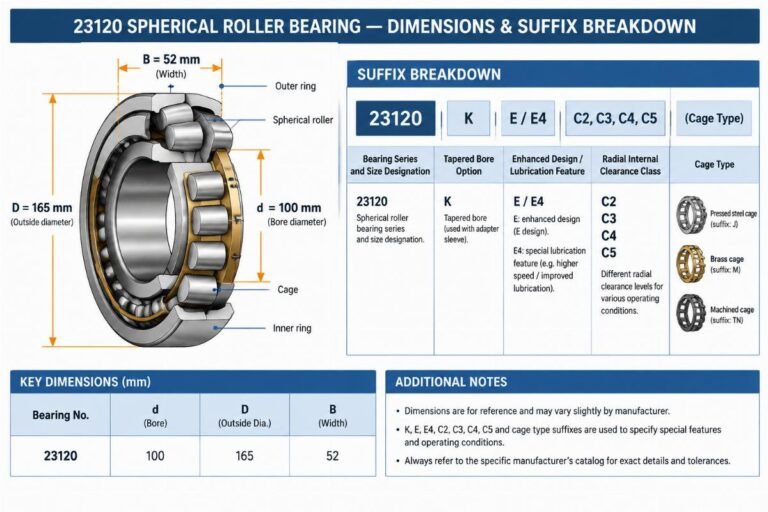

Leave a Reply