Japanese Machinery Bearing Replacement: Genuine NSK NTN KOYO Wholesale Supplier
Matching the part number is not enough; ignoring internal clearance guarantees premature failure.
Replacing bearings in Japanese machinery requires precise cross-referencing of internal clearances, strict adherence to installation tolerances, and sourcing 100% genuine parts to prevent catastrophic equipment failure. The core challenge lies not in finding a physical fit, but in ensuring the thermal and load characteristics of the replacement bearing match the original design intent of manufacturers like Komatsu, Hitachi, or Kobelco. A mismatched clearance class or a counterfeit component will lead to rapid overheating, spindle seizure, and secondary shaft damage that multiplies repair costs significantly.
I still remember the humid air in a Nigerian quarry, the smell of burnt oil hanging heavy over a stationary crusher line. The owner had saved a small amount on a batch of spherical roller bearings, convinced they were genuine NSK because the packaging looked right. Within two weeks, the main shaft seized. The cost of the downtime and the subsequent machining of a new shaft dwarfed the initial savings by a massive margin. That incident reshaped how I approach every Japanese machinery bearing replacement query. It is not just about swapping a metal ring; it is about preserving the integrity of the entire mechanical system.
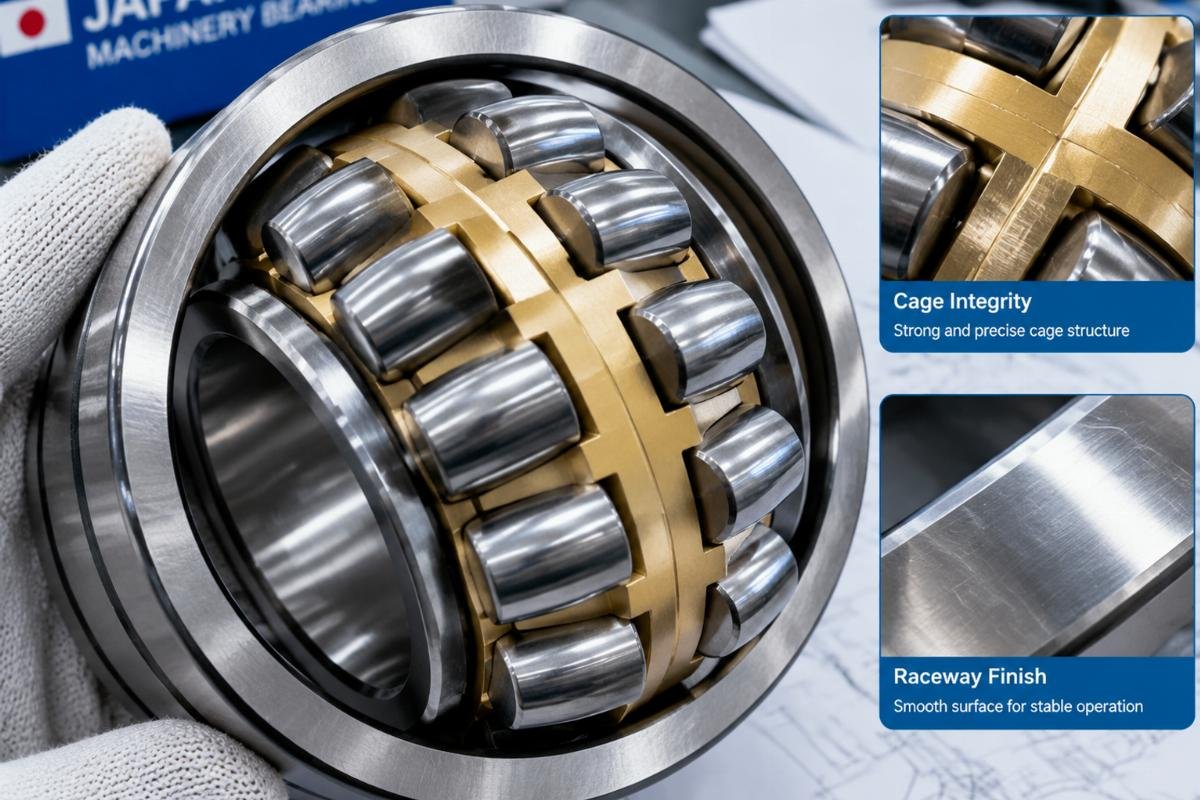
Understanding why exact part numbers fail without context is the first step toward reliable maintenance. The following sections detail how to navigate cross-referencing, identify counterfeits, and execute proper installation.
How to Cross-Reference Japanese Bearing Brands Accurately?
Dimensional compatibility is merely the baseline; internal clearance matching is the critical factor for Japanese equipment longevity.
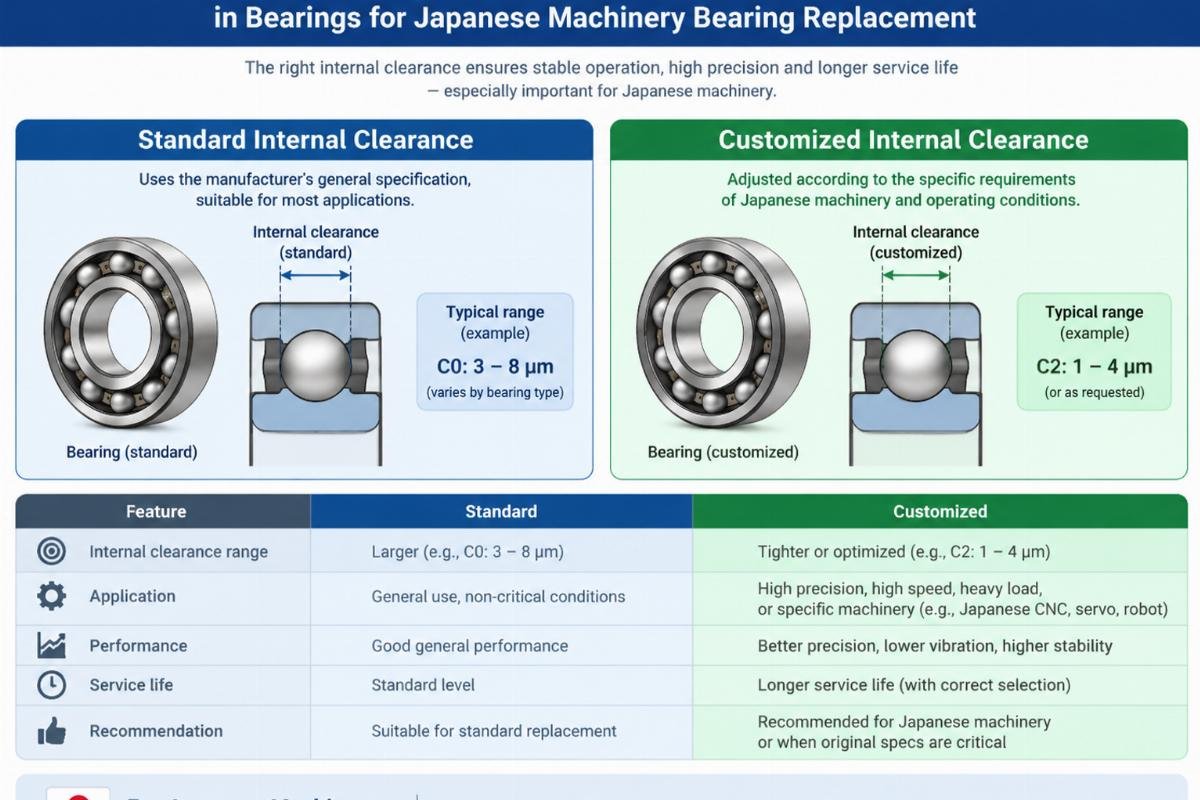
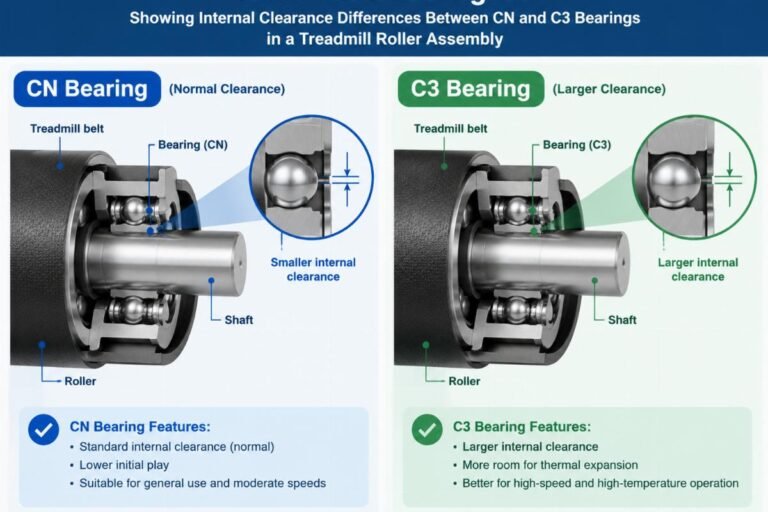
Many operators assume that if the outer diameter, inner diameter, and width match, the bearing is interchangeable. This is a dangerous oversimplification. Japanese heavy machinery often operates under specific thermal conditions that require non-standard internal clearances. For instance, a standard C3 clearance might be insufficient for a high-speed excavator swing circle operating in a hot climate, leading to preload and early fatigue.
When performing a Japanese machinery bearing replacement, you must verify the clearance class against the original equipment manufacturer (OEM) specifications. Brands like NTN and KOYO produce bearings with specific suffixes indicating these variations. Ignoring these suffixes results in a bearing that fits physically but fails functionally.
| Feature | Standard Commercial Bearing | OEM-Specific Japanese Replacement | Risk of Mismatch |
|---|---|---|---|
| Internal Clearance | Standard C3/C4 | Customized (e.g., CM, C3H) | Overheating or excessive play |
| Cage Material | Standard Steel | Reinforced Polymer or Brass | Cage fracture under vibration |
| Lubricant Fill | Generic Lithium | High-Temp Synthetic Blend | Grease breakdown and starvation |
| Tolerance Class | Normal (P0) | Precision (P5/P6) | Increased noise and vibration |
[NEED_CITE: ISO 15243 failure mode classification related to clearance mismatches]
A case from a Southeast Asian cement plant illustrates this clearly. The maintenance team replaced cylindrical roller bearings in a conveyor pulley using a generic equivalent with standard clearance. The bearing ran hot within days, causing the grease to carbonize. The correct replacement required a specific clearance adjustment to accommodate the thermal expansion of the hollow shaft. By verifying the clearance code before purchase, they avoided a repeat failure. Always consult the technical datasheet for the specific machine model, not just the bearing number.
What Are the Hidden Risks of Counterfeit Japanese Bearings?
Counterfeit parts do not just fail faster; they cause secondary damage that destroys expensive shafts and housings.
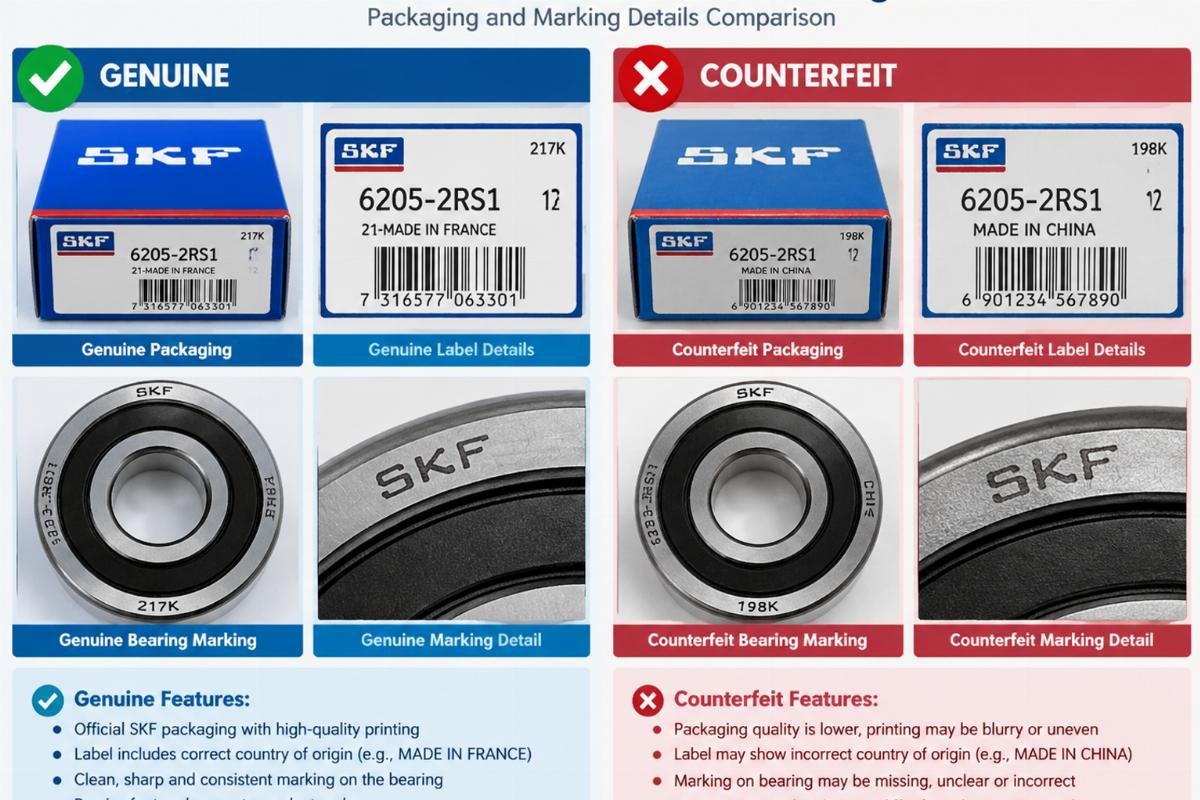
The market is flooded with bearings that mimic the branding of NSK, NTN, and KOYO. These fakes often use inferior steel with high inclusion counts, leading to premature spalling. However, the immediate financial loss of the bearing itself is minor compared to the collateral damage. A failed bearing can score the shaft, damage the housing bore, and destroy seals, turning a simple swap into a major overhaul.
In my experience, visual inspection is the first line of defense. Genuine Japanese bearings have precise laser etching or high-quality stamping that is difficult to replicate. Counterfeits often show rough edges, inconsistent font weights, or poor-quality packaging. But even sophisticated fakes can pass a visual check. The true test lies in performance under load.
| Indicator | Genuine Japanese Bearing | Counterfeit/Low-Quality Imitation |
|---|---|---|
| Steel Purity | High-carbon chromium, low inclusions | Variable quality, high impurity risk |
| Raceway Finish | Mirror-like, consistent grind | Visible tool marks, uneven polish |
| Cage Fit | Precise, smooth rotation | Loose or binding, irregular movement |
| Documentation | Full traceability, batch codes | Missing or generic paperwork |
[NEED_CITE: Industry association guidelines on counterfeit bearing identification]
A distributor in the Middle East once shared photos of a failed tapered roller bearing from an excavator. The rollers had shattered, sending shrapnel through the cage. The root cause was substandard heat treatment, a common flaw in counterfeits. The resulting damage to the hub required welding and machining that cost ten times more than the bearing. Sourcing from a verified Japanese machinery bearing replacement supplier with traceable documentation is the only way to mitigate this risk. Do not rely on price as an indicator of authenticity; if the deal looks too good, it likely is.
How to Adjust Clearances During Installation?
Proper clearance adjustment prevents overheating and premature fatigue failure by accommodating thermal expansion.
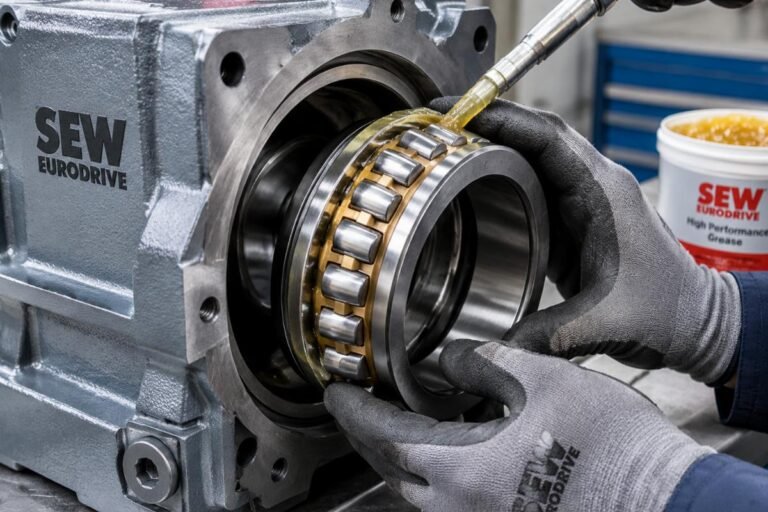
Installation is where many replacements go wrong, even with genuine parts. For tapered roller bearings, commonly found in wheel hubs and swing circles, setting the correct preload or end-play is critical. Too tight, and the bearing overheats; too loose, and it suffers from impact loading.
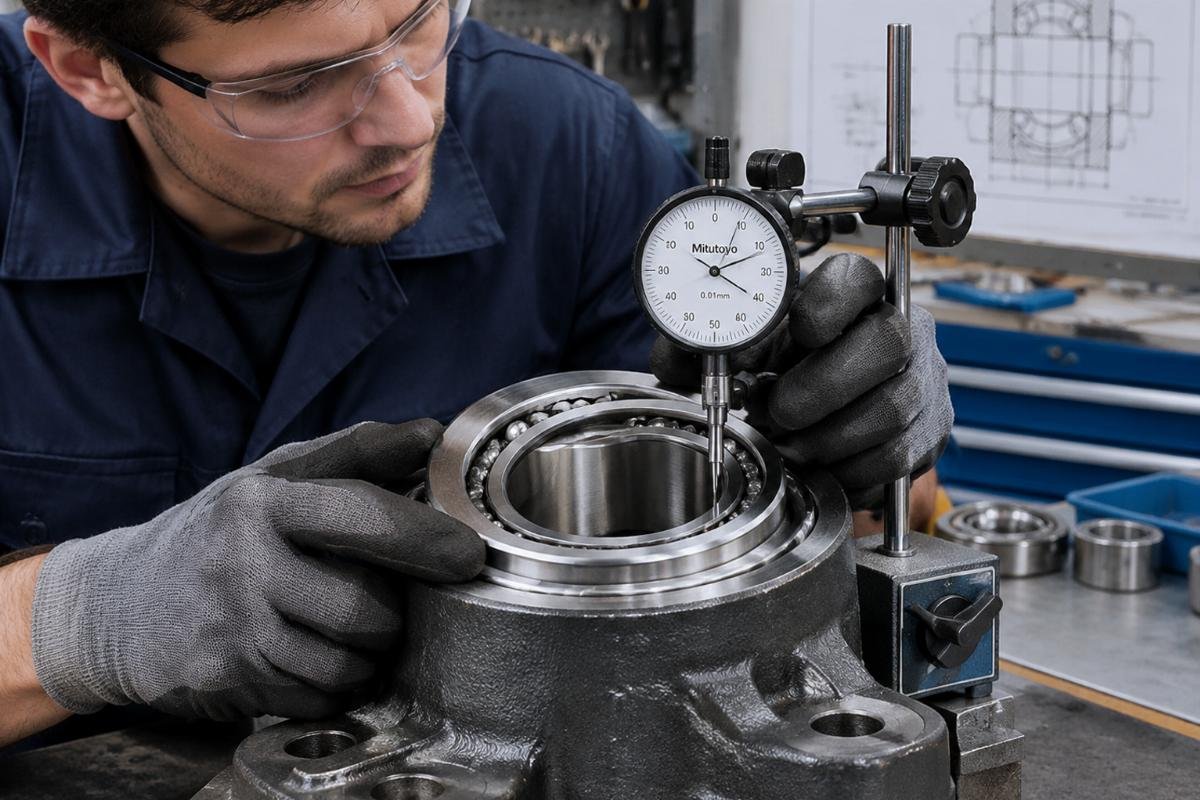
The process requires precise measurement tools, such as dial indicators or feeler gauges, depending on the application. For spherical roller bearings with tapered bores, the drive-up method on the adapter sleeve must be controlled to achieve the specified reduction in radial clearance. Guessing the torque or the number of turns leads to inconsistent results.
- Clean and Inspect: Ensure the shaft and housing are free of debris and damage. Measure the shaft diameter to confirm it is within tolerance.
- Mount the Bearing: Use induction heating or a hydraulic press for interference fits. Avoid hammering, which can damage the raceways.
- Measure Initial Clearance: Before final tightening, measure the radial clearance to establish a baseline.
- Adjust and Tighten: For tapered bores, tighten the lock nut while rotating the bearing to seat the rollers. Measure the clearance reduction periodically.
- Verify Final Clearance: Ensure the final clearance matches the OEM specification. Lock the nut securely and install the seal.
[NEED_CITE: Manufacturer technical manual guidelines for tapered bore mounting]
I recall a scenario involving a crane operator who ignored the clearance reduction step. He tightened the lock nut until it felt “snug.” The bearing ran for a few hours before seizing due to zero internal clearance. The heat generated welded the rollers to the race. Proper training and adherence to the installation procedure are essential for any Japanese machinery bearing replacement task. It is not just about putting the part on; it is about setting it up to survive the operating environment.
Which Brands Offer the Best Alternatives for Japanese Machinery?
NTN, KOYO, and premium domestic brands provide reliable, cost-effective replacements when sourced correctly.
While OEM-branded bearings are the gold standard, supply chain disruptions or cost constraints often necessitate alternatives. NTN and KOYO are original equipment suppliers for many Japanese machines, making them natural choices for replacements. Their manufacturing standards align closely with the original design requirements. Additionally, high-quality domestic Chinese brands have improved significantly, offering viable options for less critical applications if they meet the necessary precision and material standards.
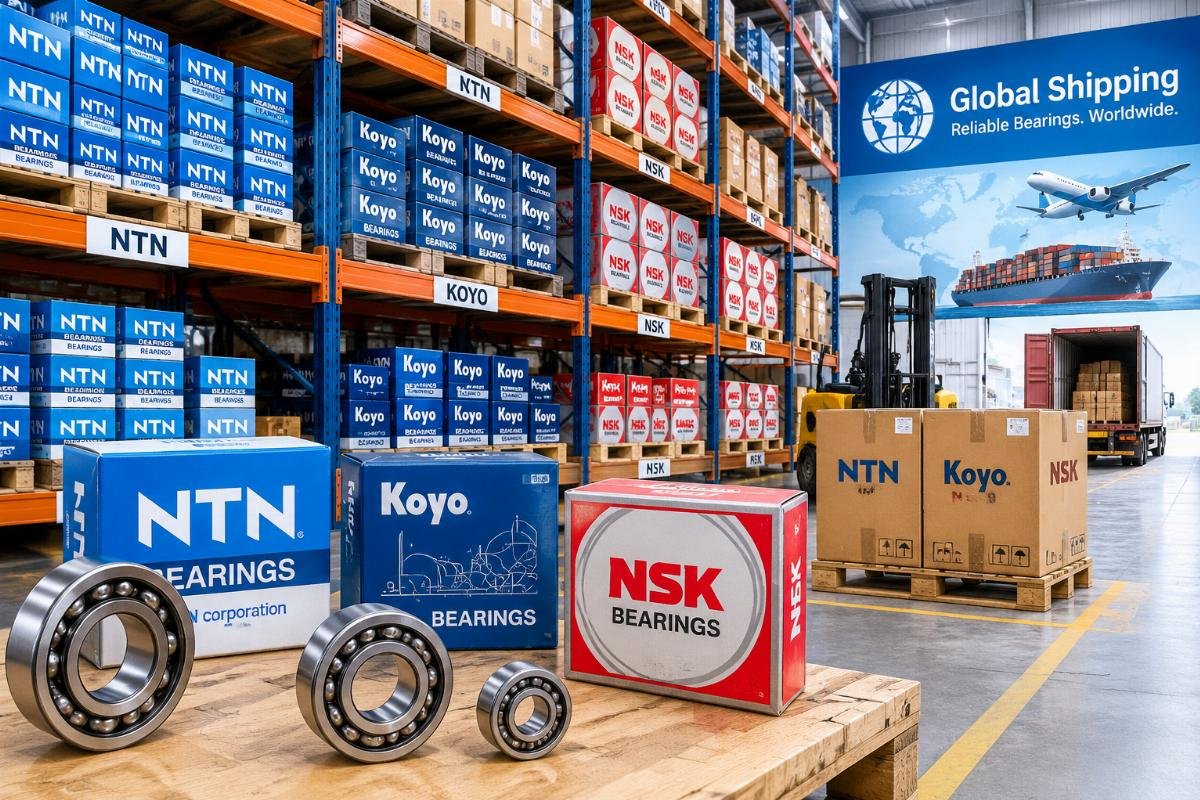
The key is to select a supplier who understands the nuances of these brands. Not all distributors stock the full range of clearance classes or specialized variants. A reliable partner will offer mixed-brand consolidation, allowing you to source NSK for critical spindles and KOYO for general applications in a single shipment. This approach simplifies logistics and ensures consistency in quality control.
When evaluating suppliers, look for those who provide technical support for failure analysis. They should be able to review your application parameters and recommend the appropriate bearing type and clearance. This level of service transforms a transactional purchase into a strategic maintenance solution. For MRO operators managing diverse fleets, having a single source for genuine Japanese machinery bearing replacement components reduces administrative burden and minimizes the risk of ordering errors.
Conclusion
Precision in selection and installation defines the success of any bearing replacement strategy.
Replacing bearings in Japanese machinery demands more than just a matching part number. It requires a deep understanding of internal clearances, vigilance against counterfeits, and strict adherence to installation protocols. By prioritizing genuine components from reputable brands like NTN, KOYO, and NSK, and ensuring proper technical execution, operators can minimize downtime and protect their assets from catastrophic failure. The cost of precision is always lower than the cost of repair.

Written by
authorEditor covering global sourcing, supplier verification, and industrial product knowledge. Content is compiled from manufacturer specifications, industry standards, and hands-on experience with international B2B buyers. Every article is fact-checked before publishing to help procurement professionals make informed decisions.
View all posts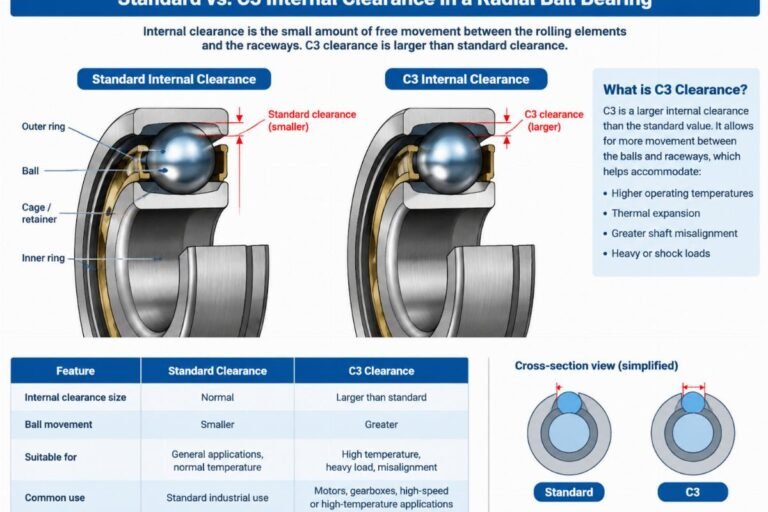
Leave a Reply